

1 pound (Save the Children Fund) – Cyprus
Add to wishlist
Non-circulating coins
Commemoration: 70th Anniversary of the Save the Children Fund
Cyprus
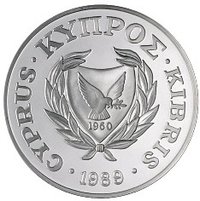
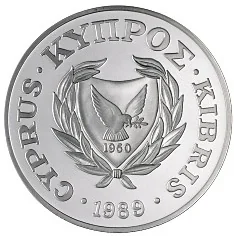
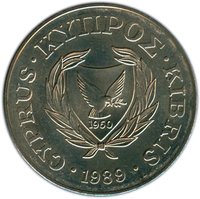
Obverse
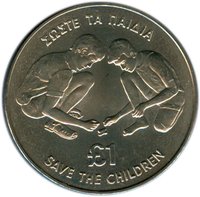
Reverse
Description:
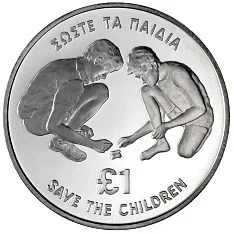
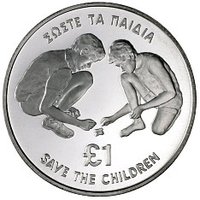
Two children playing knucklebones, with "SAVE THE CHILDREN" in Greek and English and a £1 face value.
Inscription:
ΣΩΣΤΕ ΤΑ ΠΑΙΔΙΑ
£1
SAVE THE CHILDREN
£1
SAVE THE CHILDREN
Translation:
SAVE THE CHILDREN
£1
SAVE THE CHILDREN
£1
SAVE THE CHILDREN
Language: Greek
Edge
Plain
Mintings
| Year | Mint Mark | Mintage | Quality | Collection |
|---|---|---|---|---|
| 1989 | — | 19,000 |
Historical background
In 1989, the Republic of Cyprus operated under a unique and complex dual-currency system, a legacy of the island's division following the 1974 Turkish invasion. The internationally recognized government in the south used the Cypriot pound (CYP), which was pegged to a basket of currencies, primarily weighted towards the European Currency Unit (ECU), the forerunner to the euro. This peg provided a degree of stability but required consistent foreign exchange reserves and careful monetary policy from the Central Bank of Cyprus to maintain.
Simultaneously, the northern part of the island, administered by the Turkish Republic of Northern Cyprus (recognized only by Turkey), used the Turkish lira (TRY). This created a stark economic contrast, as the south enjoyed relative prosperity and stability tied to Europe, while the north grappled with the high inflation and volatility imported from Turkey's own economic struggles. The Green Line dividing the island was a firm economic as well as political boundary, with limited movement of goods and people, effectively creating two separate monetary zones.
The currency situation in 1989 thus reflected the island's political reality: a bifurcated economy with the Cypriot pound symbolizing the south's alignment with Western economic structures and aspirations for European integration, and the Turkish lira anchoring the north's dependence on Ankara. This duality underscored the deep economic disparities between the two communities and presented a significant challenge to any future discussions on reunification, as monetary integration would be a formidable hurdle long before political agreements could be reached.
Simultaneously, the northern part of the island, administered by the Turkish Republic of Northern Cyprus (recognized only by Turkey), used the Turkish lira (TRY). This created a stark economic contrast, as the south enjoyed relative prosperity and stability tied to Europe, while the north grappled with the high inflation and volatility imported from Turkey's own economic struggles. The Green Line dividing the island was a firm economic as well as political boundary, with limited movement of goods and people, effectively creating two separate monetary zones.
The currency situation in 1989 thus reflected the island's political reality: a bifurcated economy with the Cypriot pound symbolizing the south's alignment with Western economic structures and aspirations for European integration, and the Turkish lira anchoring the north's dependence on Ankara. This duality underscored the deep economic disparities between the two communities and presented a significant challenge to any future discussions on reunification, as monetary integration would be a formidable hurdle long before political agreements could be reached.
💎 Extremely Rare