

Obverse
Description:
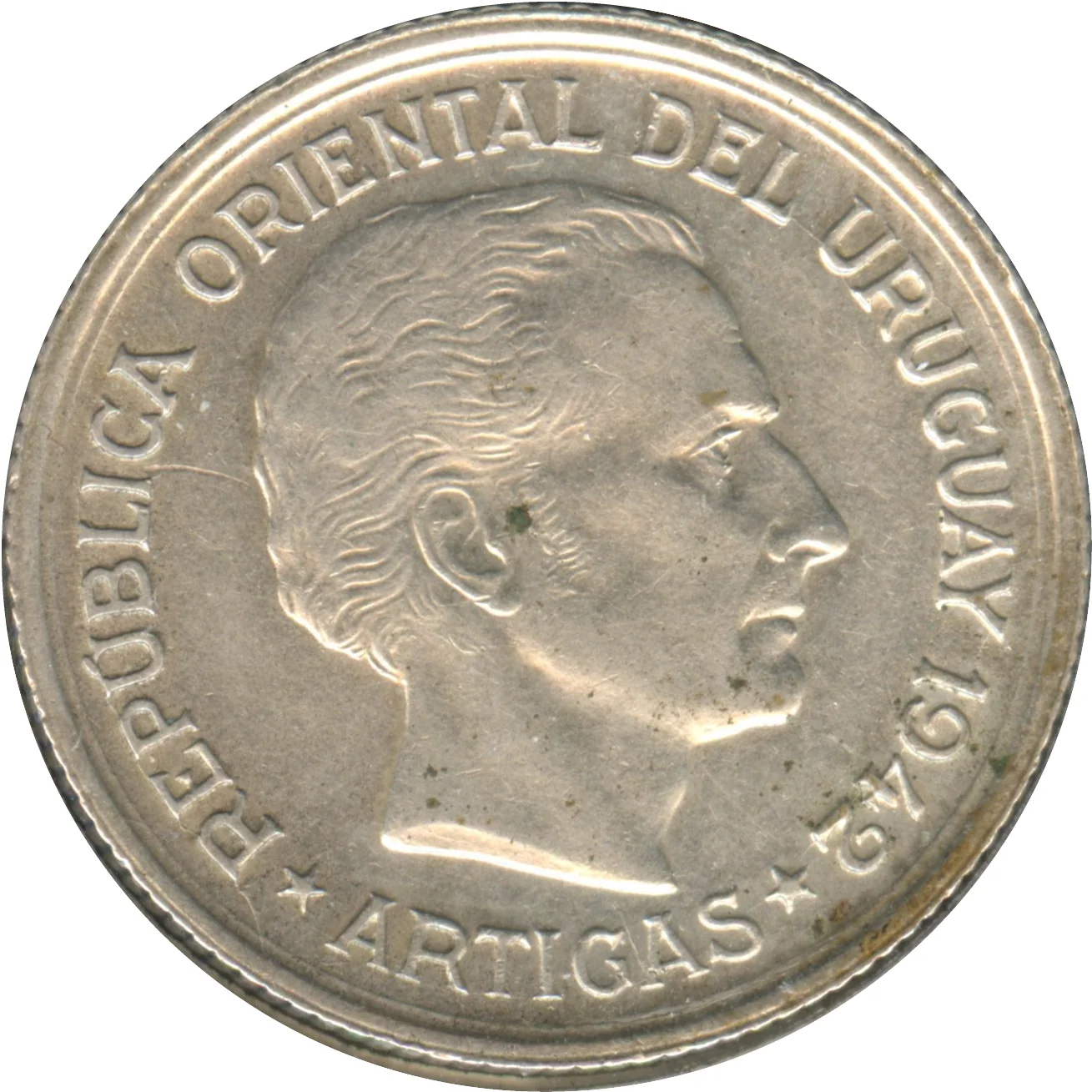
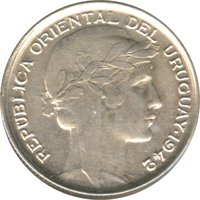
Artigas facing right, country name arched above, geometric rim.
Inscription:
REPUBLICA ORIENTAL DEL URUGUAY 1942
ARTIGAS
ARTIGAS
Translation:
ORIENTAL REPUBLIC OF URUGUAY 1942
ARTIGAS
ARTIGAS
Script: Latin
Language: Spanish
Engraver: Lucien Georges Bazor
Reverse
Description:
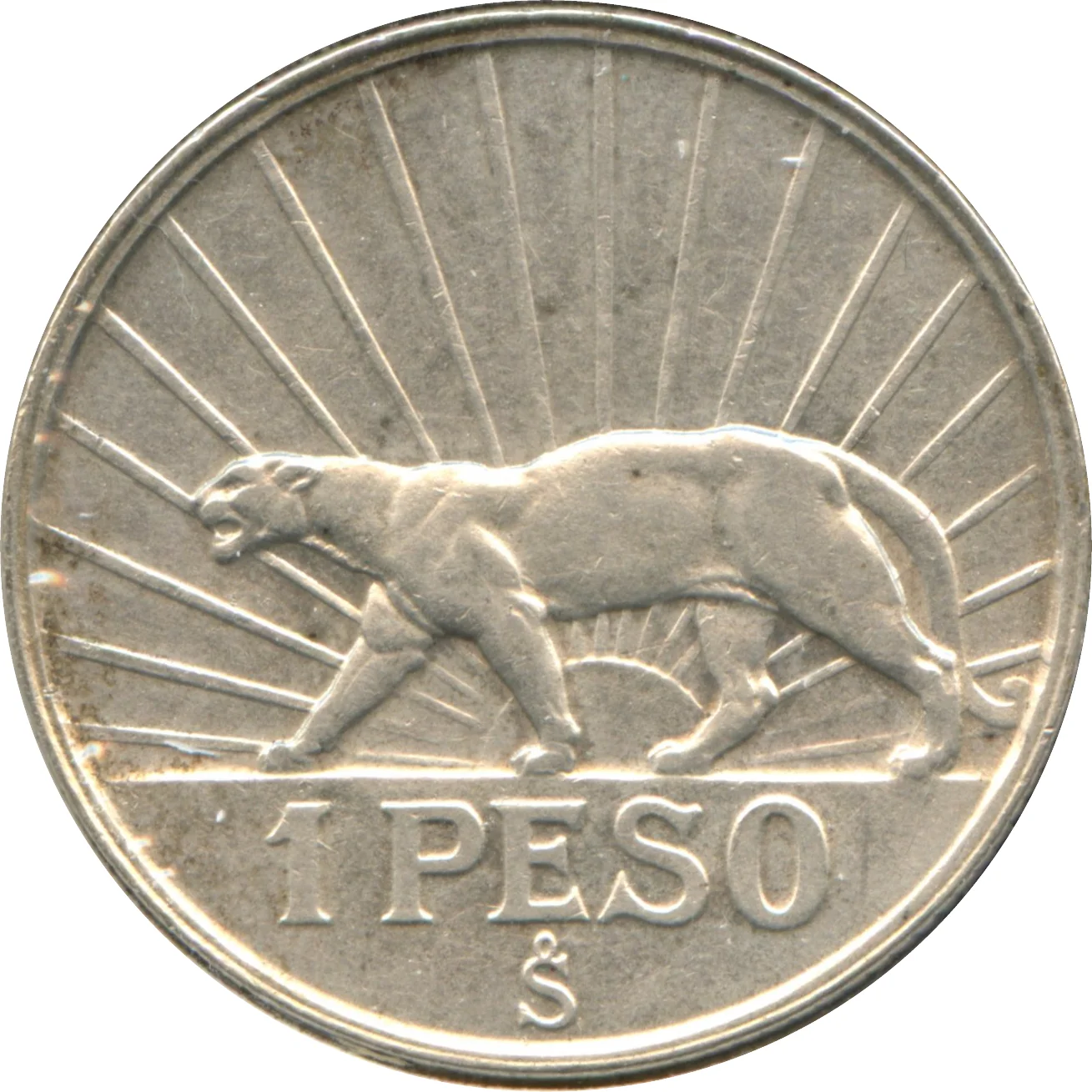
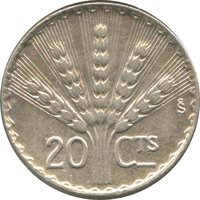
Cougar walking left before a radiant sun, value and mintmark in exergue.
Inscription:
1 PESO
So
So
Translation:
One Peso
Script: Latin
Language: Spanish
Engraver: Pierre-Alexandre Morlon
Edge
Reeded
Categories
| Animal> Feline |
| Person> Military leader |
| Symbol> Sun |
| Person> Politician |
Mints
| Name | Mark |
|---|---|
| Casa de Moneda de Chile | So |
Mintings
| Year | Mint Mark | Mintage | Quality | Collection |
|---|---|---|---|---|
| 1942 | So | 9,000,000 |
Historical background
In 1942, Uruguay's currency situation was characterized by a complex system of exchange controls and multiple exchange rates, a direct consequence of global economic dislocations during World War II. As a major agricultural exporter (particularly of beef, wool, and hides), Uruguay was heavily impacted by the loss of its traditional European markets due to wartime blockades and shipping disruptions. This created a severe shortage of foreign exchange, especially US dollars and British pounds, which were crucial for importing essential manufactured goods, machinery, and fuel that the country did not produce domestically.
To manage this crisis, the government, under President Alfredo Baldomir, maintained and refined a strict exchange control regime initially established in the early 1930s. The Central Bank of Uruguay (BCU) became the sole buyer and seller of foreign currency, allocating it according to government priorities. A key feature was the use of multiple exchange rates: a favorable official rate for essential imports like fuel and medicines, and a less favorable financial rate for other transactions. This system aimed to conserve scarce hard currency, subsidize critical imports, and protect the country's gold and foreign reserve holdings from depletion.
This controlled environment inevitably gave rise to a active black market for dollars, where the exchange rate was significantly higher than the official rates, reflecting the true scarcity and high demand. While the system provided stability and prevented a full-blown financial crisis during the turbulent war years, it also introduced distortions, rent-seeking behaviors, and bureaucratic complexities into the economy. The situation of 1942 thus represents a period of managed financial isolation, where Uruguay's monetary policy was fundamentally geared toward survival and stability amidst unprecedented external shocks, setting a precedent for state intervention in the foreign exchange market that would persist in various forms for decades.
To manage this crisis, the government, under President Alfredo Baldomir, maintained and refined a strict exchange control regime initially established in the early 1930s. The Central Bank of Uruguay (BCU) became the sole buyer and seller of foreign currency, allocating it according to government priorities. A key feature was the use of multiple exchange rates: a favorable official rate for essential imports like fuel and medicines, and a less favorable financial rate for other transactions. This system aimed to conserve scarce hard currency, subsidize critical imports, and protect the country's gold and foreign reserve holdings from depletion.
This controlled environment inevitably gave rise to a active black market for dollars, where the exchange rate was significantly higher than the official rates, reflecting the true scarcity and high demand. While the system provided stability and prevented a full-blown financial crisis during the turbulent war years, it also introduced distortions, rent-seeking behaviors, and bureaucratic complexities into the economy. The situation of 1942 thus represents a period of managed financial isolation, where Uruguay's monetary policy was fundamentally geared toward survival and stability amidst unprecedented external shocks, setting a precedent for state intervention in the foreign exchange market that would persist in various forms for decades.
🌱 Common