

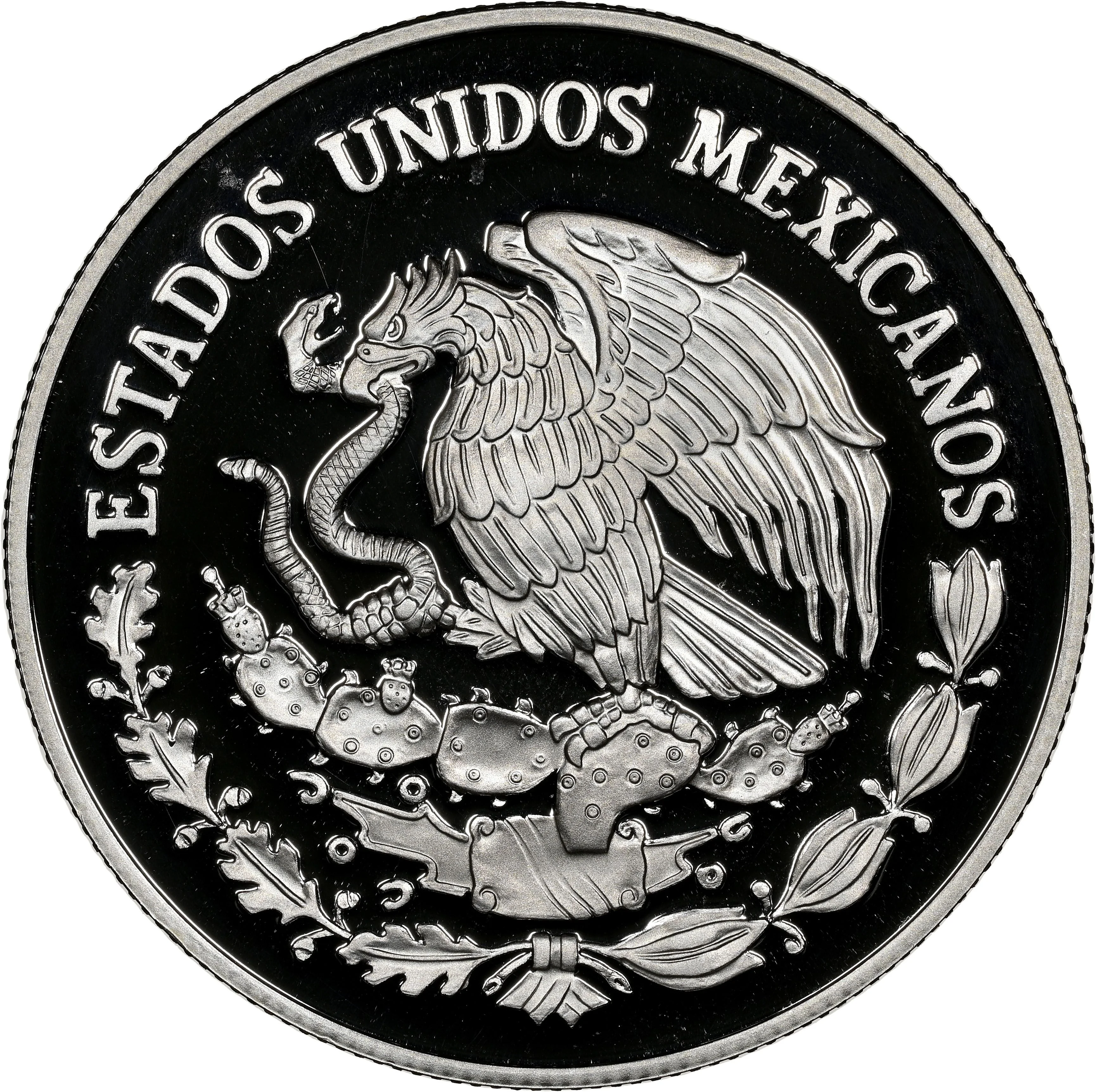
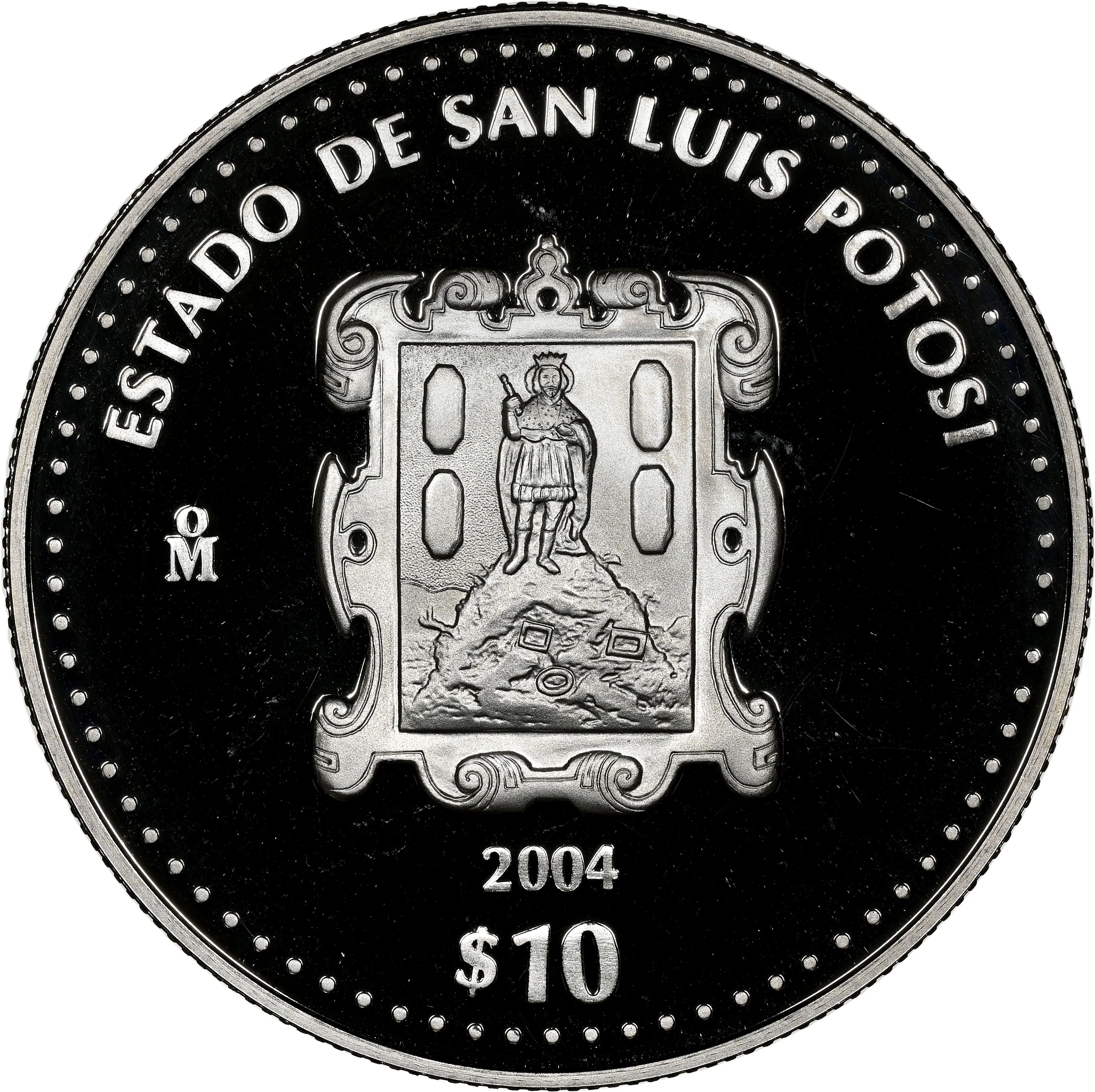
10 Pesos (Federation) – Mexico
Non-circulating coins
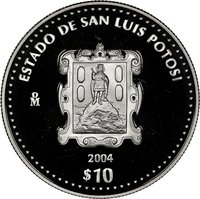
Commemoration: 180th Anniversary of Federation - San Luis Potosí (1st edition)
Mexico
Context
Material
Diameter: 40 mm
Weight: 31.1 g
Silver weight: 31.07 g
Thickness: 3 mm
Shape: Round
Composition: 99.9% Silver
Standard: Silver ounce
Magnetic: No
Technique: Milled
Alignment: Coin alignment
flip
References
KM: #Click to copy to clipboard687
Numista: #56555
Value
Exchange value: 10 MXN = $0.58
Bullion value: $93.64
Inflation-adjusted value: 24.81 MXN
Obverse
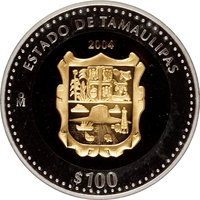
Reverse
Edge
Reeded
Mints
| Name | Mark |
|---|---|
| Mexican Mint | (Mo) |
Mintings
| Year | Mint Mark | Mintage | Quality | Collection |
|---|---|---|---|---|
| 2004 | Mo | 10,000 | Proof |
Historical background
In 2004, Mexico's currency situation was characterized by a period of remarkable stability and strength for the Mexican peso (MXN), a significant turnaround from the volatile "Tequila Crisis" of the mid-1990s. This stability was underpinned by a combination of prudent macroeconomic policies, including an inflation-targeting regime adopted by Banco de México (the central bank) and a flexible exchange rate system that had been in place since 1995. Key factors contributing to confidence included substantial international reserves, responsible fiscal management, and a steady inflow of foreign direct investment and remittances. The peso traded within a relatively narrow band, averaging approximately 11.3 pesos per US dollar for the year, reflecting investor confidence in Mexico's economic fundamentals.
This favorable environment was largely supported by external conditions, particularly the robust economic performance of the United States, Mexico's largest trading partner under NAFTA. Strong US demand for Mexican exports fueled economic growth and provided a steady stream of dollar inflows. Furthermore, high global oil prices benefited Mexico, a major oil exporter, strengthening the country's fiscal position and current account. Banco de México's credibility was also enhanced by its consistent focus on controlling inflation, which had been successfully reduced to single-digit levels, further supporting the peso's value.
However, this stability was not without underlying vulnerabilities and cautious management. Authorities remained vigilant against potential shocks, aware that the economy was still susceptible to shifts in US monetary policy and investor sentiment toward emerging markets. The central bank occasionally intervened in the foreign exchange market to dampen excessive volatility, but largely allowed the market to determine the exchange rate. Overall, 2004 represented a calm interlude for the peso, showcasing the benefits of a decade of institutional and policy reforms, while the economy and currency remained closely tied to the broader North American economic cycle.
This favorable environment was largely supported by external conditions, particularly the robust economic performance of the United States, Mexico's largest trading partner under NAFTA. Strong US demand for Mexican exports fueled economic growth and provided a steady stream of dollar inflows. Furthermore, high global oil prices benefited Mexico, a major oil exporter, strengthening the country's fiscal position and current account. Banco de México's credibility was also enhanced by its consistent focus on controlling inflation, which had been successfully reduced to single-digit levels, further supporting the peso's value.
However, this stability was not without underlying vulnerabilities and cautious management. Authorities remained vigilant against potential shocks, aware that the economy was still susceptible to shifts in US monetary policy and investor sentiment toward emerging markets. The central bank occasionally intervened in the foreign exchange market to dampen excessive volatility, but largely allowed the market to determine the exchange rate. Overall, 2004 represented a calm interlude for the peso, showcasing the benefits of a decade of institutional and policy reforms, while the economy and currency remained closely tied to the broader North American economic cycle.
✨ Legendary