

5 pence – Guernsey
Add to wishlist
Context
Years: 1990–1997
Country: British Crown dependencies
Issuer: Guernsey
Ruler: Elizabeth II
Currency:
(since 1971)
Total mintage: 3,700,700
Material
Diameter: 18 mm
Weight: 3.25 g
Thickness: 1.7 mm
Shape: Round
Composition: Copper-nickel
Technique: Milled
Alignment: Medal alignment
flip
References
KM: #
Numista: #5647
Value
Exchange value: 0.05 GGP
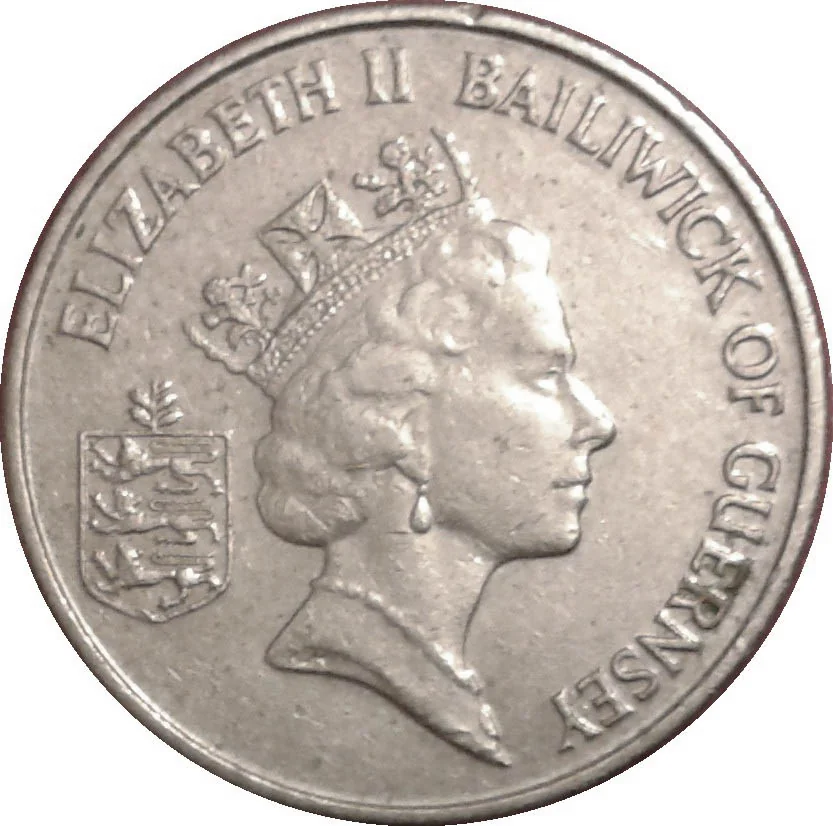
Obverse
Description:
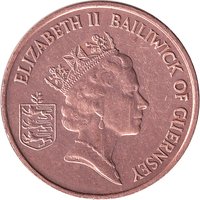
Bust of Queen Elizabeth II, right-facing.
Inscription:
ELIZABETH II BAILIWICK OF GUERNSEY
RDM
RDM
Script: Latin
Engraver: Raphael David Maklouf
Reverse
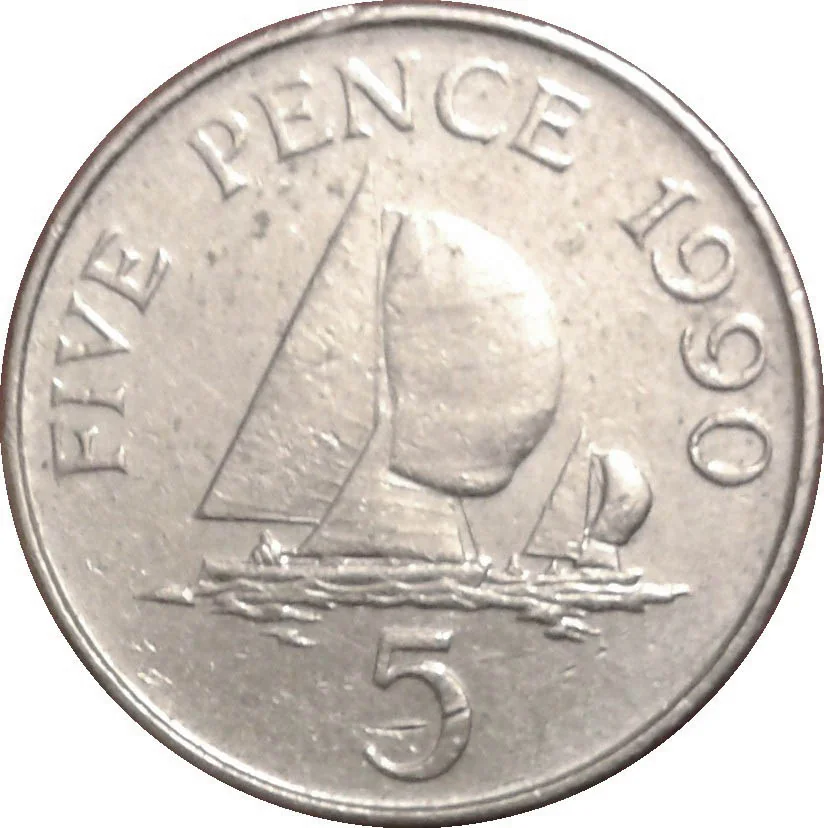
Description:
Two yachts sailing right under spinnaker, with value and date.
Inscription:
FIVE PENCE 1990
5
5
Script: Latin
Engraver: Robert Elderton
Edge
Milled
Categories
| Symbols> Coat of Arms |
| Transportation> Watercraft |
Mints
| Name | Mark |
|---|---|
| Royal Mint | — |
Mintings
| Year | Mint Mark | Mintage | Quality | Collection |
|---|---|---|---|---|
| 1990 | — | 2,400,000 | ||
| 1990 | — | 700 | Proof | |
| 1992 | — | 1,300,000 | ||
| 1992 | — | — | Proof | |
| 1997 | — | — | Proof | |
| 1997 | — | — |
Historical background
In 1990, the currency situation in Guernsey was characterised by a stable and pragmatic dual-currency system, deeply integrated with the United Kingdom. The States of Guernsey issued its own local currency, the Guernsey pound (GGP), which existed in parity with the Pound Sterling (GBP). These notes and coins, featuring distinct local designs, were legal tender only on the island, but Sterling was also universally accepted, creating a seamless monetary environment for residents and businesses.
This system was underpinned by a Currency Fund, established in 1958, which held Sterling reserves to fully back the value of Guernsey pound notes in circulation. This orthodox "currency board" style arrangement ensured absolute confidence in the local currency's peg and facilitated free interchangeability with Sterling. Economically, the island was prospering, with finance, tourism, and light industry driving growth, all smoothly supported by this reliable monetary framework.
The year 1990 fell within a long period of monetary stability for Guernsey, with no significant changes to its currency laws or practices. The system functioned effectively because of the island's close constitutional and economic ties to Britain, avoiding the complexities of a fully independent monetary policy. The primary focus for authorities was maintaining this stability and the one-to-one link with Sterling, which was fundamental to the island's financial sector and overall economic health.
This system was underpinned by a Currency Fund, established in 1958, which held Sterling reserves to fully back the value of Guernsey pound notes in circulation. This orthodox "currency board" style arrangement ensured absolute confidence in the local currency's peg and facilitated free interchangeability with Sterling. Economically, the island was prospering, with finance, tourism, and light industry driving growth, all smoothly supported by this reliable monetary framework.
The year 1990 fell within a long period of monetary stability for Guernsey, with no significant changes to its currency laws or practices. The system functioned effectively because of the island's close constitutional and economic ties to Britain, avoiding the complexities of a fully independent monetary policy. The primary focus for authorities was maintaining this stability and the one-to-one link with Sterling, which was fundamental to the island's financial sector and overall economic health.
🌱 Very Common