

20 centésimos – Uruguay
Add to wishlist
Uruguay
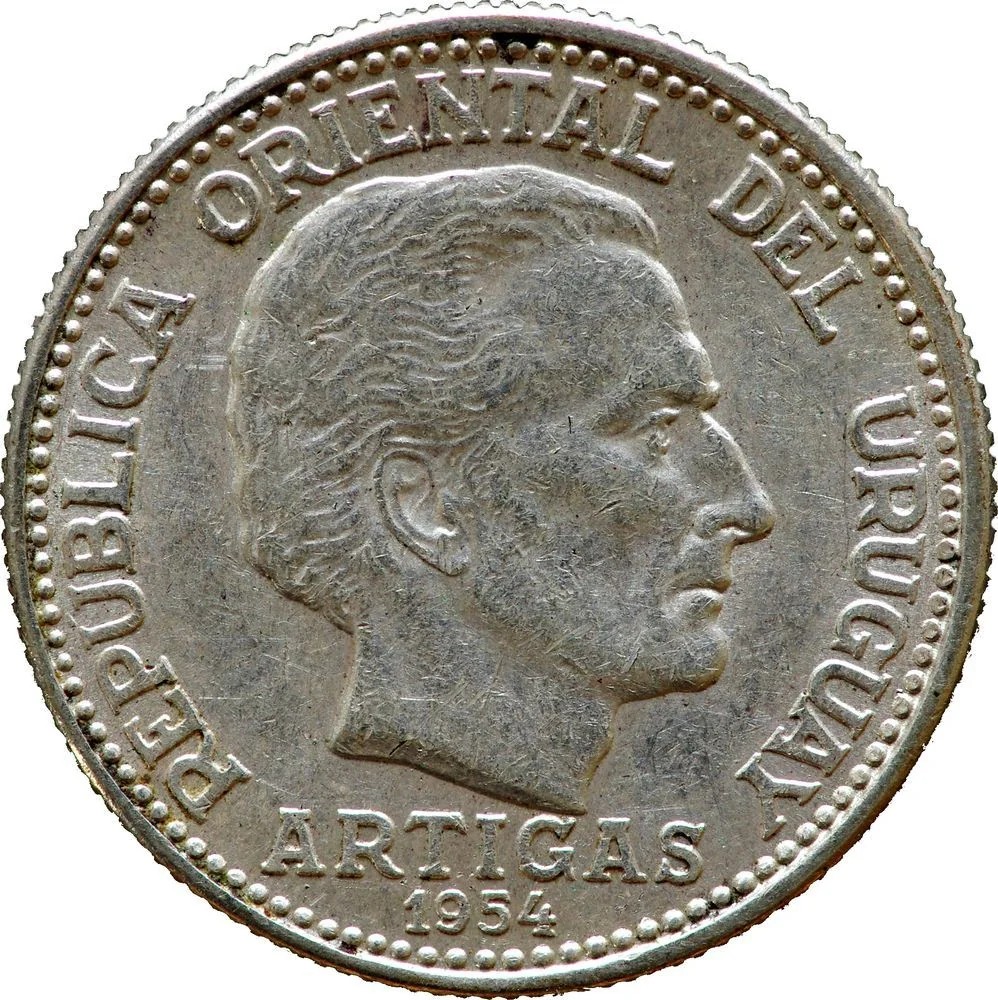
Obverse
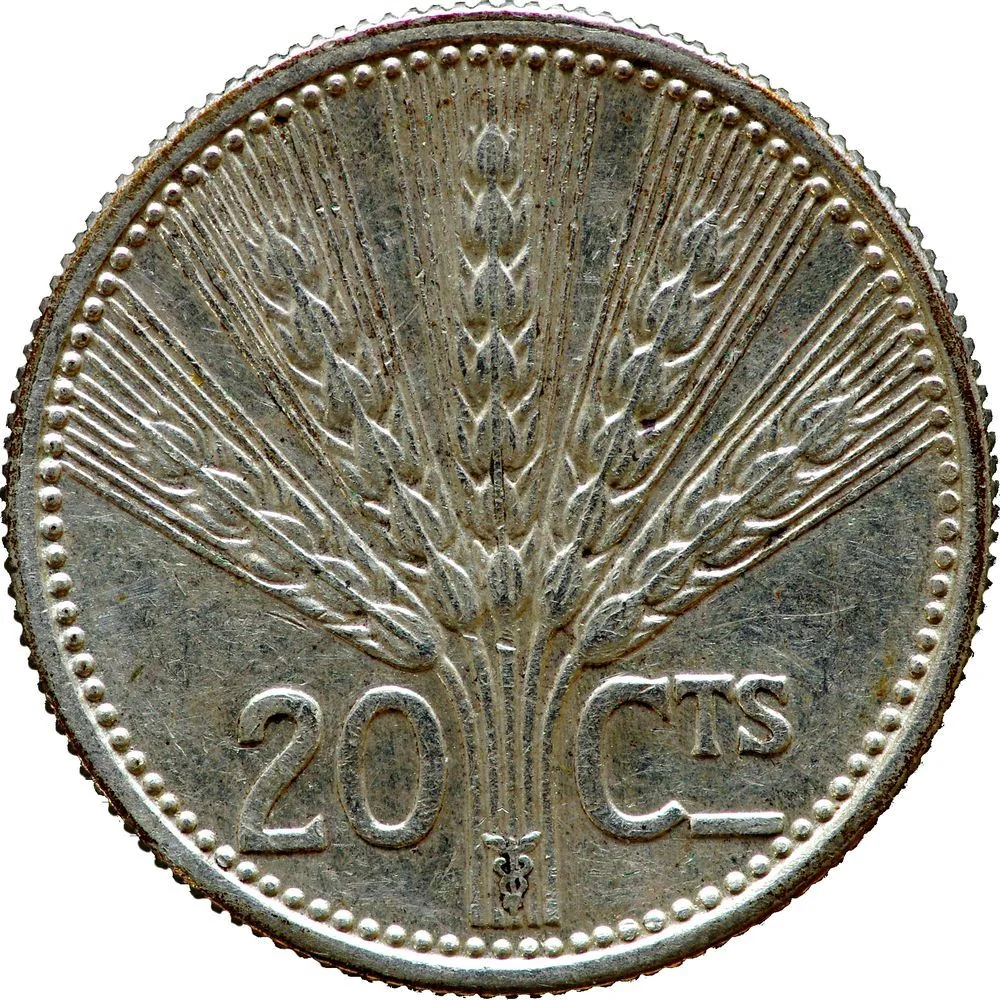
Reverse
Edge
Reeded
Categories
| Person> Military leader |
| Person> Politician |
Mints
| Name | Mark |
|---|---|
| Royal Dutch Mint | — |
Mintings
| Year | Mint Mark | Mintage | Quality | Collection |
|---|---|---|---|---|
| 1954 | — | 10,000,000 |
Historical background
By 1954, Uruguay was grappling with the long-term consequences of its post-war economic model and a significant deterioration in its currency situation. The country's prosperity, historically tied to beef and wool exports, was undermined by falling global commodity prices in the early 1950s. This created a persistent balance of payments deficit, draining the nation's gold and foreign currency reserves. The government's commitment to maintaining a strong peso and a generous welfare state, without corresponding fiscal discipline, led to excessive money printing to cover deficits, fueling inflationary pressures.
The currency instability was institutionalized through a complex system of multiple exchange rates (política de cambios múltiples). The Central Bank set different peso-to-dollar rates for various export sectors, imports, and financial transactions, attempting to manage the balance of payments and subsidize essential goods. However, this system created distortions, encouraged speculation, and fostered a thriving black market for dollars (mercado libre), where the peso traded at a significant discount to the official rates. This gap reflected a lack of confidence in the managed currency and reflected the underlying economic imbalances.
President Andrés Martínez Trueba’s Consejo Nacional de Gobierno (a collective executive) struggled to address these deep-rooted issues. Attempts at stabilization were hesitant and often reversed, as the political cost of austerity was high. Consequently, 1954 saw continued inflation, a overvalued official peso, and shrinking reserves. This precarious currency situation marked a pivotal phase in Uruguay's gradual economic decline, eroding the financial stability of the Batllista welfare state and setting the stage for more severe crises in the decades to follow.
The currency instability was institutionalized through a complex system of multiple exchange rates (política de cambios múltiples). The Central Bank set different peso-to-dollar rates for various export sectors, imports, and financial transactions, attempting to manage the balance of payments and subsidize essential goods. However, this system created distortions, encouraged speculation, and fostered a thriving black market for dollars (mercado libre), where the peso traded at a significant discount to the official rates. This gap reflected a lack of confidence in the managed currency and reflected the underlying economic imbalances.
President Andrés Martínez Trueba’s Consejo Nacional de Gobierno (a collective executive) struggled to address these deep-rooted issues. Attempts at stabilization were hesitant and often reversed, as the political cost of austerity was high. Consequently, 1954 saw continued inflation, a overvalued official peso, and shrinking reserves. This precarious currency situation marked a pivotal phase in Uruguay's gradual economic decline, eroding the financial stability of the Batllista welfare state and setting the stage for more severe crises in the decades to follow.
🌱 Common