

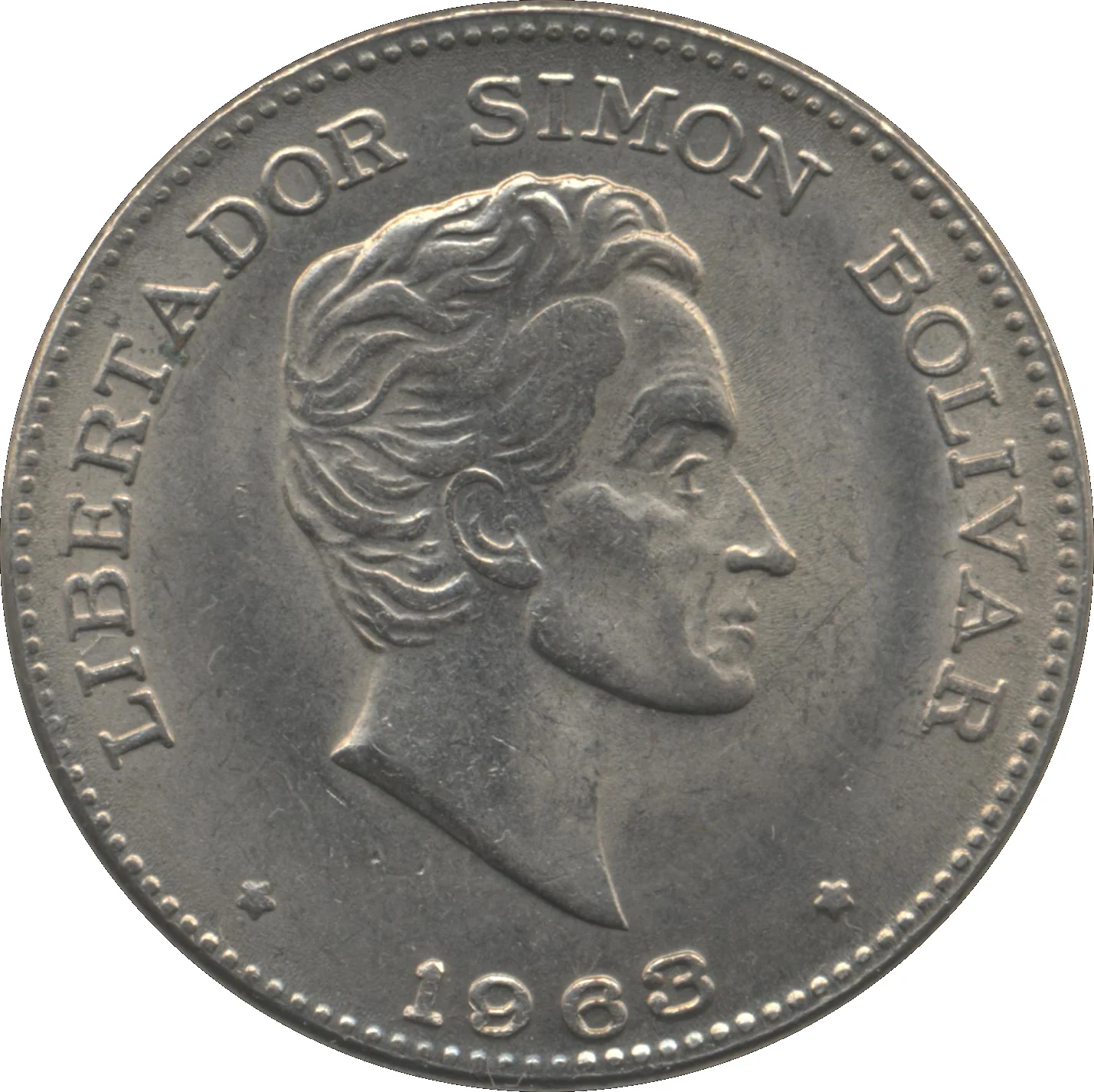
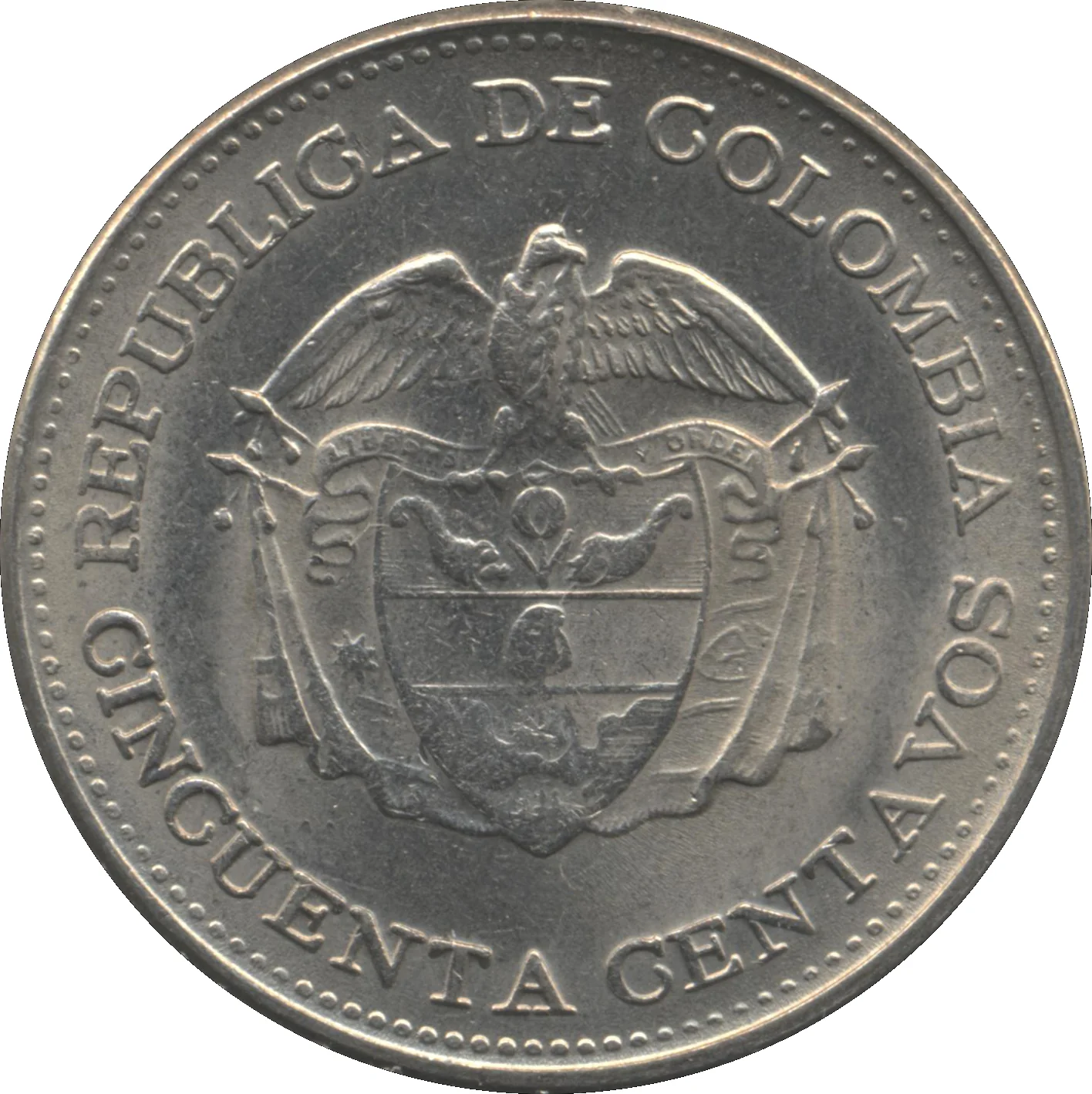
50 Centavos – Colombia
Colombia
Context
Years: 1958–1966
Issuer: Colombia 
Period:
(since 1886)
Currency:
(since 1847)
Total mintage: 49,010,000
Material
References
KM: #Click to copy to clipboard217
Numista: #5594
Value
Exchange value: 0.50 COP
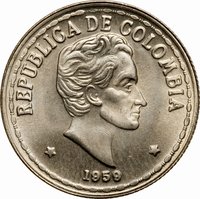
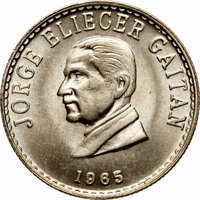
Obverse
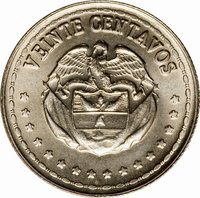
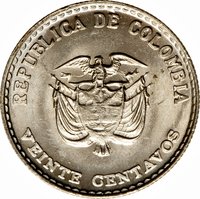
Reverse
Edge
Reeded
Categories
| Person> Military leader |
| Person> Politician |
| Symbols> Coat of Arms |
Mints
| Name | Mark |
|---|---|
| Bogota Mint | — |
Mintings
| Year | Mint Mark | Mintage | Quality | Collection |
|---|---|---|---|---|
| 1958 | — | 3,596,000 | ||
| 1959 | — | 13,466,000 | ||
| 1960 | — | 4,360,000 | ||
| 1961 | — | 3,260,000 | ||
| 1962 | — | 2,336,000 | ||
| 1963 | — | 4,098,000 | ||
| 1964 | — | 9,274,000 | ||
| 1965 | — | 5,800,000 | ||
| 1966 | — | 2,820,000 |
Historical background
In 1958, Colombia's currency situation was characterized by the challenges of the National Front political transition and the lingering effects of the Violencia civil conflict. The country operated under a fixed exchange rate system, with the peso pegged to the U.S. dollar as part of the Bretton Woods international monetary order. However, this official parity masked significant underlying pressures. A decade of internal strife had disrupted agriculture and exports, while inflation, though moderate by later standards, was eroding the peso's real value and leading to frequent balance of payments deficits.
The government maintained strict exchange controls to manage the scarcity of foreign reserves. A complex system of multiple exchange rates was in effect, with different rates applied to various categories of imports and exports. This created a divergence between the official rate and a burgeoning black market, where dollars traded at a significant premium. The primary economic objective was to defend the fixed parity, which required periodic drawing on limited international reserves and restrictive import licensing to curb outflows.
Economically, 1958 was a year of stabilization efforts following a severe recession in 1957. The new National Front government, seeking to restore confidence and attract foreign investment, prioritized monetary discipline. While not in a state of acute crisis, the currency regime was fragile and reliant on controls. This set the stage for the devaluation pressures and economic reforms that would follow in the early 1960s, as the rigid fixed exchange rate ultimately proved unsustainable in the face of persistent inflation and trade imbalances.
The government maintained strict exchange controls to manage the scarcity of foreign reserves. A complex system of multiple exchange rates was in effect, with different rates applied to various categories of imports and exports. This created a divergence between the official rate and a burgeoning black market, where dollars traded at a significant premium. The primary economic objective was to defend the fixed parity, which required periodic drawing on limited international reserves and restrictive import licensing to curb outflows.
Economically, 1958 was a year of stabilization efforts following a severe recession in 1957. The new National Front government, seeking to restore confidence and attract foreign investment, prioritized monetary discipline. While not in a state of acute crisis, the currency regime was fragile and reliant on controls. This set the stage for the devaluation pressures and economic reforms that would follow in the early 1960s, as the rigid fixed exchange rate ultimately proved unsustainable in the face of persistent inflation and trade imbalances.
🌱 Very Common