

1 speciedaler – Norway
Add to wishlist
Norway
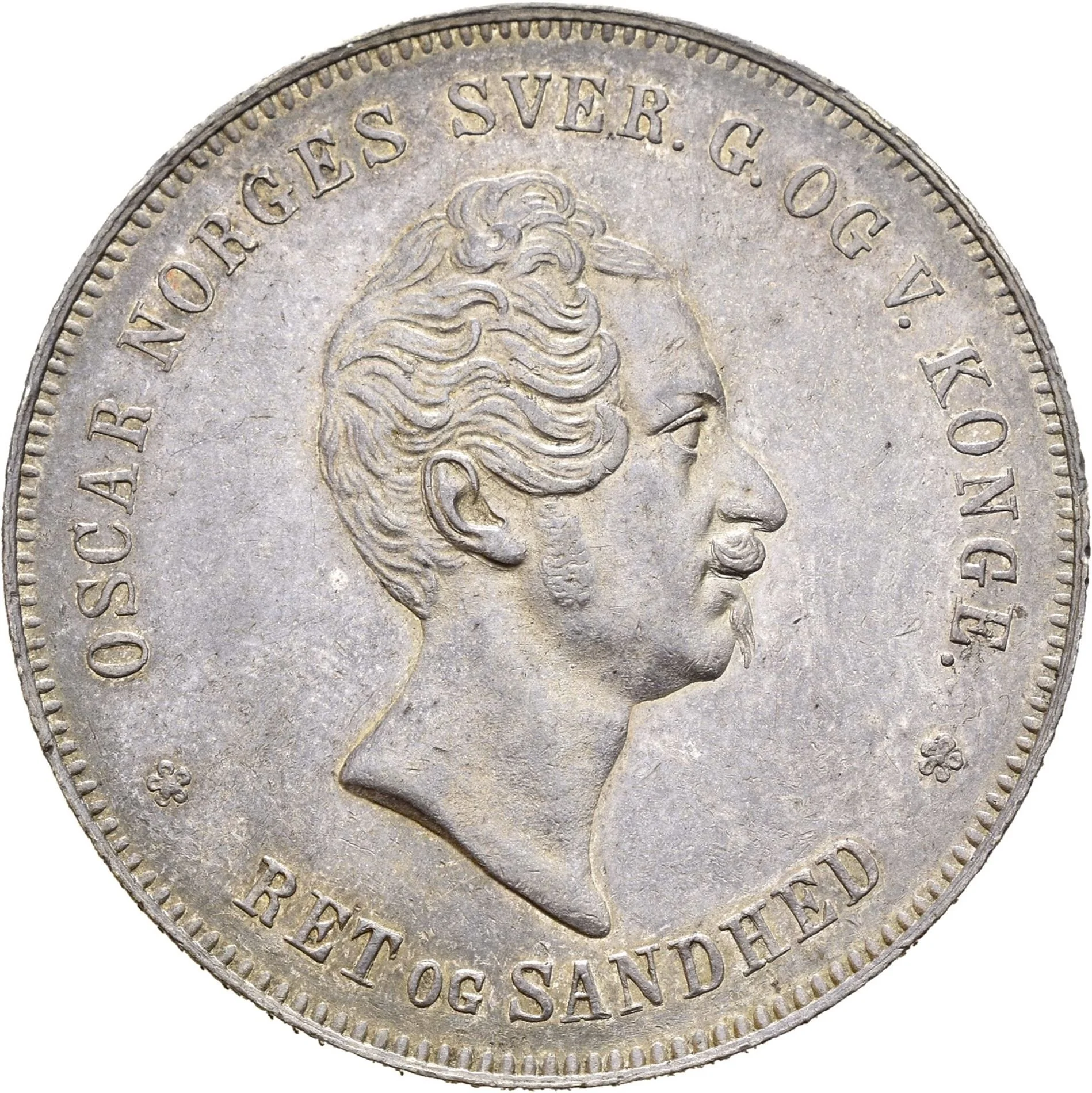
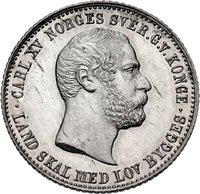
Obverse
Description:
Bust of King Oscar facing right within inscription. Beaded ring on rim.
Inscription:
OSCAR NORGES SVER. G. OG V. KONGE.
❀ RET OG SANDHED ❀
❀ RET OG SANDHED ❀
Translation:
Right and Truth
Script: Latin
Engraver: Ludwig Persson Lundgren
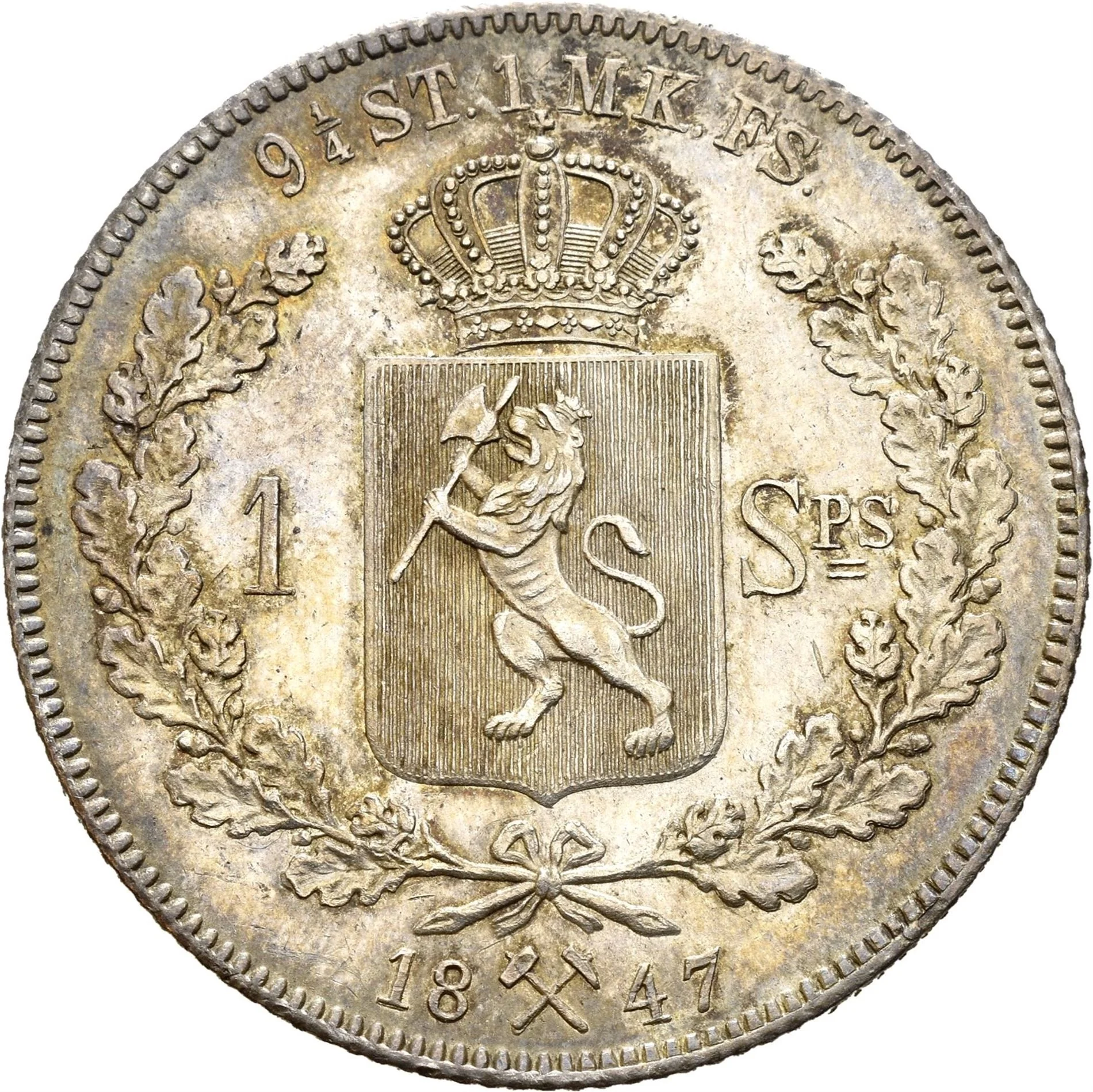
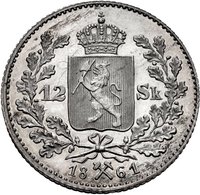
Reverse
Description:
Shield with crowned lion holding a halberd on vertical lines. Value flanking shield, wreath surrounds. Value above crown, date and mintmark below. Beaded rim.
Inscription:
9 ¼ ST. 1 MK. FS.
1 | SPS=
18 ⚒ 47
1 | SPS=
18 ⚒ 47
Script: Latin
Engraver: Ludwig Persson Lundgren
Edge
Mints
| Name | Mark |
|---|---|
| Norwegian Mint | — |
Mintings
| Year | Mint Mark | Mintage | Quality | Collection |
|---|---|---|---|---|
| 1846 | — | 66,500 | ||
| 1847 | — | 140,100 | ||
| 1848 | — | 80,500 | ||
| 1849 | — | 113,700 | ||
| 1850 | — | 123,700 | ||
| 1855 | — | 148,000 | ||
| 1856 | — | 114,200 | ||
| 1857 | — | 160,100 |
Historical background
In 1846, Norway found itself in a complex monetary situation, operating under a dual-currency system that was both cumbersome and a hindrance to commerce. Officially, the country was on a silver standard with the riksdaler spesidaler as its unit, divided into 120 skilling. However, in practice, a parallel paper currency circulated: the riksdaler courant, issued by private banks and the government. This paper money was not freely convertible to silver and traded at a significant and fluctuating discount against the silver spesidaler, creating confusion and exchange risk in everyday transactions.
This instability was a legacy of the Napoleonic Wars and Norway's union with Sweden (established in 1814). The state, burdened by debt, had suspended silver convertibility, leading to the proliferation of paper money. By the 1840s, the system was widely criticized for its inefficiency. Merchants, farmers, and policymakers agreed that the multiplicity of values—where prices, contracts, and accounts could be stated in either currency—stifled economic growth, complicated tax collection, and isolated Norway from the international financial system.
Consequently, 1846 was a year of mounting pressure for decisive reform. The Storting (parliament) was actively debating solutions, with a growing consensus on the necessity of establishing a single, stable currency tied to silver. This agitation set the stage for the pivotal monetary reform that would follow in 1848, when Norway introduced the riksdaler as a unified decimal currency, finally abolishing the skilling and moving toward a modern, standardized monetary system.
This instability was a legacy of the Napoleonic Wars and Norway's union with Sweden (established in 1814). The state, burdened by debt, had suspended silver convertibility, leading to the proliferation of paper money. By the 1840s, the system was widely criticized for its inefficiency. Merchants, farmers, and policymakers agreed that the multiplicity of values—where prices, contracts, and accounts could be stated in either currency—stifled economic growth, complicated tax collection, and isolated Norway from the international financial system.
Consequently, 1846 was a year of mounting pressure for decisive reform. The Storting (parliament) was actively debating solutions, with a growing consensus on the necessity of establishing a single, stable currency tied to silver. This agitation set the stage for the pivotal monetary reform that would follow in 1848, when Norway introduced the riksdaler as a unified decimal currency, finally abolishing the skilling and moving toward a modern, standardized monetary system.
💎 Extremely Rare