

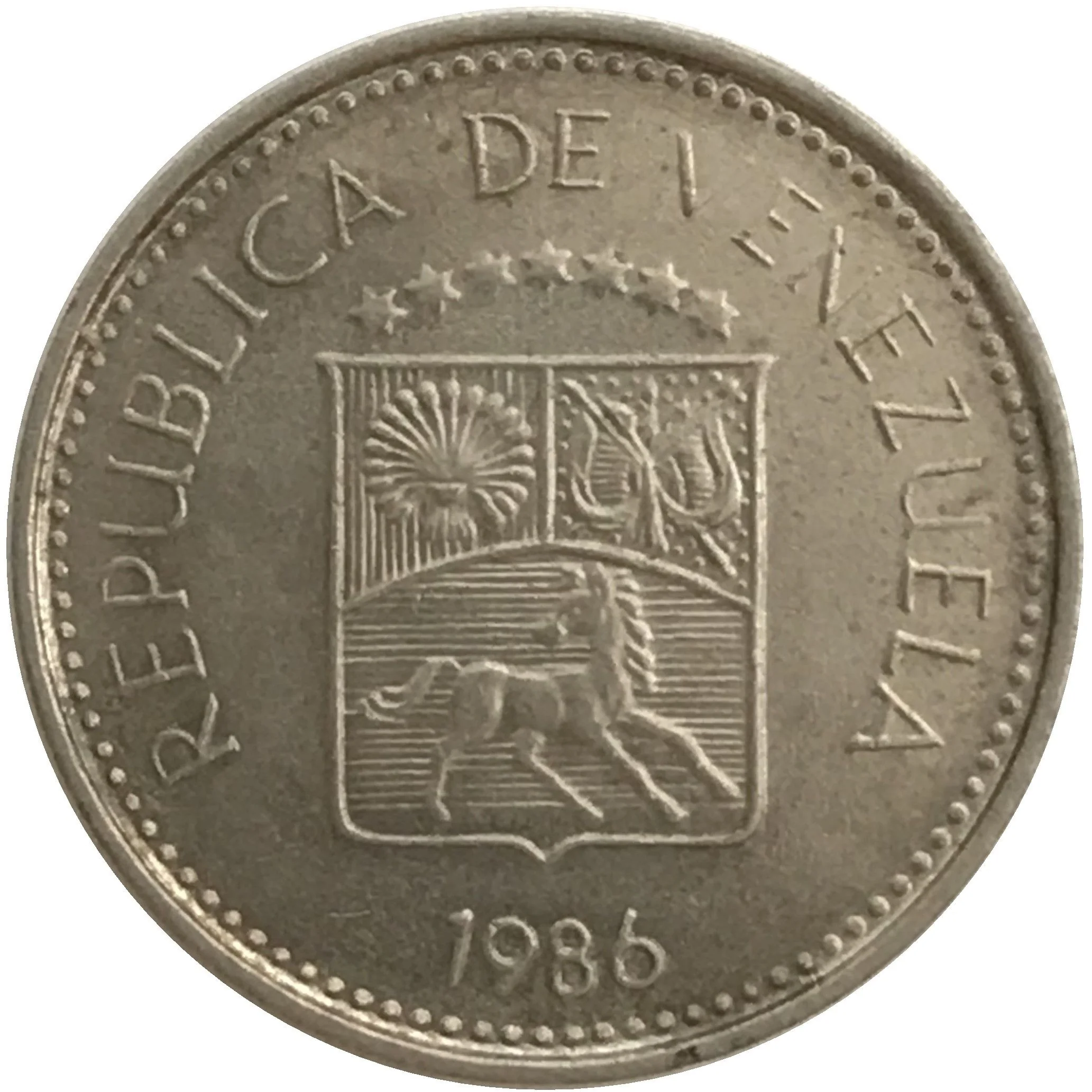
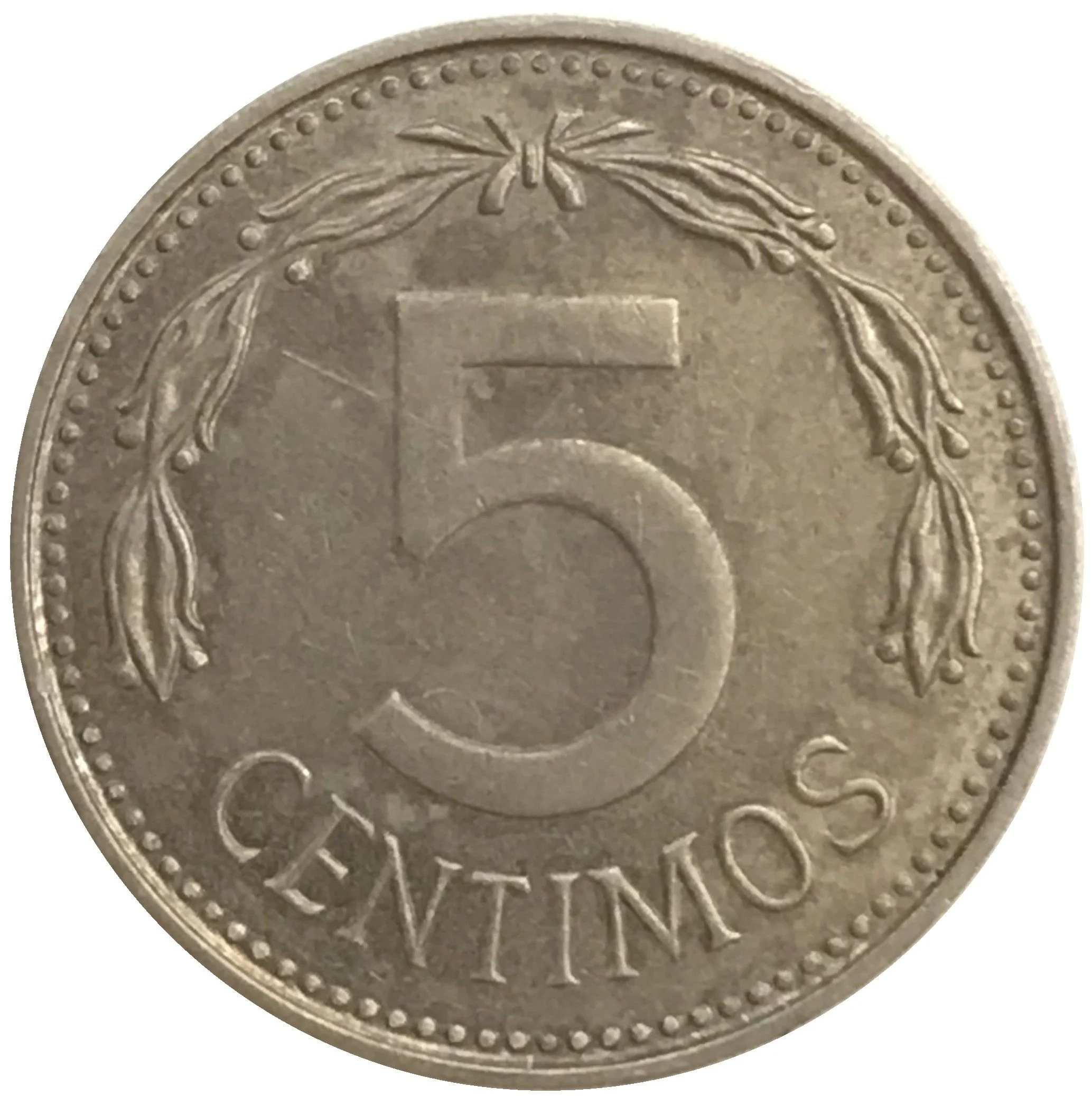
5 centimos – Venezuela
Add to wishlist
Venezuela
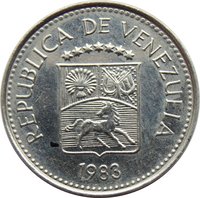
Obverse
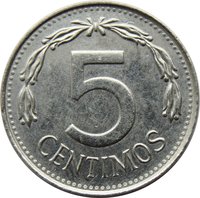
Reverse
Edge
Plain
Mints
| Name | Mark |
|---|---|
| VDM Metals / Vereinigte Deutsche Metallwerke | — |
Mintings
| Year | Mint Mark | Mintage | Quality | Collection |
|---|---|---|---|---|
| 1986 | — | 500,000,000 |
Historical background
In 1986, Venezuela's currency situation was characterized by a managed exchange rate regime under the system of "Recadi" (Régimen de Cambios Diferenciales, or Differential Exchange Rate Regime). Established in 1983 following the devaluation of the bolívar and the abandonment of a fixed rate, Recadi created a multi-tier system with preferential rates for essential imports like food and medicine, and a much less favorable floating rate for non-essential goods and capital flight. This complex system was a direct response to the collapse of oil prices in the early 1980s, which shattered the nation's economic stability after decades of petro-prosperity, triggering a foreign debt crisis and a severe depletion of international reserves.
Economically, the year saw the bolíver under significant pressure, with a widening gap between the official preferential rate (approximately 7.5 bolívares to the US dollar for priority sectors) and the floating "free market" rate, which was nearly double that. This disparity created massive distortions, incentivizing corruption and a booming black market for dollars. While the system aimed to conserve scarce foreign currency and protect the population from the full shock of devaluation, it effectively subsidized certain sectors of the economy at great fiscal cost and fostered widespread rent-seeking and fraudulent import invoicing to obtain cheap dollars.
Thus, 1986 represents a critical juncture in Venezuela's economic history, marking the entrenchment of a corrosive currency control system born from external shock. The Recadi regime, rather than a temporary measure, became a permanent feature that distorted the economy for years. Its legacy was one of institutionalized corruption—the "Recadi scandal" would later erupt as a major political crisis—and it set a precedent for state intervention in the currency market that would define Venezuelan economic policy for decades to come, laying the groundwork for future, even more rigid, exchange controls.
Economically, the year saw the bolíver under significant pressure, with a widening gap between the official preferential rate (approximately 7.5 bolívares to the US dollar for priority sectors) and the floating "free market" rate, which was nearly double that. This disparity created massive distortions, incentivizing corruption and a booming black market for dollars. While the system aimed to conserve scarce foreign currency and protect the population from the full shock of devaluation, it effectively subsidized certain sectors of the economy at great fiscal cost and fostered widespread rent-seeking and fraudulent import invoicing to obtain cheap dollars.
Thus, 1986 represents a critical juncture in Venezuela's economic history, marking the entrenchment of a corrosive currency control system born from external shock. The Recadi regime, rather than a temporary measure, became a permanent feature that distorted the economy for years. Its legacy was one of institutionalized corruption—the "Recadi scandal" would later erupt as a major political crisis—and it set a precedent for state intervention in the currency market that would define Venezuelan economic policy for decades to come, laying the groundwork for future, even more rigid, exchange controls.
🌱 Very Common