

150 dollars (Founding of New Zealand) – New Zealand
Add to wishlist
Non-circulating coins
Commemoration: 150th anniversary of the Founding of New Zealand
New Zealand
Context
Material
References
KM: #
Numista: #55835
Value
Exchange value: 150 NZD
Bullion value: $2387.88
Inflation-adjusted value: 318.61 NZD
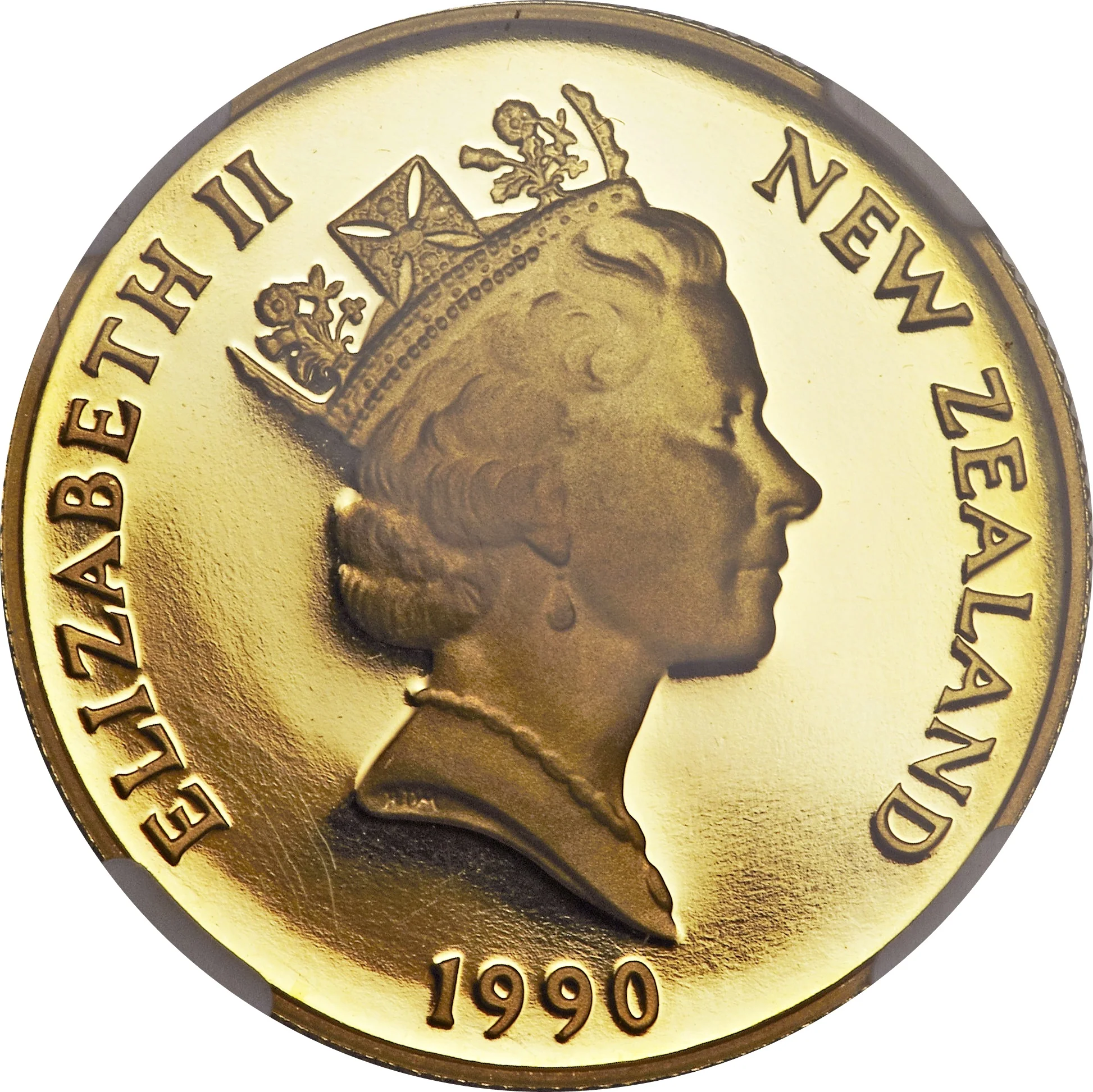
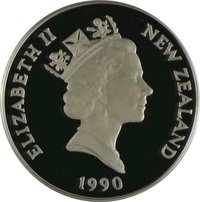
Obverse
Description:
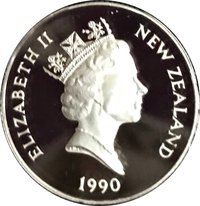
Queen Elizabeth III crowned portrait right, wearing King George IV State Diadem.
Inscription:
ELIZABETH II NEW ZEALAND
RDM
1990
RDM
1990
Script: Latin
Designer: Raphael David Maklouf
Reverse
Description:
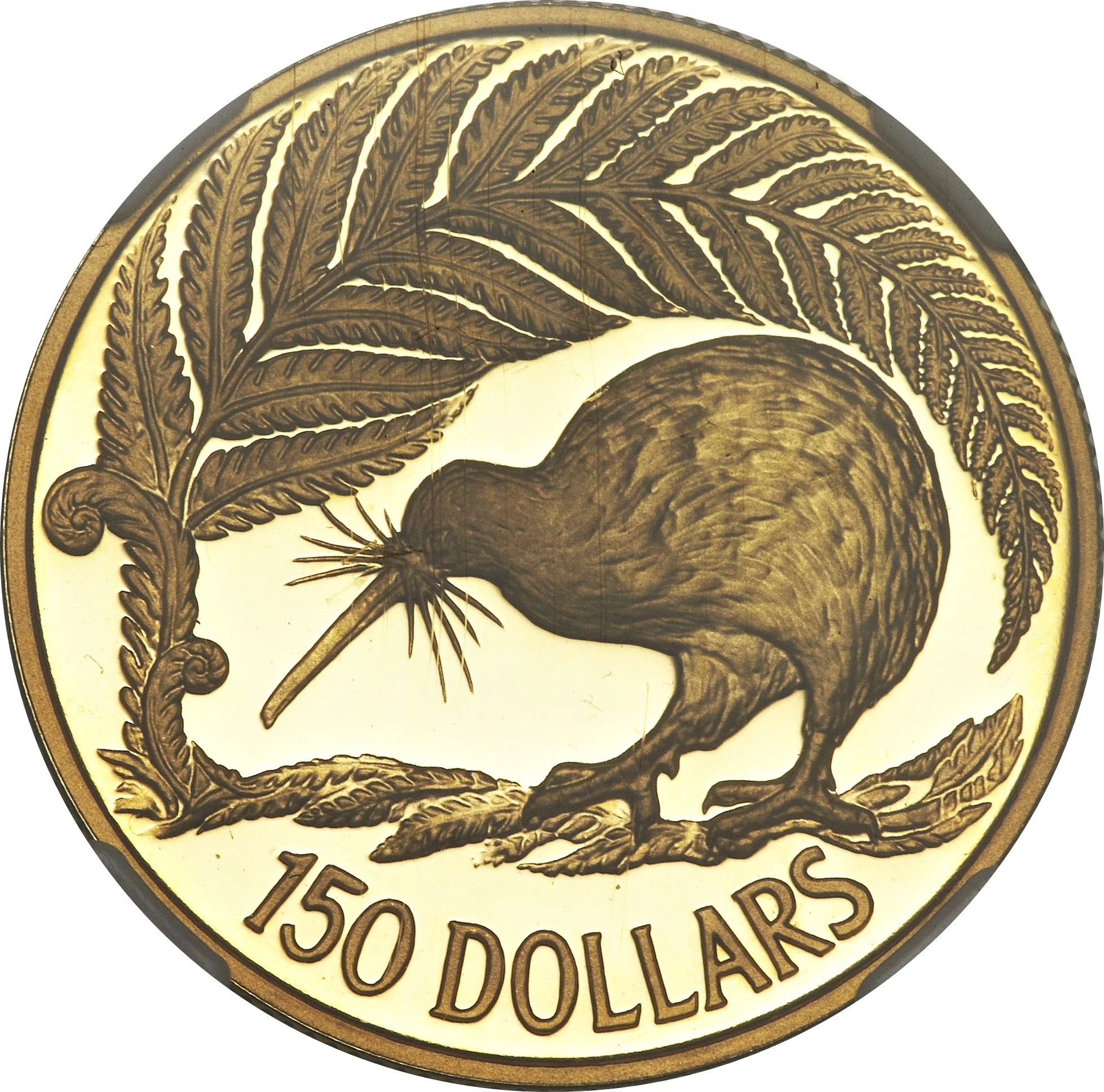
Kiwi under silver fern, above denomination.
Inscription:
150 DOLLARS
Script: Latin
Designers: Wojciech Pietranik, Robert Maurice Conly
Edge
Reeded
Mintings
| Year | Mint Mark | Mintage | Quality | Collection |
|---|---|---|---|---|
| 1990 | — | 3,200 | Proof |
Historical background
In 1990, New Zealand's currency situation was defined by the final stages of a radical and controversial economic transformation. The New Zealand dollar (NZD), which had been floated and allowed to find its market value in 1985, was operating in a largely deregulated financial environment. This shift, part of the broader "Rogernomics" reforms, removed exchange controls and moved away from a fixed, centrally-managed rate. Consequently, the currency's value was primarily determined by market forces, capital flows, and terms of trade, rather than government directive.
The period was marked by significant volatility and a sustained period of high interest rates. The Reserve Bank of New Zealand, operating under the groundbreaking Reserve Bank Act 1989, had a singular mandate to achieve and maintain price stability. To combat persistent inflation, the Bank maintained a tight monetary policy, with the Official Cash Rate (OCR) – introduced later in 1999 – conceptually foreshadowed by very high interest rates. This made the NZD attractive to foreign investors seeking yield, but also placed considerable pressure on exporters and contributed to a severe recession in the early 1990s.
Overall, the currency in 1990 was a symbol of New Zealand's painful transition from a protected, regulated economy to an open, market-led one. The high-value, volatile NZD reflected the success in curbing inflation and integrating with global capital markets, but also highlighted the acute social and economic costs of the adjustment, including high unemployment and business failures. The framework established in this era, however, laid the foundation for the inflation-targeting regime and flexible exchange rate that characterize New Zealand's monetary policy to this day.
The period was marked by significant volatility and a sustained period of high interest rates. The Reserve Bank of New Zealand, operating under the groundbreaking Reserve Bank Act 1989, had a singular mandate to achieve and maintain price stability. To combat persistent inflation, the Bank maintained a tight monetary policy, with the Official Cash Rate (OCR) – introduced later in 1999 – conceptually foreshadowed by very high interest rates. This made the NZD attractive to foreign investors seeking yield, but also placed considerable pressure on exporters and contributed to a severe recession in the early 1990s.
Overall, the currency in 1990 was a symbol of New Zealand's painful transition from a protected, regulated economy to an open, market-led one. The high-value, volatile NZD reflected the success in curbing inflation and integrating with global capital markets, but also highlighted the acute social and economic costs of the adjustment, including high unemployment and business failures. The framework established in this era, however, laid the foundation for the inflation-targeting regime and flexible exchange rate that characterize New Zealand's monetary policy to this day.


✨ Legendary