

200 kronor (Swedish Coin) – Sweden
Add to wishlist
Non-circulating coins
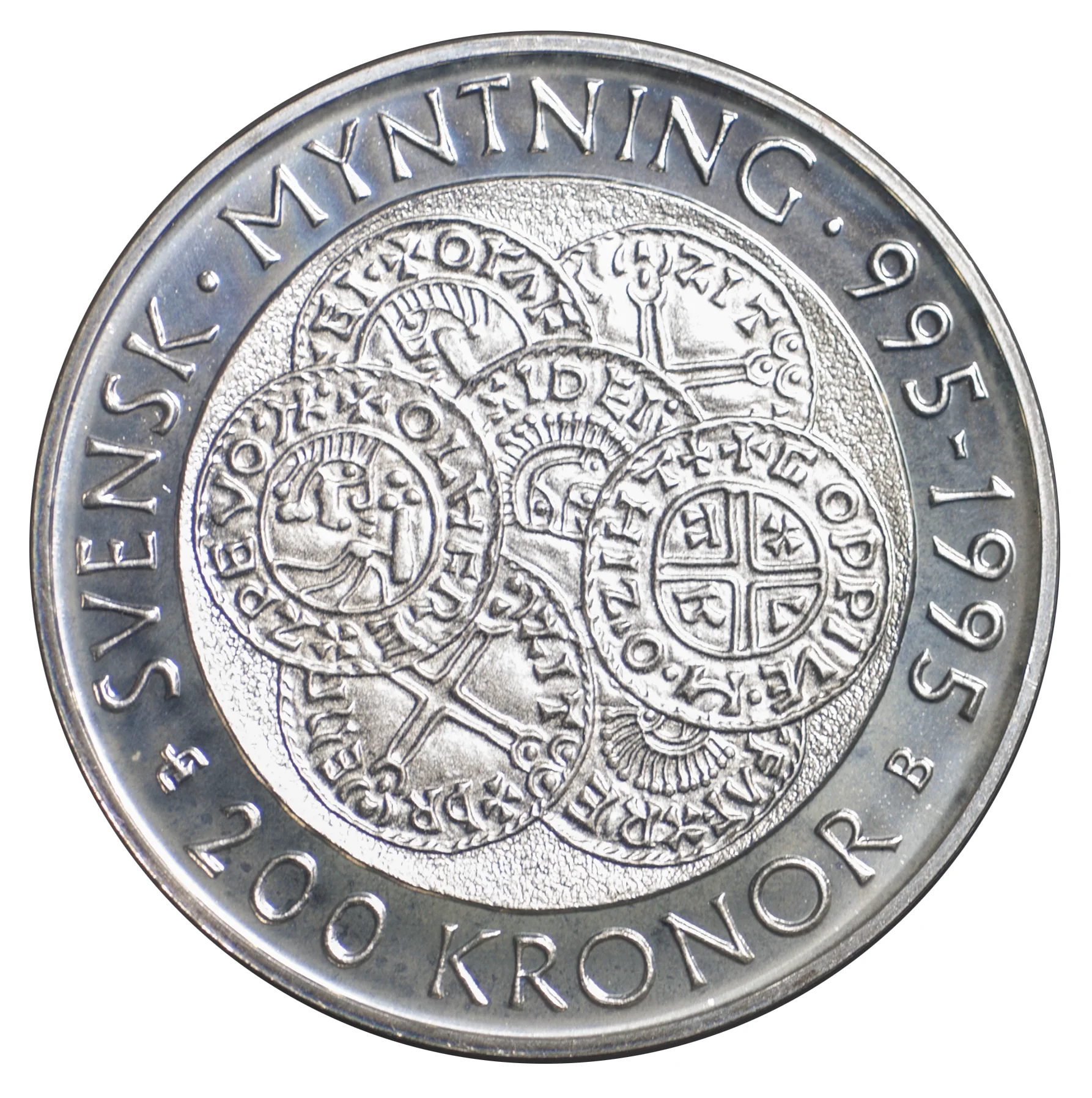
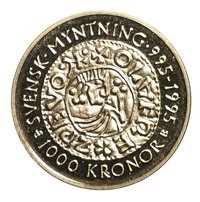
Commemoration: 1000th Anniversary of the first Swedish Coin
Sweden
Context
Material
References
KM: #
Numista: #55757
Value
Exchange value: 200 SEK
Bullion value: $60.61
Inflation-adjusted value: 338.14 SEK
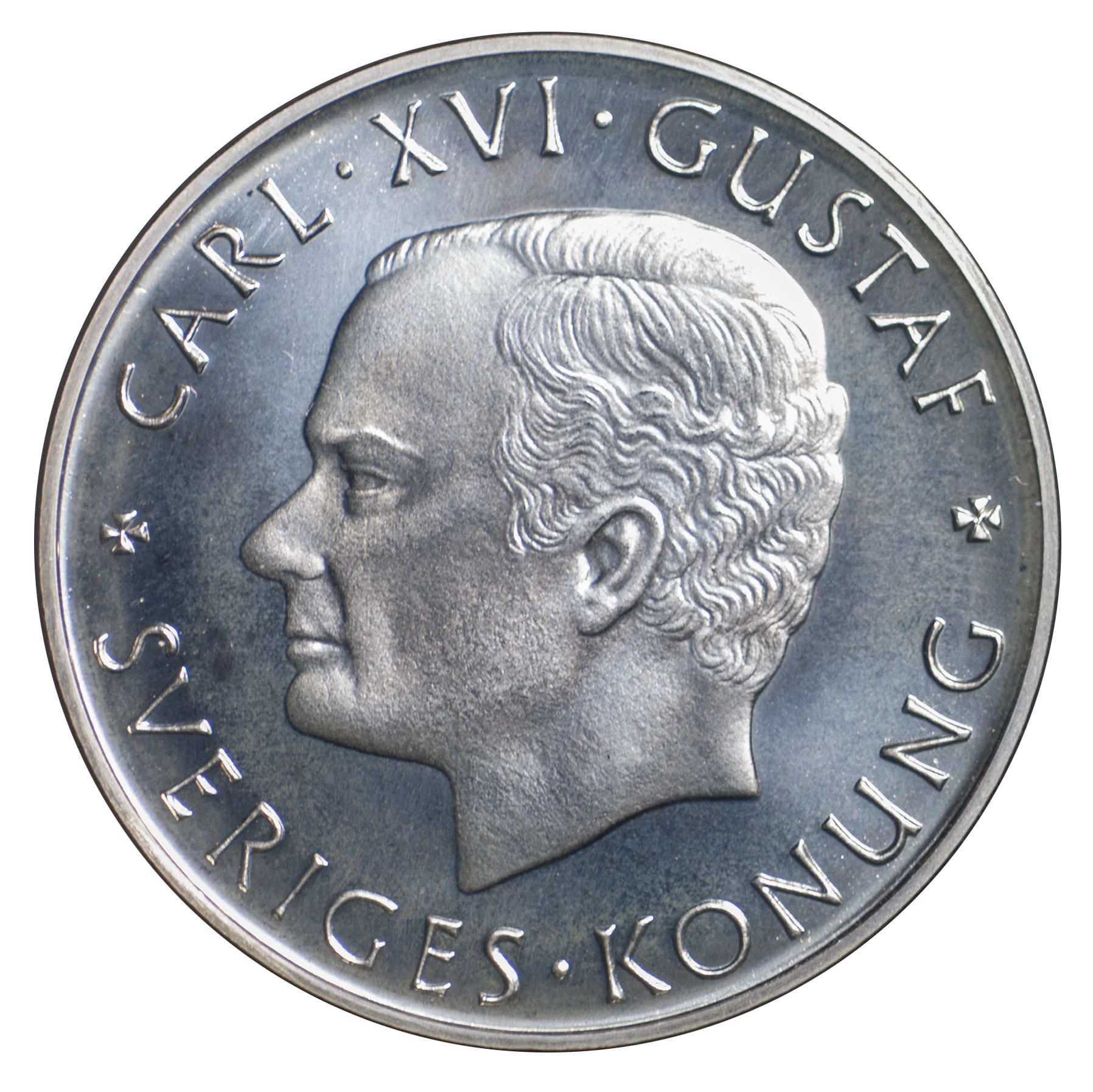
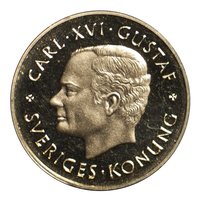
Obverse
Description:
King's head, left-facing
Inscription:
CARL*XVI*GUSTAF
SVERIGES*KONUNG
SVERIGES*KONUNG
Translation:
CARL XVI GUSTAF
KING OF SWEDEN
KING OF SWEDEN
Language: Swedish
Engraver: Anni Sundin
Reverse
Edge
Plain
Categories
| Currency> Coin depiction |
Mints
| Name | Mark |
|---|---|
| Myntverket | — |
Mintings
| Year | Mint Mark | Mintage | Quality | Collection |
|---|---|---|---|---|
| 1995 | — | 49,000 | ||
| 1995 | — | 1,000 | Prooflike |
Historical background
In 1995, Sweden's currency situation was defined by the aftermath of a profound crisis and a pivotal policy shift. Just two years prior, in 1992, the Swedish krona had been the epicenter of a severe financial crisis, forcing the Riksbank to briefly raise its key interest rate to 500% in a failed defense of its fixed exchange rate. This event led to the abandonment of the krona's peg to the European Currency Unit (ECU) in November 1992, allowing the currency to float freely. By 1995, the economy was in a period of robust recovery from this crisis, with exports booming thanks to a significantly more competitive krona.
The dominant monetary policy framework in 1995 was inflation targeting, which had been formally adopted in January 1993. The Riksbank was tasked with maintaining price stability, defined as keeping annual CPI inflation at 2% with a tolerance band of ±1 percentage point. This regime represented a clear break from the previous focus on exchange rate stability and was credited with restoring credibility and lowering inflation expectations. However, the year was not without challenges, as the krona experienced notable volatility, influenced by domestic fiscal concerns and international currency turbulence.
Furthermore, 1995 was a key year in the context of European integration, as Sweden had joined the European Union on January 1st. This immediately reignited the domestic debate about eventually adopting the euro and joining the European Economic and Monetary Union (EMU). While the krona operated independently under its inflation-targeting regime, Sweden's EU membership created a long-term strategic question about the currency's future, setting the stage for the national referendum on the euro that would follow in 2003.
The dominant monetary policy framework in 1995 was inflation targeting, which had been formally adopted in January 1993. The Riksbank was tasked with maintaining price stability, defined as keeping annual CPI inflation at 2% with a tolerance band of ±1 percentage point. This regime represented a clear break from the previous focus on exchange rate stability and was credited with restoring credibility and lowering inflation expectations. However, the year was not without challenges, as the krona experienced notable volatility, influenced by domestic fiscal concerns and international currency turbulence.
Furthermore, 1995 was a key year in the context of European integration, as Sweden had joined the European Union on January 1st. This immediately reignited the domestic debate about eventually adopting the euro and joining the European Economic and Monetary Union (EMU). While the krona operated independently under its inflation-targeting regime, Sweden's EU membership created a long-term strategic question about the currency's future, setting the stage for the national referendum on the euro that would follow in 2003.
⭐ Rare