

500 rials – Yemen
Add to wishlist
Non-circulating coins
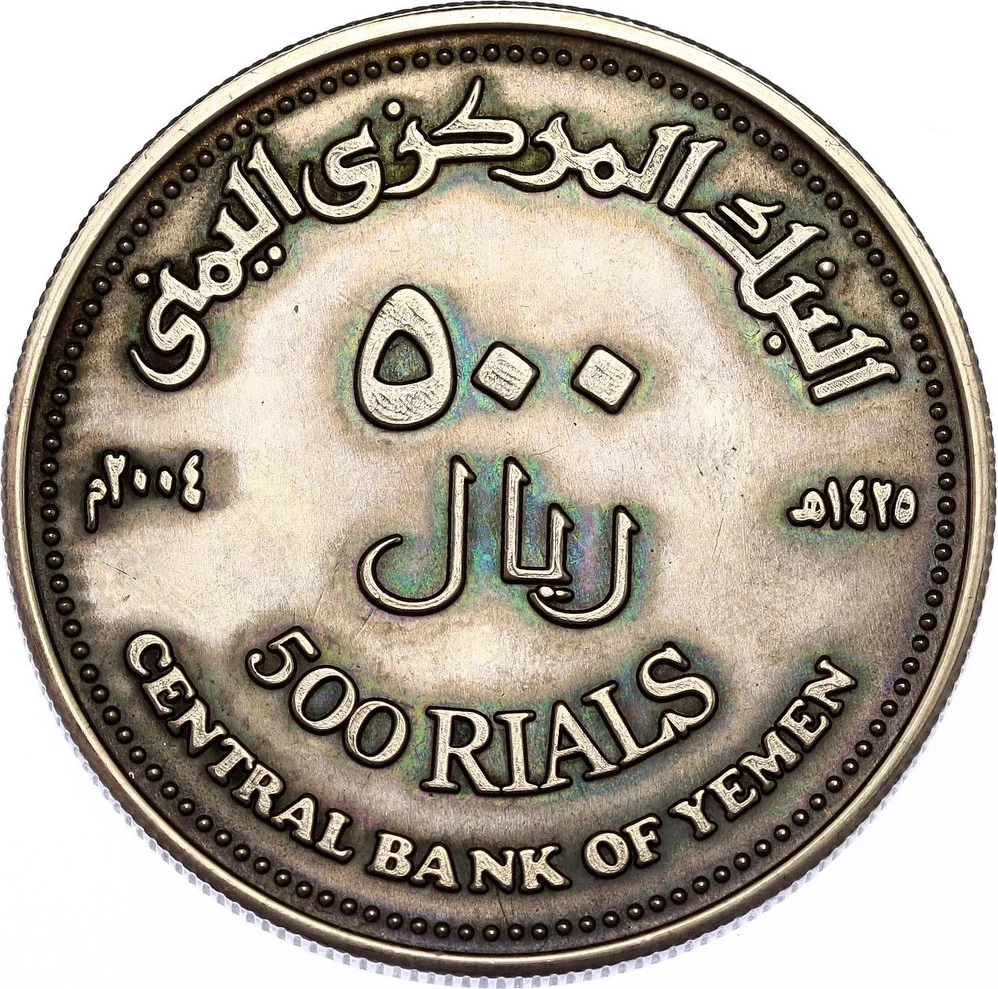
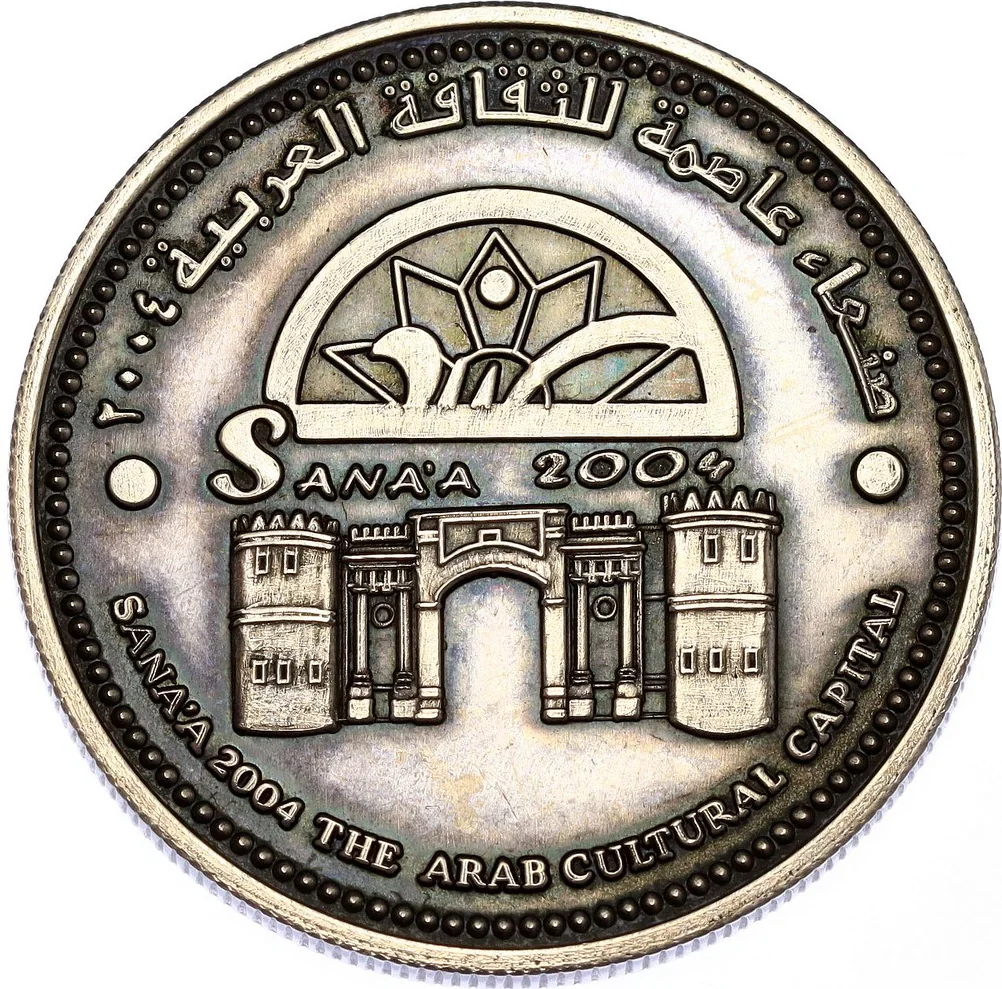
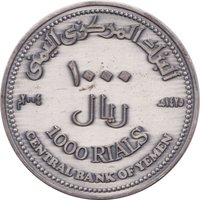
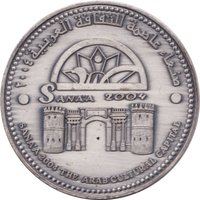
Commemoration: Sana'a 2004 the Arab Cultural Capital
Yemen
Context
Year: 2004
Islamic (Hijri) Year:: 1425
Issuer: Yemen
Issuing organization: Central Bank of Yemen
Period:
(since 1990)
Currency:
(since 1990)
Material
Diameter: 35.2 mm
Weight: 21.25 g
Shape: Round
Composition: Nickel brass
Magnetic: No
Technique: Milled
Alignment: Medal alignment
flip
References
KM: #
Numista: #55561
Value
Exchange value: 500 YER
Obverse
Reverse
Edge
Reeded
Mintings
| Year | Mint Mark | Mintage | Quality | Collection |
|---|---|---|---|---|
| 2004 | — | — |
Historical background
In 2004, Yemen's currency, the Yemeni rial (YER), operated within a fragile economic and political context that foreshadowed the severe crises to come. The country was grappling with long-standing structural issues: declining oil production, which accounted for the majority of government revenue and exports, a rapidly growing population, widespread poverty, and significant corruption. While not yet in freefall, the rial faced persistent pressure, and the Central Bank of Yemen struggled to maintain stability through managed depreciation and limited foreign exchange reserves. The economic environment was one of underlying vulnerability, heavily dependent on a finite resource and with limited diversification.
Politically, the year was marked by rising internal tensions that would later have direct monetary consequences. The government of President Ali Abdullah Saleh was engaged in an escalating conflict with Houthi rebels in the northern Saada Governorate, a confrontation that began in 2004 and is known as the Sa'dah War. This conflict began to divert substantial public funds away from development and into military expenditures, increasing fiscal strain. Furthermore, the implementation of economic reforms mandated by international donors, including subsidy reductions and efforts to curb money laundering, often proceeded unevenly and faced public resistance, creating an uncertain policy environment.
Overall, the currency situation in 2004 can be characterized as one of managed stability masking profound fragility. The rial's value was officially maintained, but the foundations of the economy were eroding. The twin pressures of dwindling oil income and the nascent, costly conflict in the north set the stage for future instability, long before the profound shocks of the 2011 uprising and the subsequent civil war would fracture the country's financial institutions and lead to the emergence of competing central banks and multiple exchange rates in the following decade.
Politically, the year was marked by rising internal tensions that would later have direct monetary consequences. The government of President Ali Abdullah Saleh was engaged in an escalating conflict with Houthi rebels in the northern Saada Governorate, a confrontation that began in 2004 and is known as the Sa'dah War. This conflict began to divert substantial public funds away from development and into military expenditures, increasing fiscal strain. Furthermore, the implementation of economic reforms mandated by international donors, including subsidy reductions and efforts to curb money laundering, often proceeded unevenly and faced public resistance, creating an uncertain policy environment.
Overall, the currency situation in 2004 can be characterized as one of managed stability masking profound fragility. The rial's value was officially maintained, but the foundations of the economy were eroding. The twin pressures of dwindling oil income and the nascent, costly conflict in the north set the stage for future instability, long before the profound shocks of the 2011 uprising and the subsequent civil war would fracture the country's financial institutions and lead to the emergence of competing central banks and multiple exchange rates in the following decade.

💎 Extremely Rare