

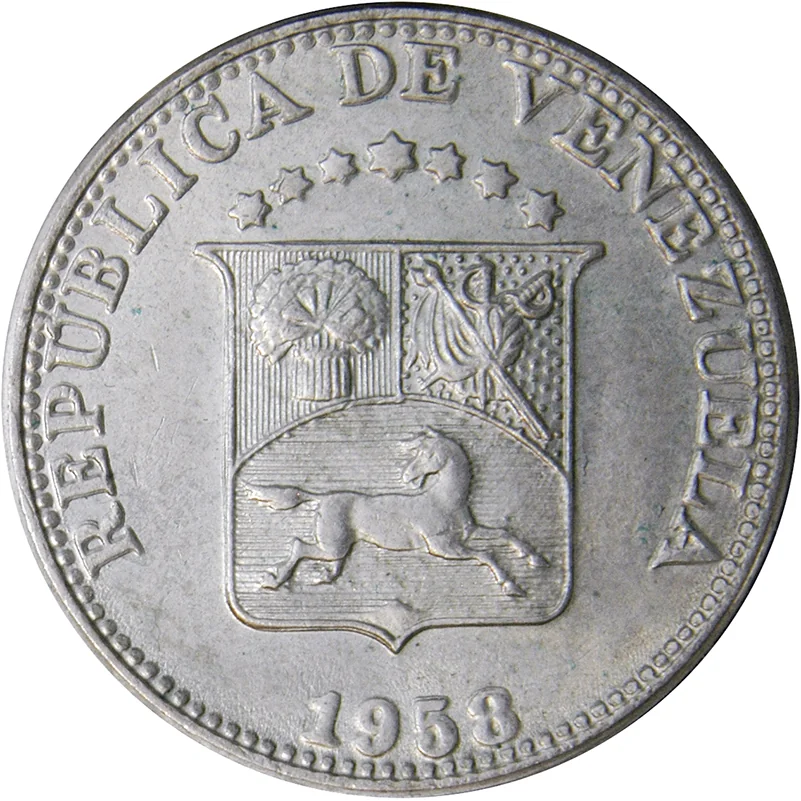
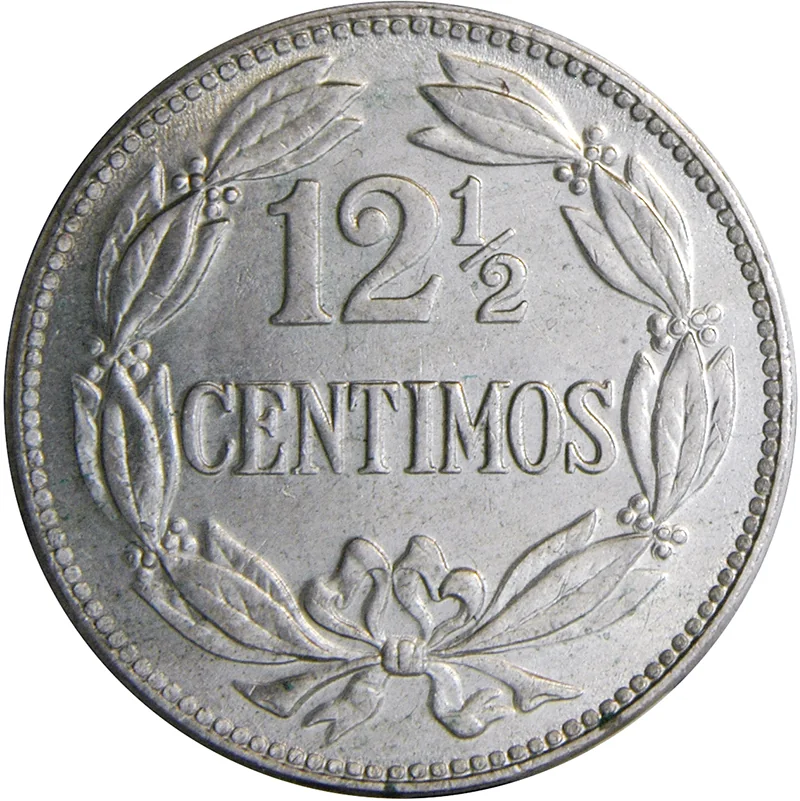
12½ Centimos – Venezuela
Venezuela
Context
Year: 1958
Issuer: Venezuela 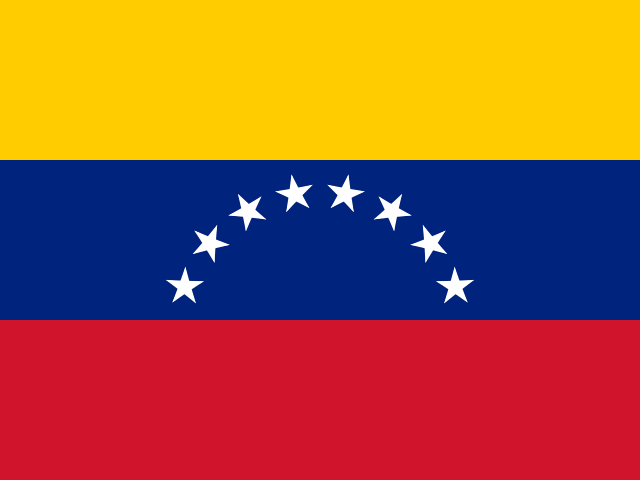
Period:
(1953—1999)
Currency:
(1879—2007)
Demonetization: 31 December 2011
Total mintage: 10,000,000
Material
References
Y: #Click to copy to clipboard39
Numista: #5481
Value
Exchange value: 0.125 VEB
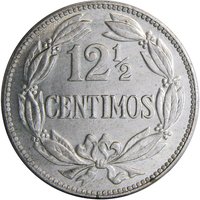
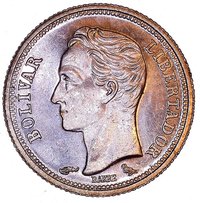
Obverse
Reverse
Edge
Plain
Mints
| Name | Mark |
|---|---|
| United States Mint of Philadelphia | — |
Mintings
| Year | Mint Mark | Mintage | Quality | Collection |
|---|---|---|---|---|
| 1958 | — | 10,000,000 |
Historical background
Following the overthrow of dictator Marcos Pérez Jiménez in January 1958, Venezuela entered a period of profound political and economic transition. The currency, the bolívar, was in a position of remarkable strength, underpinned by the nation's status as the world's leading oil exporter. This petro-wealth created a stable and highly valued currency, with an official exchange rate fixed at 3.35 bolívares to the US dollar—a rate that would remain unchanged for over two decades. The bolívar was not only stable but also internationally respected, often considered a "hard currency" in Latin America.
Economically, the immediate focus of the new democratic government, known as the Punto Fijo pact, was on managing immense oil revenues rather than currency stability, which was not in doubt. The primary challenges involved budgetary allocation and curbing the inflation spurred by massive public spending on infrastructure and social programs. While the bolívar's external value was firmly anchored, domestic price pressures began to emerge as the government injected oil money into the economy, a early sign of the "Dutch disease" that would later pose significant problems.
Thus, in 1958, Venezuela's currency situation stood in stark contrast to the hyperinflation and devaluation crises of later decades. The bolívar was a symbol of national prosperity and economic sovereignty, its strength a direct function of booming oil exports and conservative fiscal management of the preceding years. The new democratic administration inherited this robust monetary framework, and its immediate task was to navigate the macroeconomic imbalances created by abundance, rather than defending the currency's value itself.
Economically, the immediate focus of the new democratic government, known as the Punto Fijo pact, was on managing immense oil revenues rather than currency stability, which was not in doubt. The primary challenges involved budgetary allocation and curbing the inflation spurred by massive public spending on infrastructure and social programs. While the bolívar's external value was firmly anchored, domestic price pressures began to emerge as the government injected oil money into the economy, a early sign of the "Dutch disease" that would later pose significant problems.
Thus, in 1958, Venezuela's currency situation stood in stark contrast to the hyperinflation and devaluation crises of later decades. The bolívar was a symbol of national prosperity and economic sovereignty, its strength a direct function of booming oil exports and conservative fiscal management of the preceding years. The new democratic administration inherited this robust monetary framework, and its immediate task was to navigate the macroeconomic imbalances created by abundance, rather than defending the currency's value itself.
🌱 Common