

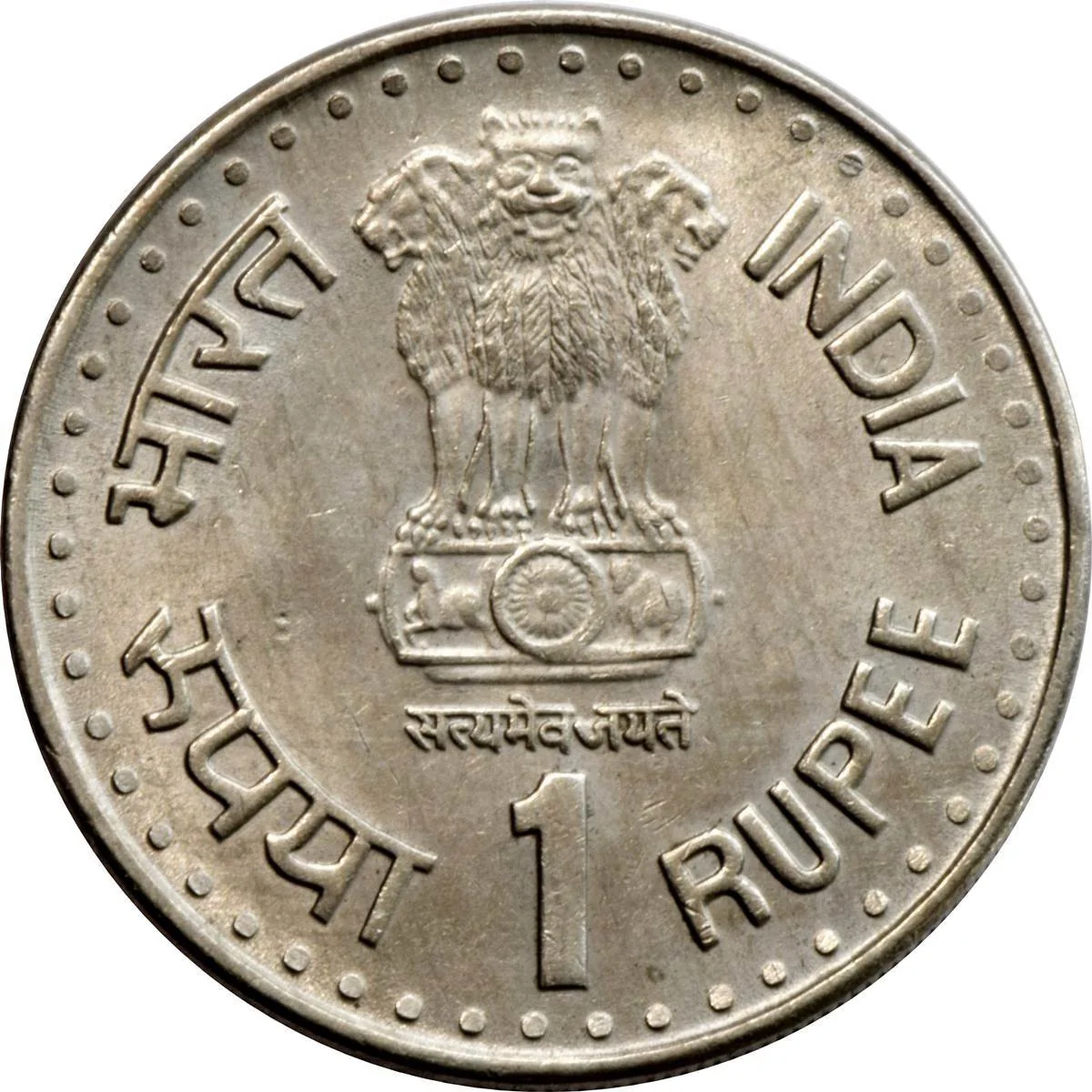
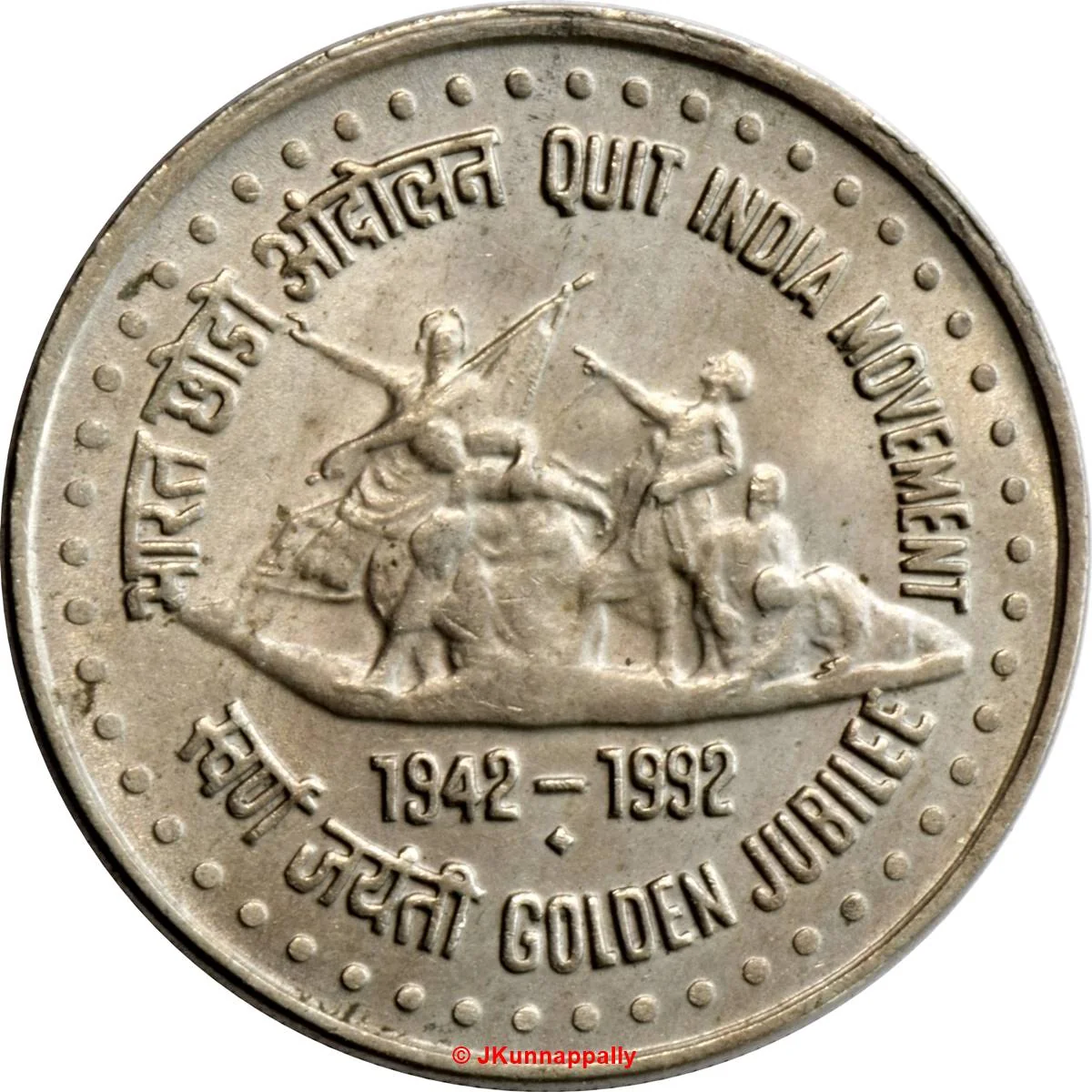
1 Rupee (Quit India Movement British Forces Withdrawal) – India
Circulating commemorative coins
Commemoration: 50th Anniversary of Quit India Movement - British Forces Withdrawal
India

Material
Diameter: 26 mm
Weight: 6.1 g
Thickness: 1.6 mm
Shape: Round
Composition: Copper-nickel
Technique: Milled
Alignment: Medal alignment
flip
References
KM: #Click to copy to clipboard93
Numista: #5471
Value
Exchange value: 1 INR = $0.01
Inflation-adjusted value: 9.11 INR
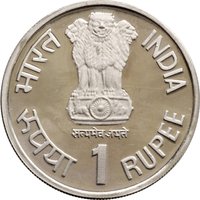
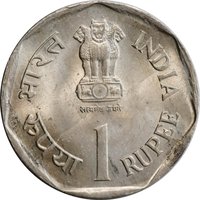
Obverse
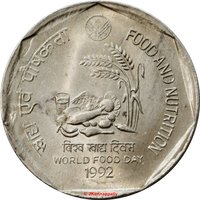
Reverse
Edge
Reeded
Mints
| Name | Mark |
|---|---|
| Kolkata / Calcutta / Murshidabad | — |
| Hyderabad | * |
| Mumbai / Bombay | ♦ |
| Mumbai / Bombay | M |
Historical background
In 1992, India's currency situation was defined by a profound transition from a controlled, inward-looking economy to one integrated with global markets. This period followed the watershed economic reforms of July 1991, initiated in response to a severe balance of payments crisis. A critical component of these reforms was the move towards making the Indian Rupee (INR) convertible on the current account, which was formally achieved in August 1994. In 1992, the groundwork was being laid through a dual-exchange rate system known as the Liberalised Exchange Rate Management System (LERMS), introduced in March. Under LERMS, a portion of foreign exchange earnings had to be converted at an official, overvalued rate, while the rest could be traded at a market-determined rate, effectively devaluing the rupee and moving it towards realism.
This shift marked a decisive break from decades of a tightly regulated regime where the Reserve Bank of India (RBI) fixed the rupee's value, foreign exchange was scarce, and stringent controls governed all international transactions. The reforms of 1991-92, including the devaluation of the rupee, were aimed at boosting exports by making Indian goods more competitive, attracting foreign investment, and easing the external debt burden. The currency situation was thus no longer one of static control but of managed liberalization, with the government and RBI carefully navigating the move from a fixed to a market-influenced exchange rate.
The immediate consequences in 1992 were a significant depreciation of the rupee against major currencies, increased volatility, and the creation of a more active foreign exchange market. This was a necessary but challenging adjustment, creating short-term inflationary pressures but setting the stage for greater economic stability and growth. The currency reforms of this period were symbolic of India's broader economic paradigm shift, moving away from the "License Raj" and embracing globalization, with the management of the rupee becoming a key instrument of macroeconomic policy rather than an administrative tool.
This shift marked a decisive break from decades of a tightly regulated regime where the Reserve Bank of India (RBI) fixed the rupee's value, foreign exchange was scarce, and stringent controls governed all international transactions. The reforms of 1991-92, including the devaluation of the rupee, were aimed at boosting exports by making Indian goods more competitive, attracting foreign investment, and easing the external debt burden. The currency situation was thus no longer one of static control but of managed liberalization, with the government and RBI carefully navigating the move from a fixed to a market-influenced exchange rate.
The immediate consequences in 1992 were a significant depreciation of the rupee against major currencies, increased volatility, and the creation of a more active foreign exchange market. This was a necessary but challenging adjustment, creating short-term inflationary pressures but setting the stage for greater economic stability and growth. The currency reforms of this period were symbolic of India's broader economic paradigm shift, moving away from the "License Raj" and embracing globalization, with the management of the rupee becoming a key instrument of macroeconomic policy rather than an administrative tool.

🌱 Very Common