

5 Rupees (ONGC) – India
Non-circulating coins
Commemoration: 50th Anniversary of the ONGC (Oil and Natural Gas Corporation)
India

Material
Diameter: 23 mm
Weight: 9 g
Shape: Round
Composition: Copper-nickel
Technique: Milled
Alignment: Medal alignment
flip
References
Numista: #54564
Value
Exchange value: 5 INR = $0.05
Inflation-adjusted value: 18.02 INR
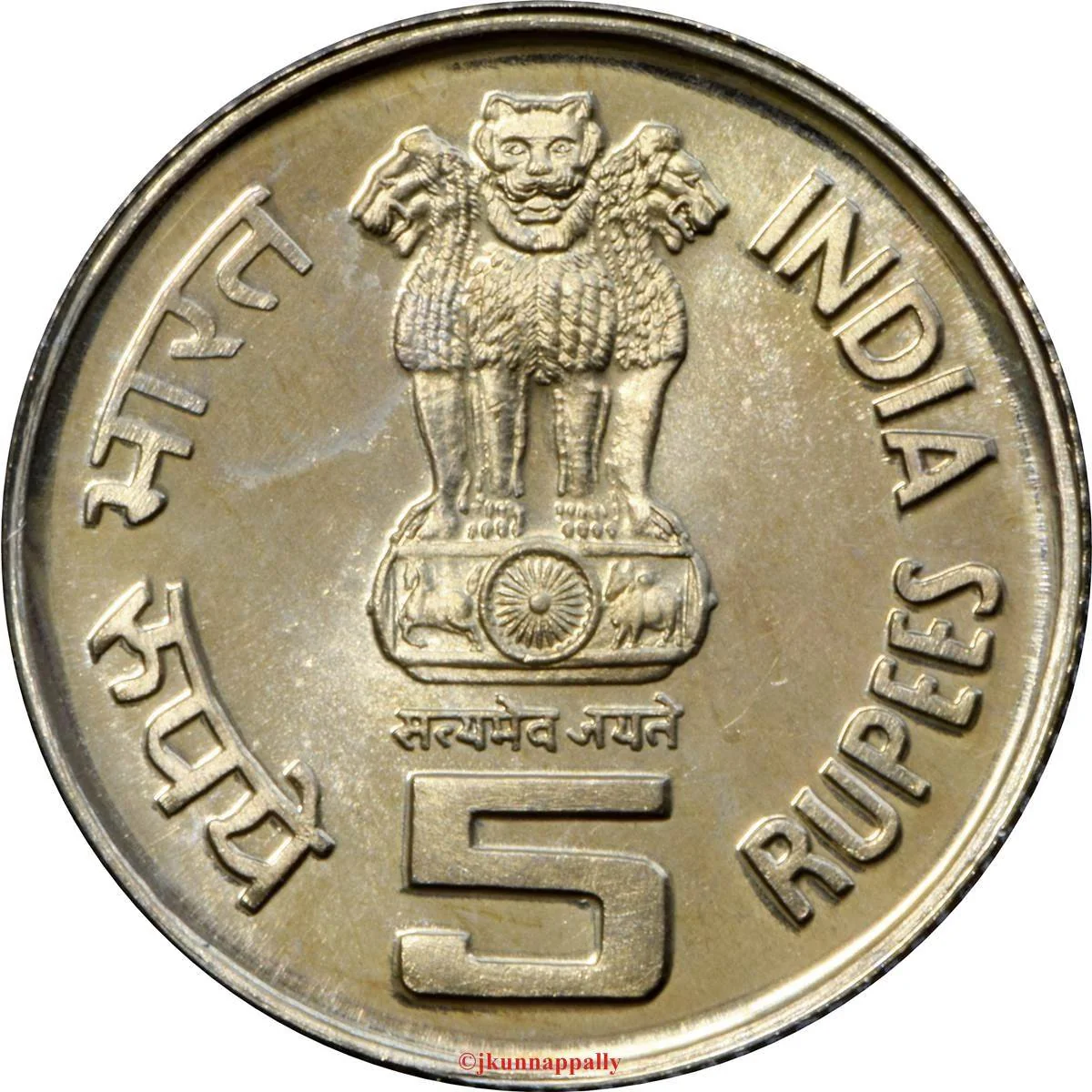
Obverse
Description:
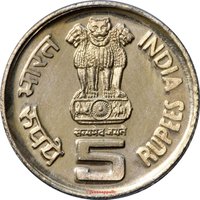
Ashoka Pillar Lion on currency.
Inscription:
भारत INDIA
सत्यमेव जयते
रूपये 5 RUPEES
सत्यमेव जयते
रूपये 5 RUPEES
Translation:
India
Truth Alone Triumphs
Rupees 5
Truth Alone Triumphs
Rupees 5
Scripts: Devanagari, Latin
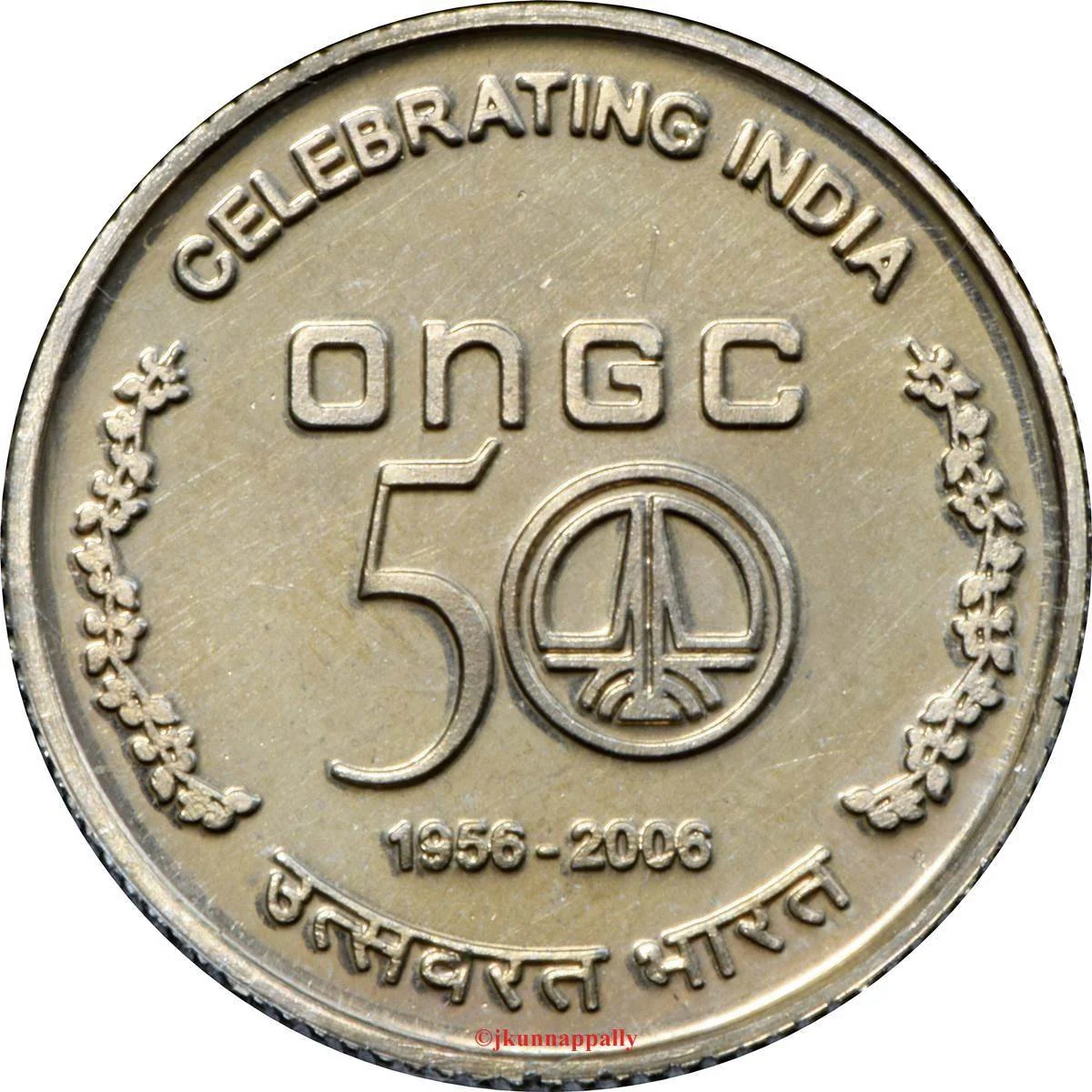
Reverse
Description:
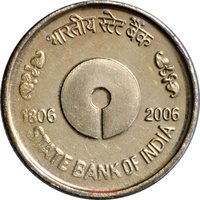
ONGC logo amid sprays.
Inscription:
CELEBRATING INDIA
ONGC
50
1956-2006
उत्सवरत भारत
ONGC
50
1956-2006
उत्सवरत भारत
Translation:
Celebrating India
ONGC
50
1956-2006
Utsavrat Bharat
ONGC
50
1956-2006
Utsavrat Bharat
Scripts: Devanagari, Latin
Edge
Security edge
Mints
| Name | Mark |
|---|---|
| Kolkata / Calcutta / Murshidabad | — |
Mintings
| Year | Mint Mark | Mintage | Quality | Collection |
|---|---|---|---|---|
| 2006 | — | — | In sets |
Historical background
In 2006, India's currency situation was characterized by robust economic growth and a confident, strengthening rupee, but also by significant and ongoing challenges in currency management. The Indian economy was booming at over 8% GDP growth, attracting substantial foreign institutional investment (FII) into its stock markets. This capital inflow created upward pressure on the rupee, which the Reserve Bank of India (RBI) actively managed to prevent excessive appreciation that could hurt export competitiveness. The RBI engaged in heavy intervention, purchasing dollars to build foreign exchange reserves, which soared past $170 billion, while simultaneously sterilizing the resultant rupee liquidity to control inflation.
Despite this strength, a major structural issue dominated the monetary landscape: the pervasive problem of counterfeit currency. High-quality fake Indian rupee notes, particularly of ₹500 and ₹1000 denominations, were a serious concern for both security agencies and the RBI. It was widely believed that these notes were being smuggled into the country from overseas, used to finance illicit activities and undermine the financial system. This threat directly informed the central bank's long-term planning, seeding early internal discussions about a future demonetization to invalidate such counterfeits, though no action was taken in 2006.
Overall, the year presented a dual narrative. On the surface, the macroeconomic indicators were positive—a growing forex kitty, a stable and gradually appreciating rupee, and low inflation by historical standards. However, beneath this stability lay the persistent worries about currency fraud and the complexities of managing capital flows in a globalizing economy. The RBI's policy walk was thus a careful balance between allowing market-driven flexibility for the rupee and maintaining control to ensure financial stability and export viability.
Despite this strength, a major structural issue dominated the monetary landscape: the pervasive problem of counterfeit currency. High-quality fake Indian rupee notes, particularly of ₹500 and ₹1000 denominations, were a serious concern for both security agencies and the RBI. It was widely believed that these notes were being smuggled into the country from overseas, used to finance illicit activities and undermine the financial system. This threat directly informed the central bank's long-term planning, seeding early internal discussions about a future demonetization to invalidate such counterfeits, though no action was taken in 2006.
Overall, the year presented a dual narrative. On the surface, the macroeconomic indicators were positive—a growing forex kitty, a stable and gradually appreciating rupee, and low inflation by historical standards. However, beneath this stability lay the persistent worries about currency fraud and the complexities of managing capital flows in a globalizing economy. The RBI's policy walk was thus a careful balance between allowing market-driven flexibility for the rupee and maintaining control to ensure financial stability and export viability.
🌟 Limited