

100 Dollars (Independence) – Fiji
Non-circulating coins
Commemoration: 25th Anniversary of Independence
Fiji
Context

Material
References
KM: #Click to copy to clipboard98
Numista: #54445
Value
Exchange value: 100 FJD
Bullion value: $1951.11
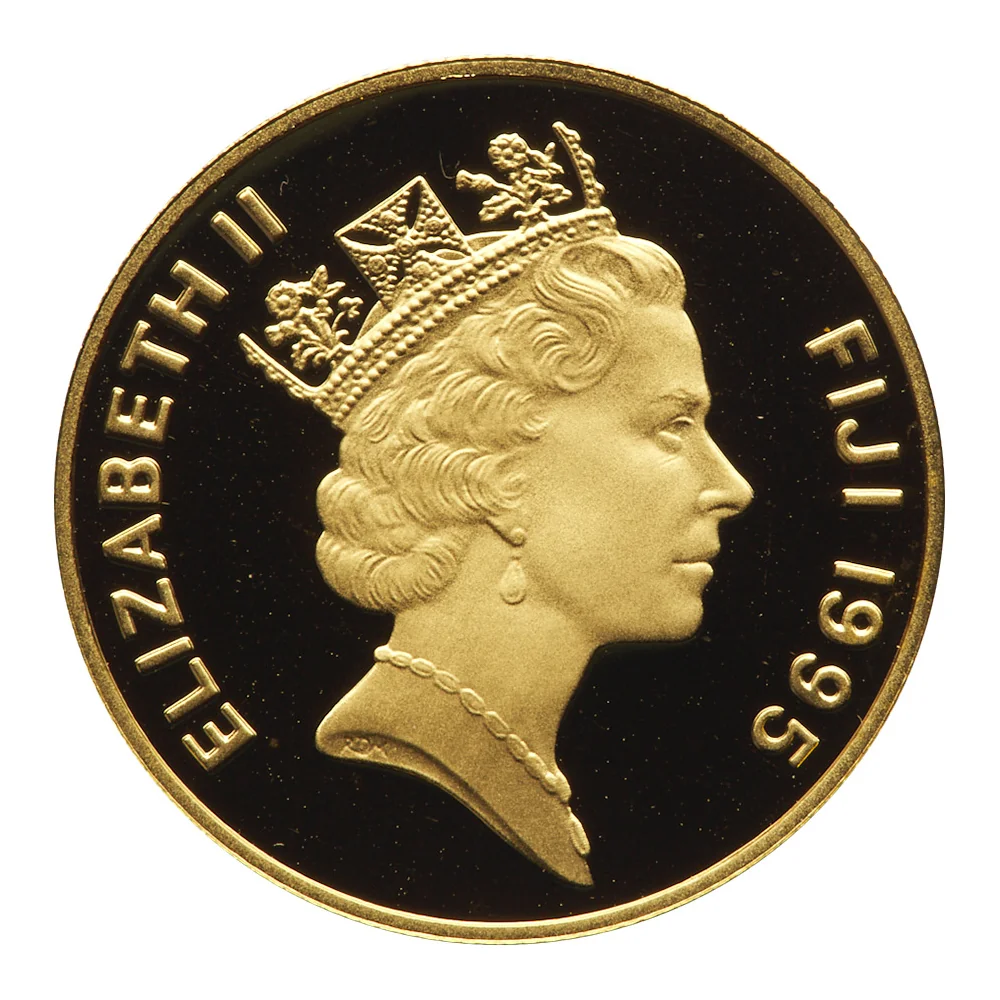
Obverse
Description:
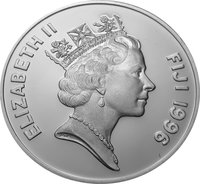
Elizabeth II facing right
Inscription:
ELIZABETH FIJI 1995
Translation:
ELIZABETH FIJI 1995
Script: Latin
Language: English
Engraver: Raphael David Maklouf
Reverse
Description:
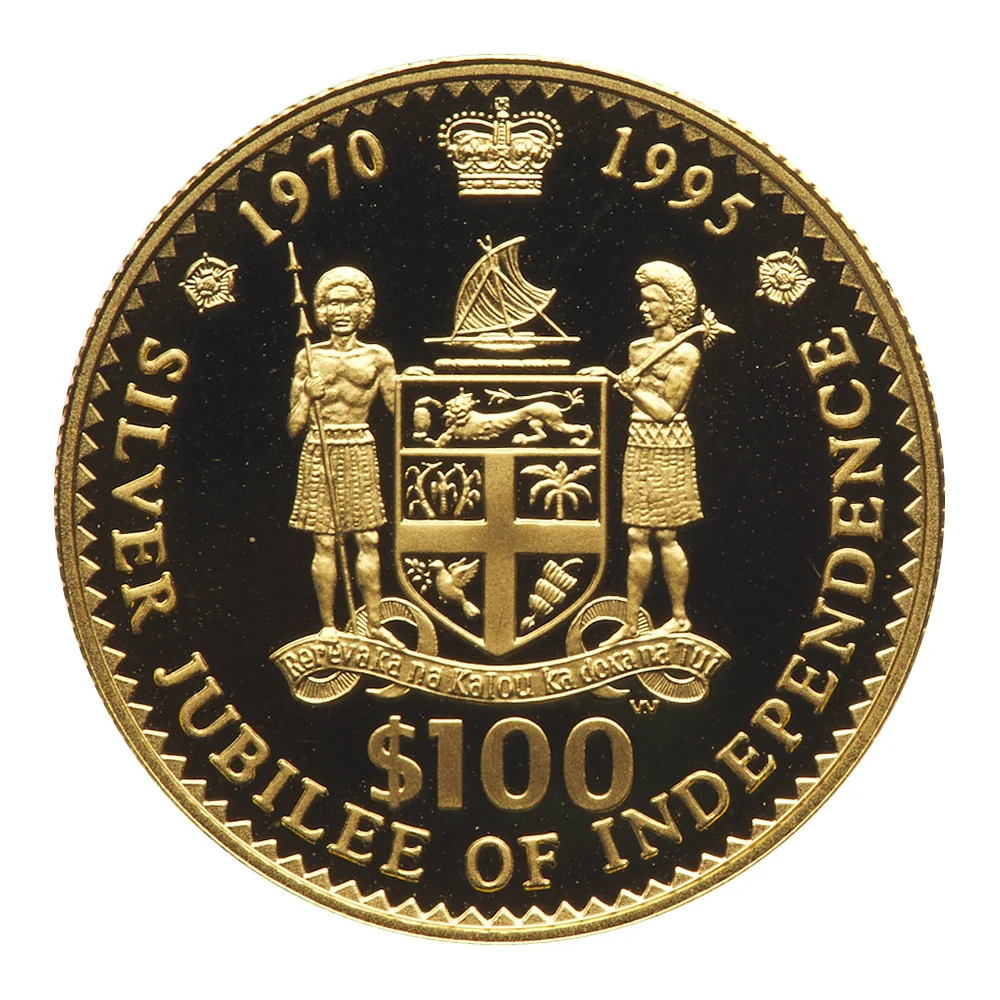
Fiji's coat of arms.
Inscription:
1970 1995
Rerevaka na Kalou ka doka na Tui
$100
SILVER JUBILEE OF INDEPENDENCE
Rerevaka na Kalou ka doka na Tui
$100
SILVER JUBILEE OF INDEPENDENCE
Script: Latin
Edge
Reeded
Mintings
| Year | Mint Mark | Mintage | Quality | Collection |
|---|---|---|---|---|
| 1995 | — | 500 |
Historical background
In 1995, Fiji's currency situation was characterized by stability and a period of managed adjustment under the authority of the Reserve Bank of Fiji (RBF). The Fijian dollar (FJD), which had been pegged to a basket of currencies of its major trading partners since 1975, was maintaining a relatively steady exchange rate. This peg was designed to curb inflation and provide predictability for the import-dependent economy and its vital tourism and sugar export sectors. The RBF actively managed the basket's composition and the dollar's value, successfully navigating the post-devaluation period of the late 1980s to foster economic confidence.
The year fell within a broader context of economic liberalization and reform that began after the coups of 1987. Key policies included the devaluation of the Fijian dollar in 1987 and 1991, which aimed to boost export competitiveness. By 1995, these adjustments were largely bedded in, and the focus was on maintaining monetary stability to support growing foreign investment and economic recovery. Inflation was under control, and the currency's stability was a cornerstone of the government's strategy to present Fiji as a reliable destination for business and tourism in the Pacific region.
However, underlying vulnerabilities persisted. The economy remained susceptible to external shocks, particularly fluctuations in global sugar prices and the cost of imported oil. Furthermore, the currency peg required consistent foreign reserve levels, which could be pressured by trade deficits or political instability. While 1995 itself was not a year of currency crisis, the managed system in place was continuously tested by these structural economic factors, setting the stage for future challenges, including the devaluation that would eventually occur in 1998 following the Asian financial crisis.
The year fell within a broader context of economic liberalization and reform that began after the coups of 1987. Key policies included the devaluation of the Fijian dollar in 1987 and 1991, which aimed to boost export competitiveness. By 1995, these adjustments were largely bedded in, and the focus was on maintaining monetary stability to support growing foreign investment and economic recovery. Inflation was under control, and the currency's stability was a cornerstone of the government's strategy to present Fiji as a reliable destination for business and tourism in the Pacific region.
However, underlying vulnerabilities persisted. The economy remained susceptible to external shocks, particularly fluctuations in global sugar prices and the cost of imported oil. Furthermore, the currency peg required consistent foreign reserve levels, which could be pressured by trade deficits or political instability. While 1995 itself was not a year of currency crisis, the managed system in place was continuously tested by these structural economic factors, setting the stage for future challenges, including the devaluation that would eventually occur in 1998 following the Asian financial crisis.
✨ Legendary