

5 euro (Spirou) – Belgium
Add to wishlist
Non-circulating coins
Commemoration: 75th Anniversary of Spirou
Belgium
Context
Material
References
KM: #
Numista: #53999
Value
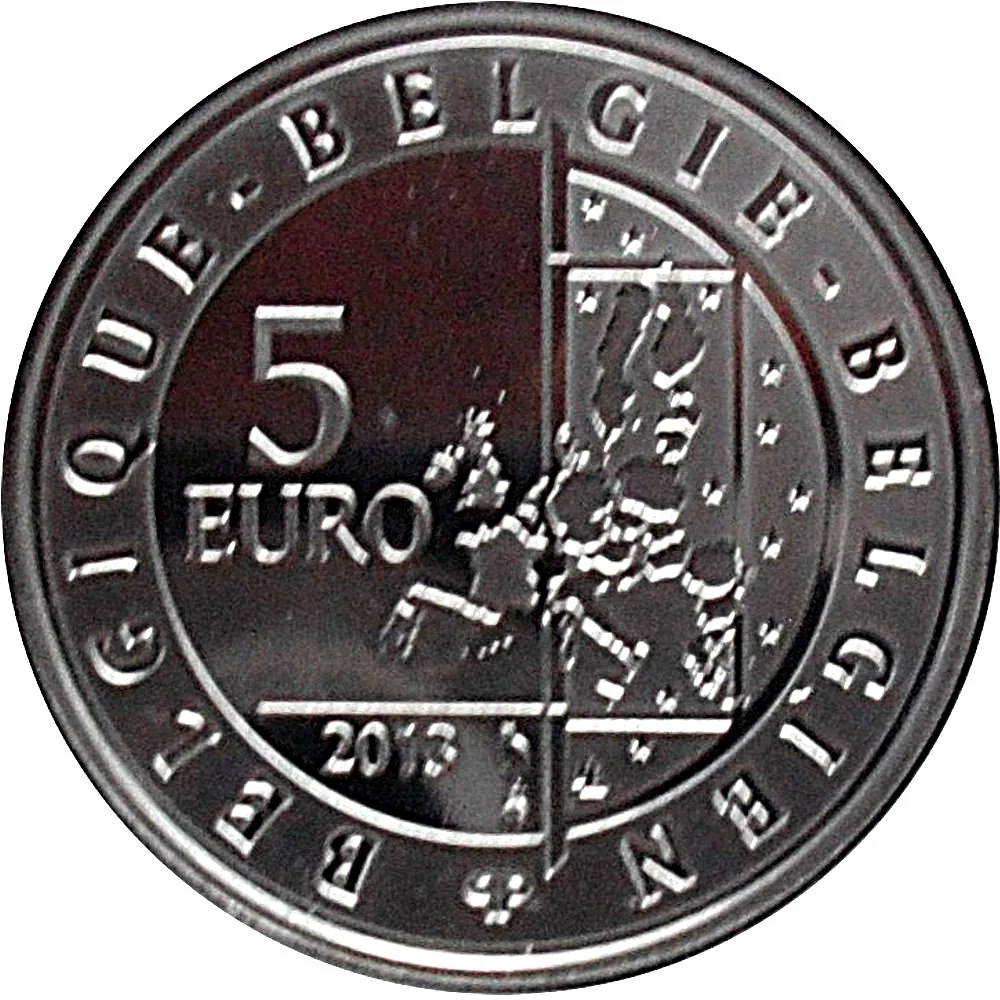
Exchange value: 5 EUR
Bullion value: $34.51
Inflation-adjusted value: 6.59 EUR
Obverse
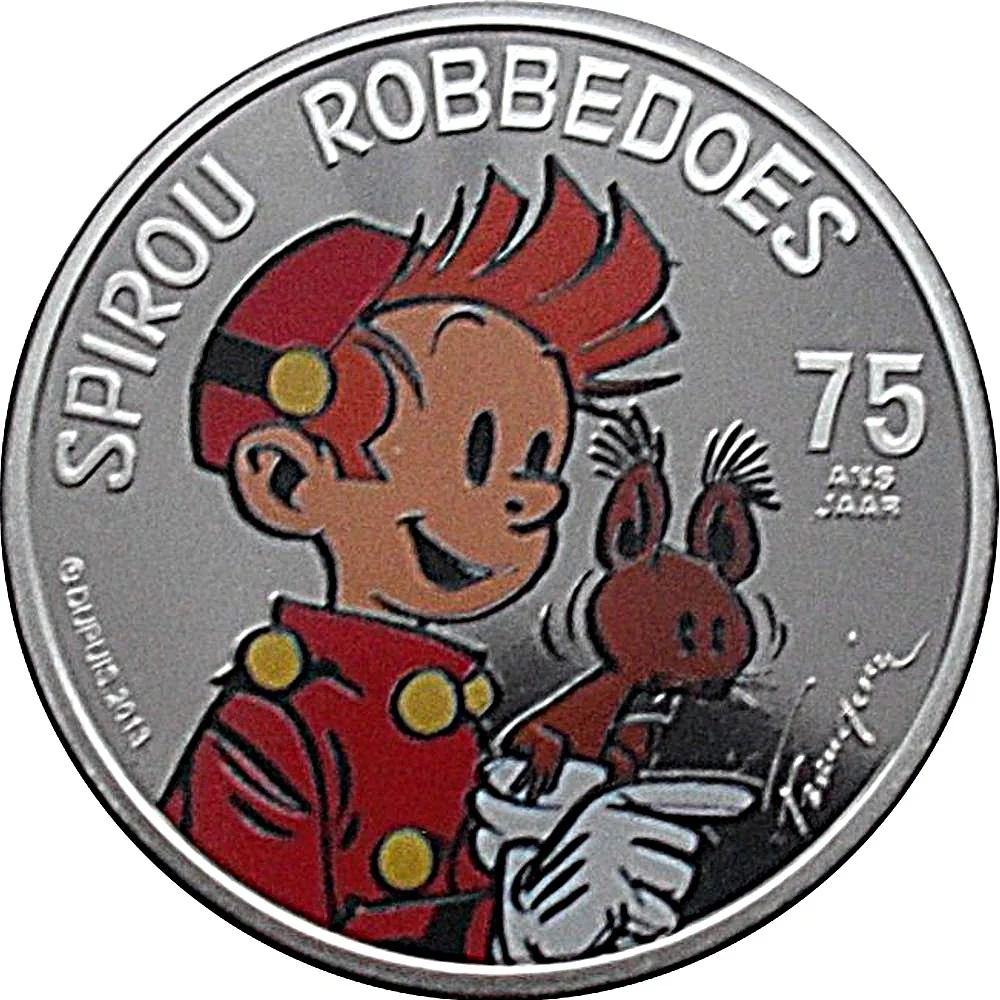
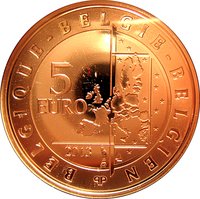
Reverse
Description:
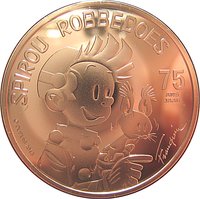
Spirou and Spip, with "SPIROU ROBBEDOES" and "75 ANS JAAR."
Inscription:
SPIROU ROBBEDOES
75
ANS
JAAR
© DUPUIS.2013
Franquin
75
ANS
JAAR
© DUPUIS.2013
Franquin
Script: Latin
Edge
Plain
Categories
| Map |
| Animal> Rodent |
| Art> Fictional character |
Mints
| Name | Mark |
|---|---|
| Royal Mint of Belgium | — |
Mintings
| Year | Mint Mark | Mintage | Quality | Collection |
|---|---|---|---|---|
| 2013 | — | 2,500 | Proof |
Historical background
In 2013, Belgium was a well-integrated member of the Eurozone, having adopted the euro as its official currency in 2002. The currency situation was therefore defined by its participation in the single currency, with monetary policy set by the European Central Bank (ECB) in Frankfurt. This meant Belgium had no independent control over interest rates or money supply, focusing instead on national fiscal policy and competitiveness within the shared framework. The euro provided stability and eliminated exchange rate risks with key trading partners, but also meant Belgium was directly exposed to the ongoing aftershocks of the Eurozone sovereign debt crisis that had peaked in 2011-2012.
The domestic economic context was one of moderate challenge. Belgium's public debt-to-GDP ratio remained stubbornly high, hovering around 100%, which drew periodic scrutiny from European institutions. While the acute existential threat to the euro had receded due to ECB interventions like the Outright Monetary Transactions program announced in 2012, Belgium, like its neighbors, was navigating a period of subdued growth and necessary fiscal consolidation. The national focus was on maintaining cost competitiveness and addressing budgetary pressures without stifling a fragile economic recovery.
Overall, the currency situation in 2013 was one of relative stability within the Eurozone architecture, but with underlying vulnerabilities. Belgium benefited from the euro's credibility and the ECB's protective measures, which shielded it from the speculative attacks seen in southern European nations. However, the high public debt burden underscored the need for prudent national economic management within the constraints of a shared currency, a balancing act that defined Belgian fiscal policy during this period.
The domestic economic context was one of moderate challenge. Belgium's public debt-to-GDP ratio remained stubbornly high, hovering around 100%, which drew periodic scrutiny from European institutions. While the acute existential threat to the euro had receded due to ECB interventions like the Outright Monetary Transactions program announced in 2012, Belgium, like its neighbors, was navigating a period of subdued growth and necessary fiscal consolidation. The national focus was on maintaining cost competitiveness and addressing budgetary pressures without stifling a fragile economic recovery.
Overall, the currency situation in 2013 was one of relative stability within the Eurozone architecture, but with underlying vulnerabilities. Belgium benefited from the euro's credibility and the ECB's protective measures, which shielded it from the speculative attacks seen in southern European nations. However, the high public debt burden underscored the need for prudent national economic management within the constraints of a shared currency, a balancing act that defined Belgian fiscal policy during this period.
💎 Extremely Rare