

2 Centavos – Brazil
Circulating commemorative coins
Commemoration: F.A.O.
Brazil
Context
Years: 1975–1978
Issuer: Brazil 
Period:
(since 1967)
Currency:
(1967—1986)
Demonetized: Yes
Total mintage: 31,686,000
Material
Diameter: 19 mm
Weight: 2.21 g
Shape: Round
Composition: Stainless steel
Technique: Milled
Alignment: Coin alignment
flip
References
KM: #Click to copy to clipboard586
Numista: #5384
Value
Exchange value: 0.02 BRB
Obverse
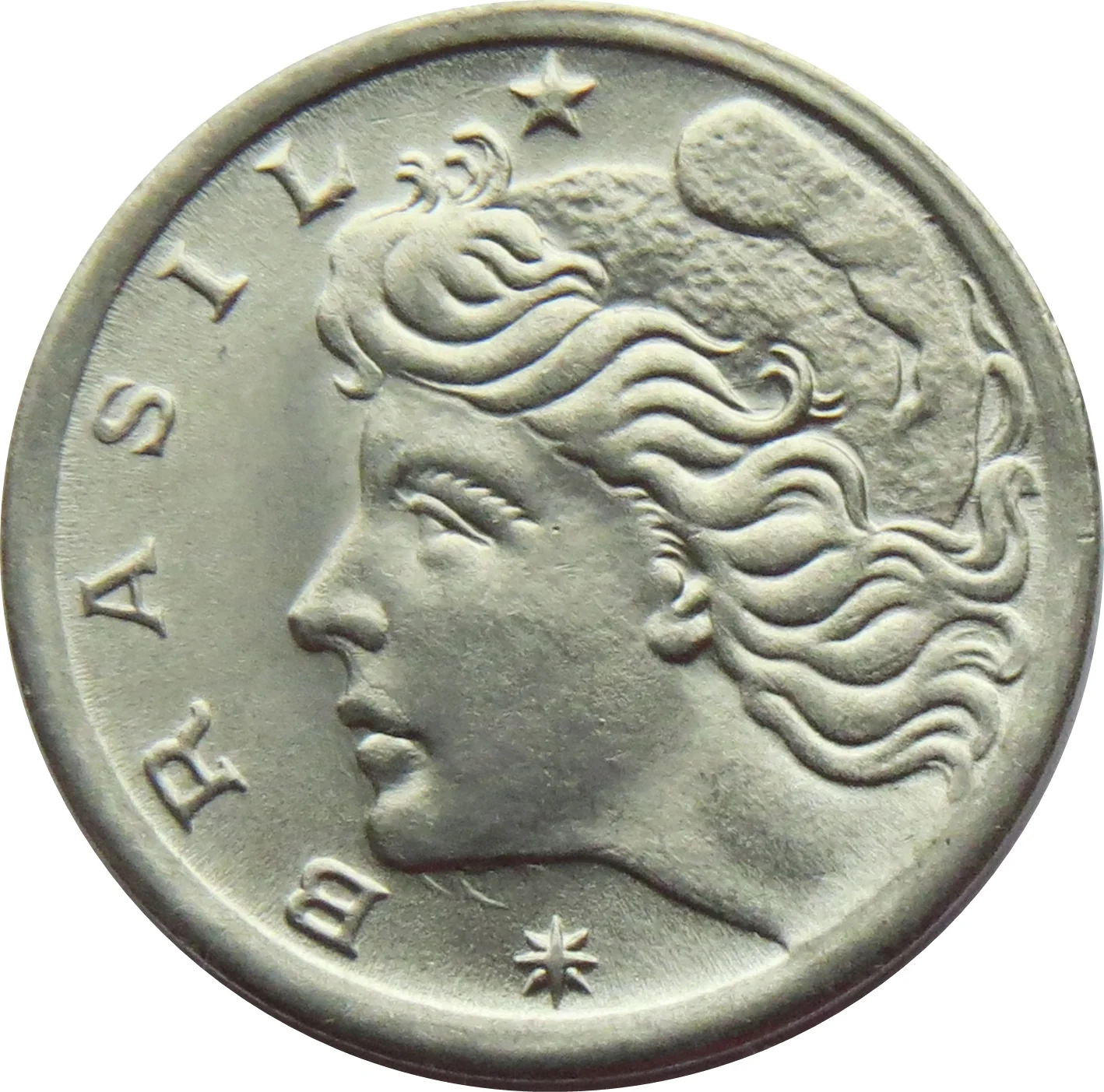
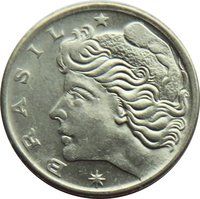
Description:
Republic emblem and country name left.
Inscription:
* BRASIL *
Translation:
* BRAZIL *
Script: Latin
Languages: Latin, Portuguese
Reverse
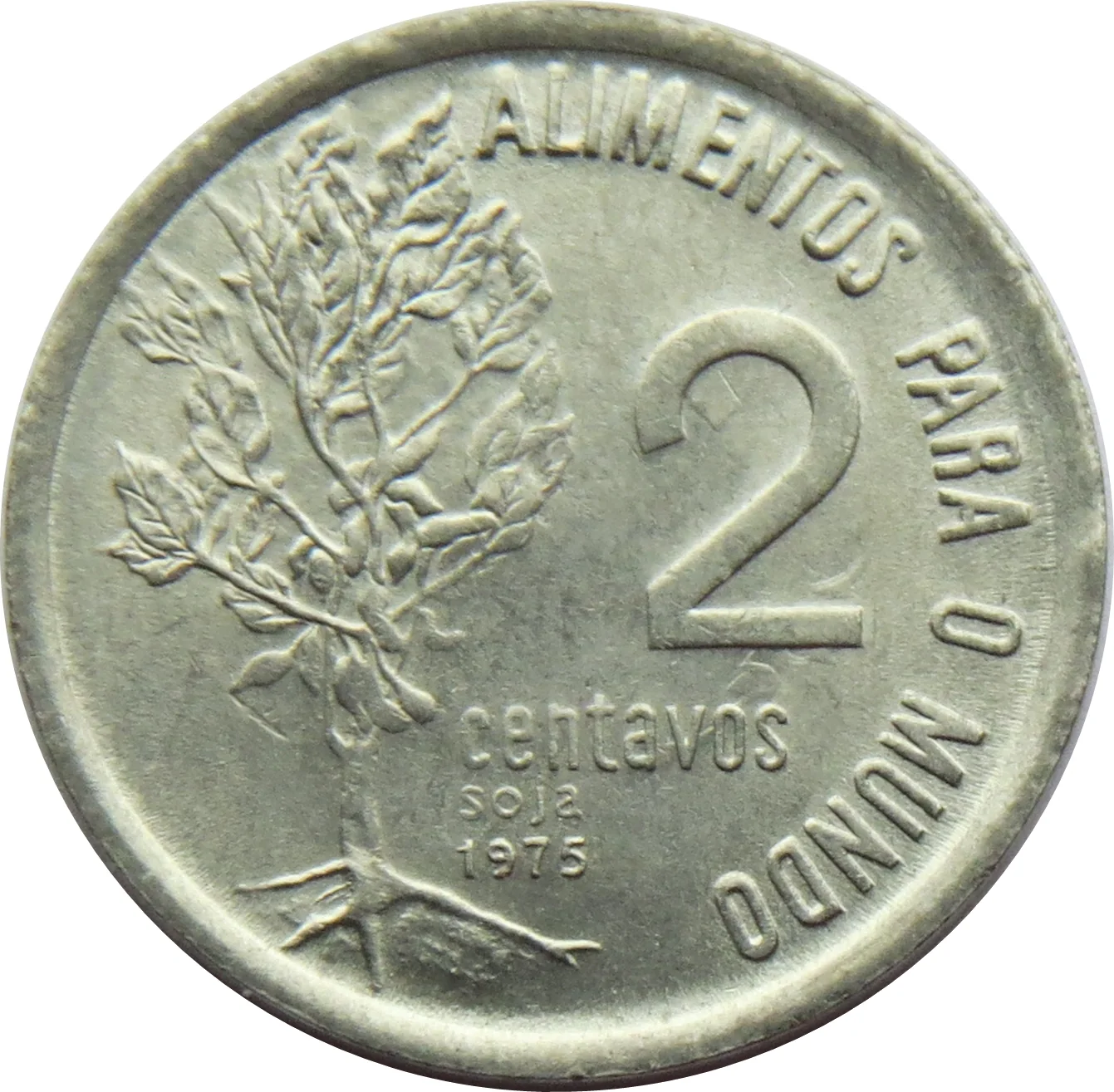
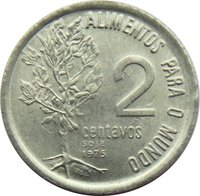
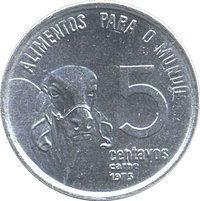
Description:
Soybean plant value.
Inscription:
ALIMENTOS PARA O MUNDO
2
centavos
soja
1975
2
centavos
soja
1975
Translation:
Food for the World
2
cents
soybean
1975
2
cents
soybean
1975
Script: Latin
Language: Portuguese
Edge
Plain
Categories
| Organization> FAO |
Mints
| Name | Mark |
|---|---|
| Casa da Moeda do Brasil | — |
Mintings
| Year | Mint Mark | Mintage | Quality | Collection |
|---|---|---|---|---|
| 1975 | — | 31,400,000 | ||
| 1976 | — | 136,000 | ||
| 1977 | — | 100,000 | ||
| 1978 | — | 50,000 |
Historical background
By 1975, Brazil was in the midst of its "economic miracle," a period of rapid GDP growth fueled by heavy state-led industrialization and foreign borrowing. This growth, however, came with significant underlying strains in the currency and monetary situation. The Brazilian cruzeiro was under a tightly managed fixed exchange rate regime, pegged to the U.S. dollar at an increasingly overvalued level. This overvaluation was maintained to control inflation—which remained a persistent problem in the double digits—and to cheapen the cost of importing capital goods for industrial projects and foreign debt servicing. The policy created a growing imbalance, as it discouraged exports and encouraged an appetite for imported goods, putting pressure on the trade balance.
The government, led by President Ernesto Geisel, responded to these pressures not with a devaluation, but with a complex system of mini-devaluations, known as the "crawling peg" (minidesvalorizações). This mechanism allowed the cruzeiro to lose value against the dollar in small, frequent, and predictable increments, aiming to gradually correct the overvaluation without triggering capital flight or a loss of confidence. Furthermore, a complex system of multiple exchange rates was in place, with different rates applied to various types of transactions (e.g., essential imports, financial operations, coffee exports) to steer the economy.
Despite these controls, the fundamental vulnerabilities were mounting. The 1973 oil shock had dramatically increased Brazil's import bill, turning a trade surplus into a growing deficit. To finance this deficit and its ambitious development plans, the military regime aggressively borrowed U.S. dollars from international banks, leading to a rapid rise in external debt. Thus, while the currency situation in 1975 appeared stable on the surface due to strict control, it was increasingly fragile, setting the stage for the debt crisis and inflationary spiral that would engulf Brazil in the subsequent "lost decade" of the 1980s.
The government, led by President Ernesto Geisel, responded to these pressures not with a devaluation, but with a complex system of mini-devaluations, known as the "crawling peg" (minidesvalorizações). This mechanism allowed the cruzeiro to lose value against the dollar in small, frequent, and predictable increments, aiming to gradually correct the overvaluation without triggering capital flight or a loss of confidence. Furthermore, a complex system of multiple exchange rates was in place, with different rates applied to various types of transactions (e.g., essential imports, financial operations, coffee exports) to steer the economy.
Despite these controls, the fundamental vulnerabilities were mounting. The 1973 oil shock had dramatically increased Brazil's import bill, turning a trade surplus into a growing deficit. To finance this deficit and its ambitious development plans, the military regime aggressively borrowed U.S. dollars from international banks, leading to a rapid rise in external debt. Thus, while the currency situation in 1975 appeared stable on the surface due to strict control, it was increasingly fragile, setting the stage for the debt crisis and inflationary spiral that would engulf Brazil in the subsequent "lost decade" of the 1980s.
🌱 Very Common