

1 Siao – Thailand
Thailand
Context
Years: 1888–1905
Issuer: Thailand 
Ruler: Phra Chula Chom Klao
Currency:
(1869—1897)
Subdivision: 1 Siao = ¼ Fuang = 1⁄32 Baht
Demonetization: 17 May 1909
Total mintage: 10,240,000
Material
References
Y: #Click to copy to clipboard23
Numista: #11037
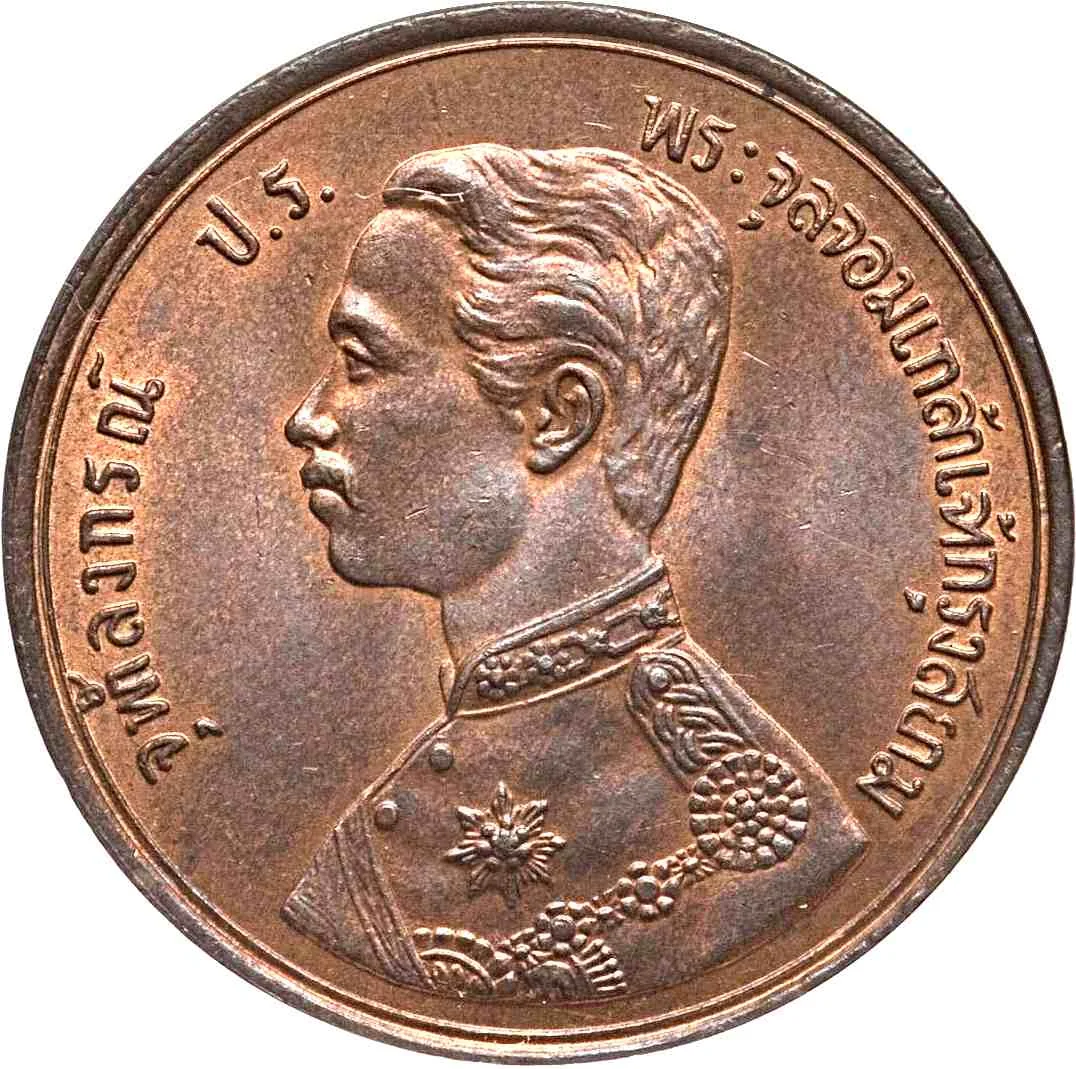
Obverse
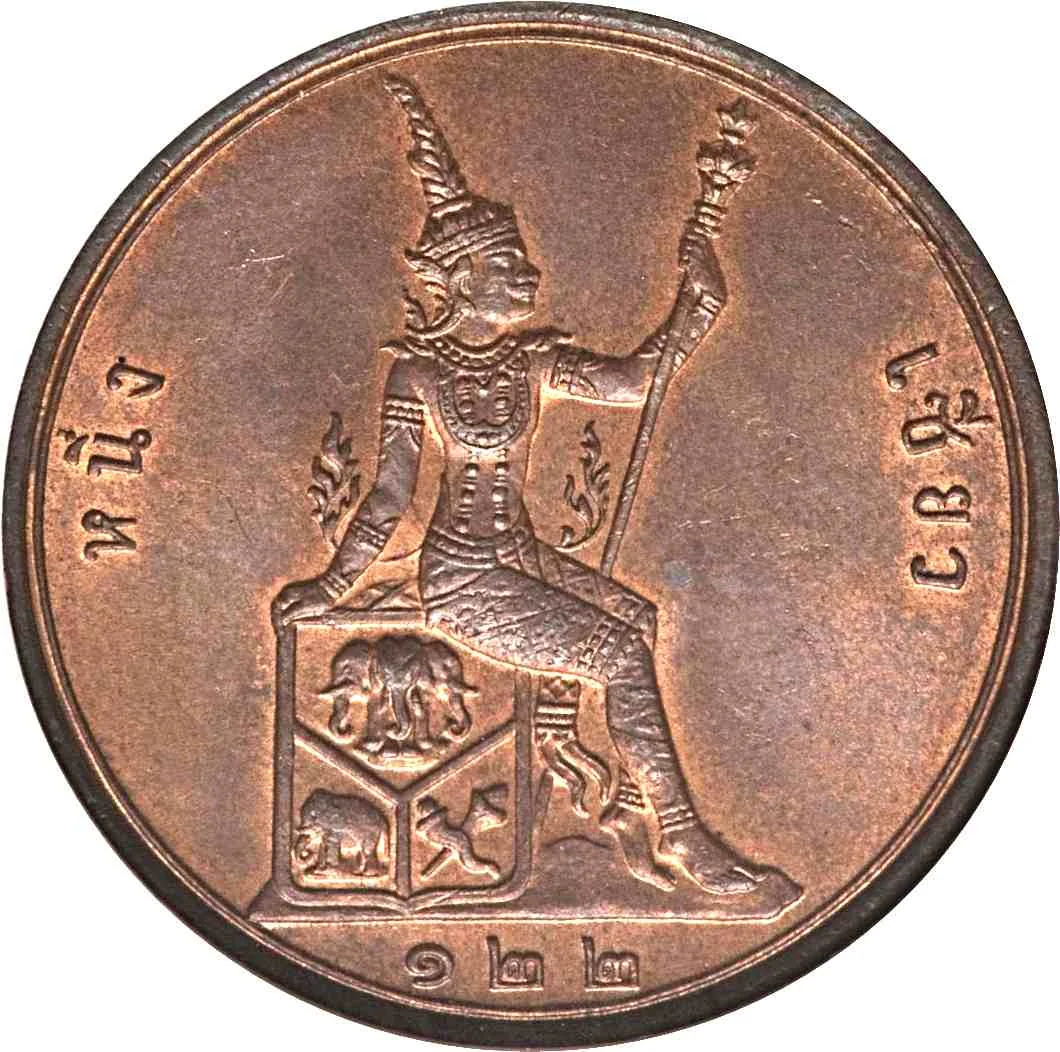
Reverse
Description:
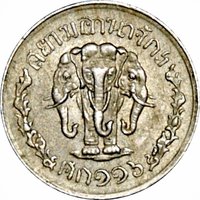
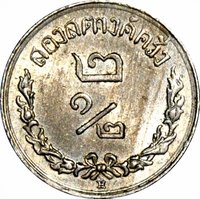
Phra Siam Devadhiraj seated on a shield, holding a spear. The shield's three sections feature: a three-headed elephant for Siam (top), an elephant for Lan Xang (bottom left), and crossed Kris and Warangka for Malay. Inscriptions flank the figure, with the date below.
Inscription:
หนึ่ง เซียว
๑๒๒
๑๒๒
Translation:
One Salung
122
122
Script: Thai
Language: Thai
Edge
Plain
Mints
| Name | Mark |
|---|---|
| Bangkok | — |
| Hamburgische Münze | — |
| Heaton and Sons / The Mint Birmingham | — |
Mintings
| Year | Mint Mark | Mintage | Quality | Collection |
|---|---|---|---|---|
| 1888 | — | — | BU | |
| 1890 | — | 5,120,000 | ||
| 1895 | — | — | ||
| 1896 | — | — | BU | |
| 1899 | — | — | BU | |
| 1900 | — | — | ||
| 1902 | — | 2,797,000 | BU | |
| 1903 | — | 2,323,000 | ||
| 1905 | — | — |
Historical background
In 1888, Thailand, then known as Siam, was navigating a complex and transitional monetary system under the reign of King Chulalongkorn (Rama V). The economy operated on a bimetallic standard, but one dominated by silver. The primary unit was the baht, a unit of weight for silver, which circulated alongside a multitude of physical currencies: bullet-shaped silver ticals, gold coins, and a vast array of foreign silver coins, particularly Mexican and Peruvian dollars. This created a chaotic environment where exchange rates fluctuated not only with the international market but also regionally within the kingdom, hindering both domestic trade and foreign commerce.
This monetary disarray was exacerbated by a global crisis: the dramatic fall in the international price of silver relative to gold. As Siam's silver-based currency depreciated, it created severe fiscal problems for the government, which had obligations and foreign loans often denominated in gold-backed currencies like the British pound. The instability made state financial planning difficult and increased the cost of the kingdom's ambitious modernization projects. Furthermore, the influx of cheap foreign silver coins threatened to drive the kingdom's own minted coins out of circulation, a phenomenon known as Gresham's Law.
Consequently, 1888 fell within a critical period of reform. King Chulalongkorn's government, advised by foreign financial experts, was actively laying the groundwork for a modern, centralized system. This included establishing the Royal Mint in 1860 and, significantly, moving toward the eventual adoption of a gold exchange standard. The foundational step came just two years later, in 1890, with the proclamation of the Coinage Act, which began the process of phasing out the old silver ticals and standardizing the coinage. Therefore, the currency situation in 1888 was one of palpable strain, marking the final years of a chaotic bimetallic system before a state-driven transformation toward a unified, decimalized, and gold-pegged currency.
This monetary disarray was exacerbated by a global crisis: the dramatic fall in the international price of silver relative to gold. As Siam's silver-based currency depreciated, it created severe fiscal problems for the government, which had obligations and foreign loans often denominated in gold-backed currencies like the British pound. The instability made state financial planning difficult and increased the cost of the kingdom's ambitious modernization projects. Furthermore, the influx of cheap foreign silver coins threatened to drive the kingdom's own minted coins out of circulation, a phenomenon known as Gresham's Law.
Consequently, 1888 fell within a critical period of reform. King Chulalongkorn's government, advised by foreign financial experts, was actively laying the groundwork for a modern, centralized system. This included establishing the Royal Mint in 1860 and, significantly, moving toward the eventual adoption of a gold exchange standard. The foundational step came just two years later, in 1890, with the proclamation of the Coinage Act, which began the process of phasing out the old silver ticals and standardizing the coinage. Therefore, the currency situation in 1888 was one of palpable strain, marking the final years of a chaotic bimetallic system before a state-driven transformation toward a unified, decimalized, and gold-pegged currency.
🌱 Fairly Common