

1 crown (King George V accession) – United Kingdom
Add to wishlist
Circulating commemorative coins
Commemoration: 25th anniversary of accession of King George V
United Kingdom
Context
Material
References
KM: #
Numista: #10337
Value
Bullion value: $35.47
Obverse
Description:
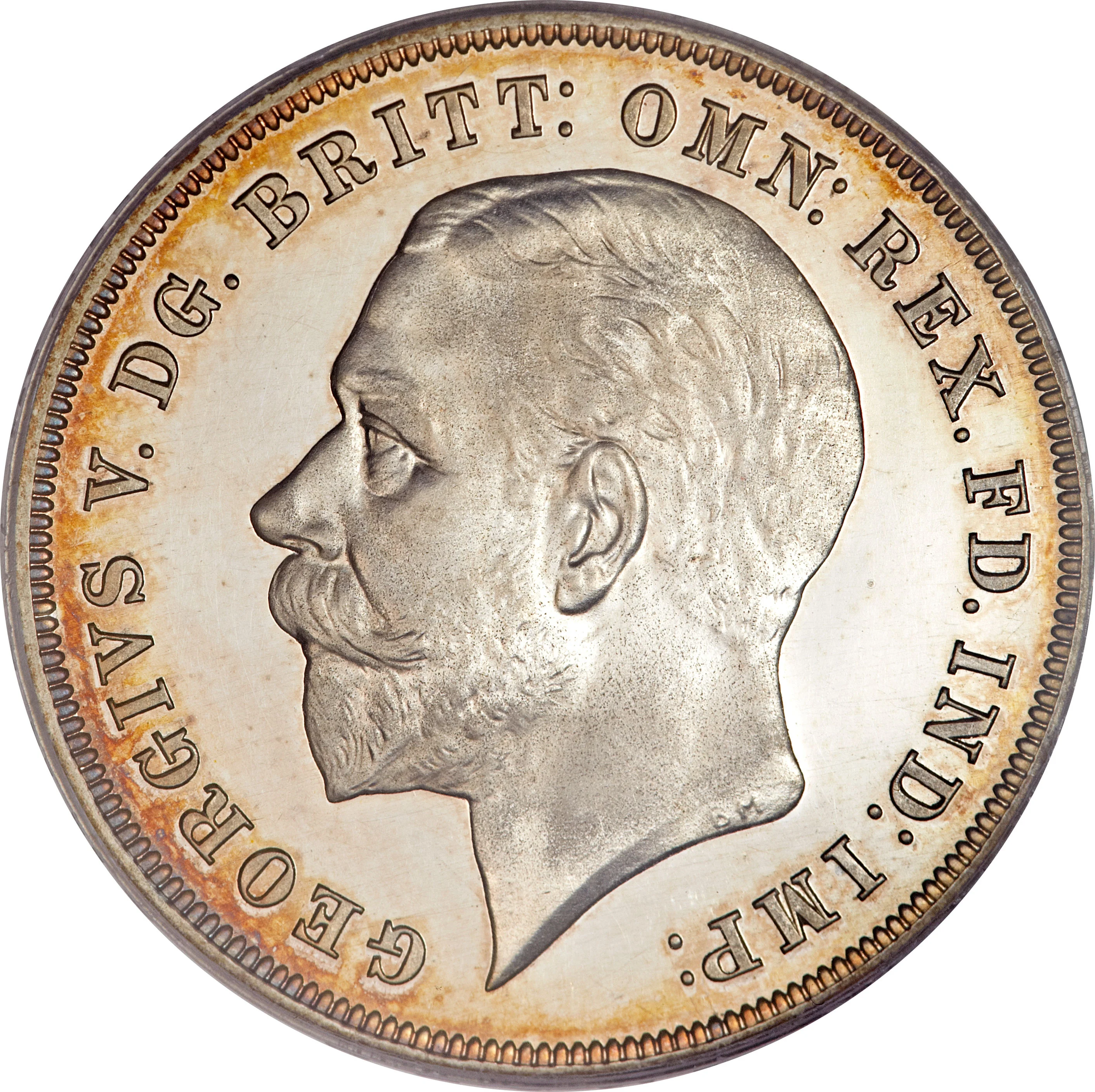
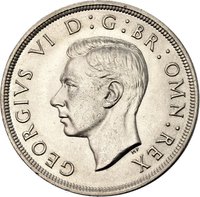
Uncrowned portrait of King George V left, circular legend.
Inscription:
GEORGIVS V. DG. BRITT: OMN: REX. FD. IND: IMP:
BM
BM
Translation:
George V, by the Grace of God, of all the Britains King, Defender of the Faith, Emperor of India.
Script: Latin
Language: Latin
Engraver: Edgar Bertram MacKennal
Reverse
Description:
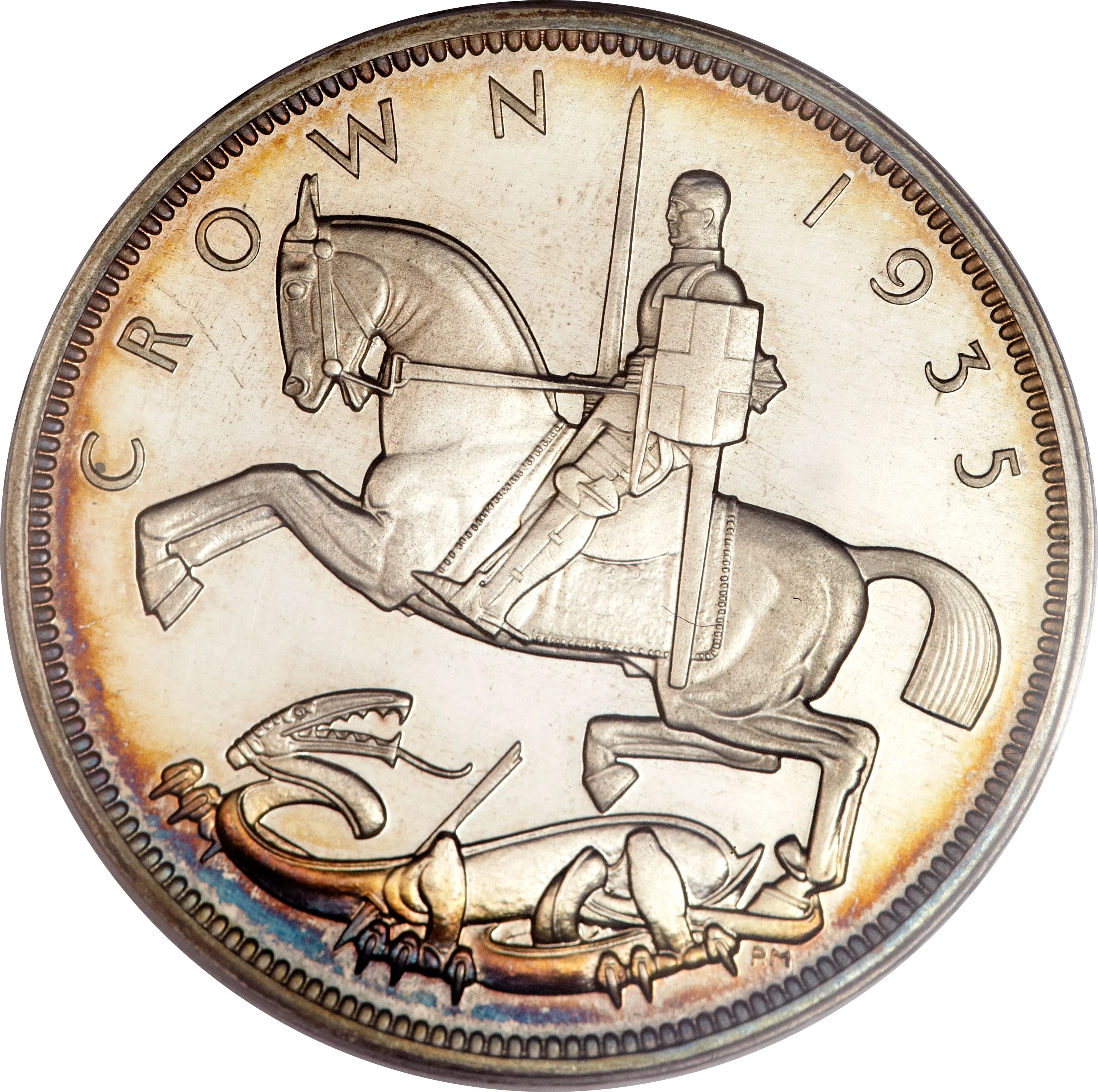
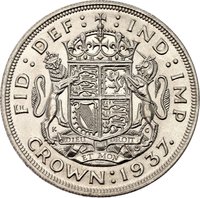
Art Deco depiction of St. George slaying the dragon, with denomination and date above.
Inscription:
C R O W N 1 9 3 5
PM
PM
Script: Latin
Engraver: Percy Metcalfe
Edge
Plain with incuse letteringNote: varieties exist (see below)
Legend:
* DECUS ET TUTAMEN * ANNO REGNI XXV
Translation:
An ornament and a safeguard * In the 25th year of the reign
Language: Latin
Categories
| Mythology> Fantastic animal |
| Animal> Horse |
Mints
| Name | Mark |
|---|---|
| Royal Mint (Tower Hill) | — |
Mintings
| Year | Mint Mark | Mintage | Quality | Collection |
|---|---|---|---|---|
| 1935 | — | 714,769 |
Historical background
In 1935, the United Kingdom's currency situation was defined by its adherence to the Gold Standard, but in a significantly altered form from the pre-war era. Following the economic trauma of the Great Depression, Britain had been forced to abandon the classical Gold Standard in September 1931, an event known as the "Gold Standard crisis." This departure led to an immediate devaluation of sterling, which fell by approximately 25% against gold-backed currencies. Rather than returning to a fixed gold parity, the government and the Bank of England managed a managed float for sterling, with its value influenced by market forces and official intervention through the newly established Exchange Equalisation Account (EEA) in 1932.
The primary objective of monetary policy was not to fix sterling to a specific gold price, but to maintain general exchange rate stability and rebuild the nation's depleted gold and foreign currency reserves. The EEA acted as a buffer, using its funds to smooth out excessive fluctuations in the pound's value, particularly against the US Dollar and the French Franc, which remained on gold. This period saw the emergence of the "Sterling Area" (or Sterling Bloc), an informal group of countries, primarily within the British Empire and some trading partners, who chose to peg their own currencies to the pound sterling. This arrangement facilitated trade and capital flows within the bloc, reinforcing London's role as a global financial centre.
Economically, the cheaper pound provided a boost to British exports, contributing to a modest domestic recovery in the early-to-mid 1930s. However, the currency regime was not without tension. There was persistent pressure from certain financial and political quarters for a formal return to the Gold Standard at a new, lower parity, though this was resisted by the National Government. The system of managed sterling, supported by the EEA and the Sterling Area, represented a pragmatic compromise—it provided the stability desired for international trade without the rigid deflationary constraints that had crippled the economy under the old standard, setting the stage for the monetary structures that would prevail until the Bretton Woods system after World War II.
The primary objective of monetary policy was not to fix sterling to a specific gold price, but to maintain general exchange rate stability and rebuild the nation's depleted gold and foreign currency reserves. The EEA acted as a buffer, using its funds to smooth out excessive fluctuations in the pound's value, particularly against the US Dollar and the French Franc, which remained on gold. This period saw the emergence of the "Sterling Area" (or Sterling Bloc), an informal group of countries, primarily within the British Empire and some trading partners, who chose to peg their own currencies to the pound sterling. This arrangement facilitated trade and capital flows within the bloc, reinforcing London's role as a global financial centre.
Economically, the cheaper pound provided a boost to British exports, contributing to a modest domestic recovery in the early-to-mid 1930s. However, the currency regime was not without tension. There was persistent pressure from certain financial and political quarters for a formal return to the Gold Standard at a new, lower parity, though this was resisted by the National Government. The system of managed sterling, supported by the EEA and the Sterling Area, represented a pragmatic compromise—it provided the stability desired for international trade without the rigid deflationary constraints that had crippled the economy under the old standard, setting the stage for the monetary structures that would prevail until the Bretton Woods system after World War II.
🌱 Very Common