

7500000 Lira – Turkey
Non-circulating coins
Commemoration: Turkish Flowers - Lords and Ladies
Turkey
Context
Material
Weight: 15.55 g
Silver weight: 14.38 g
Shape: Oval
Composition: 92.5% Silver
Standard: Silver half ounce
Magnetic: No
Technique: Milled
References
KM: #Click to copy to clipboard1157
Numista: #53564
Value
Exchange value: 7500000 TRL
Bullion value: $40.89
Inflation-adjusted value: 341662650.00 TRL
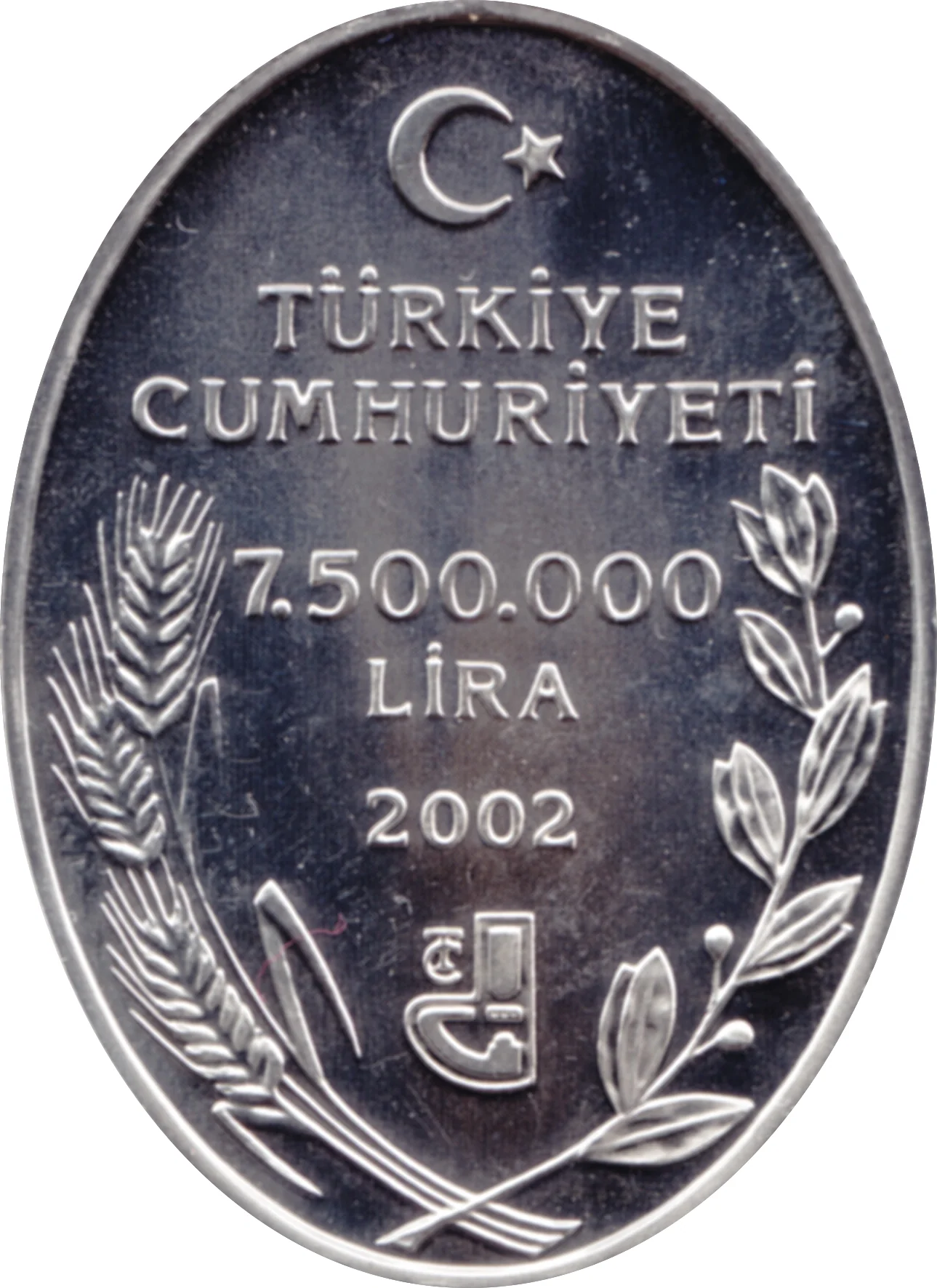
Obverse
Inscription:
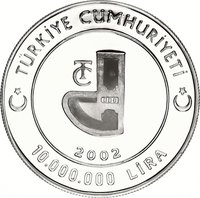
TÜRKİYE CUMHURİYETİ
7.500.000
LİRA
2002
7.500.000
LİRA
2002
Translation:
REPUBLIC OF TURKEY
7,500,000
LIRA
2002
7,500,000
LIRA
2002
Script: Latin
Language: Turkish
Engraver: Hakkı Baha Çavuşgil
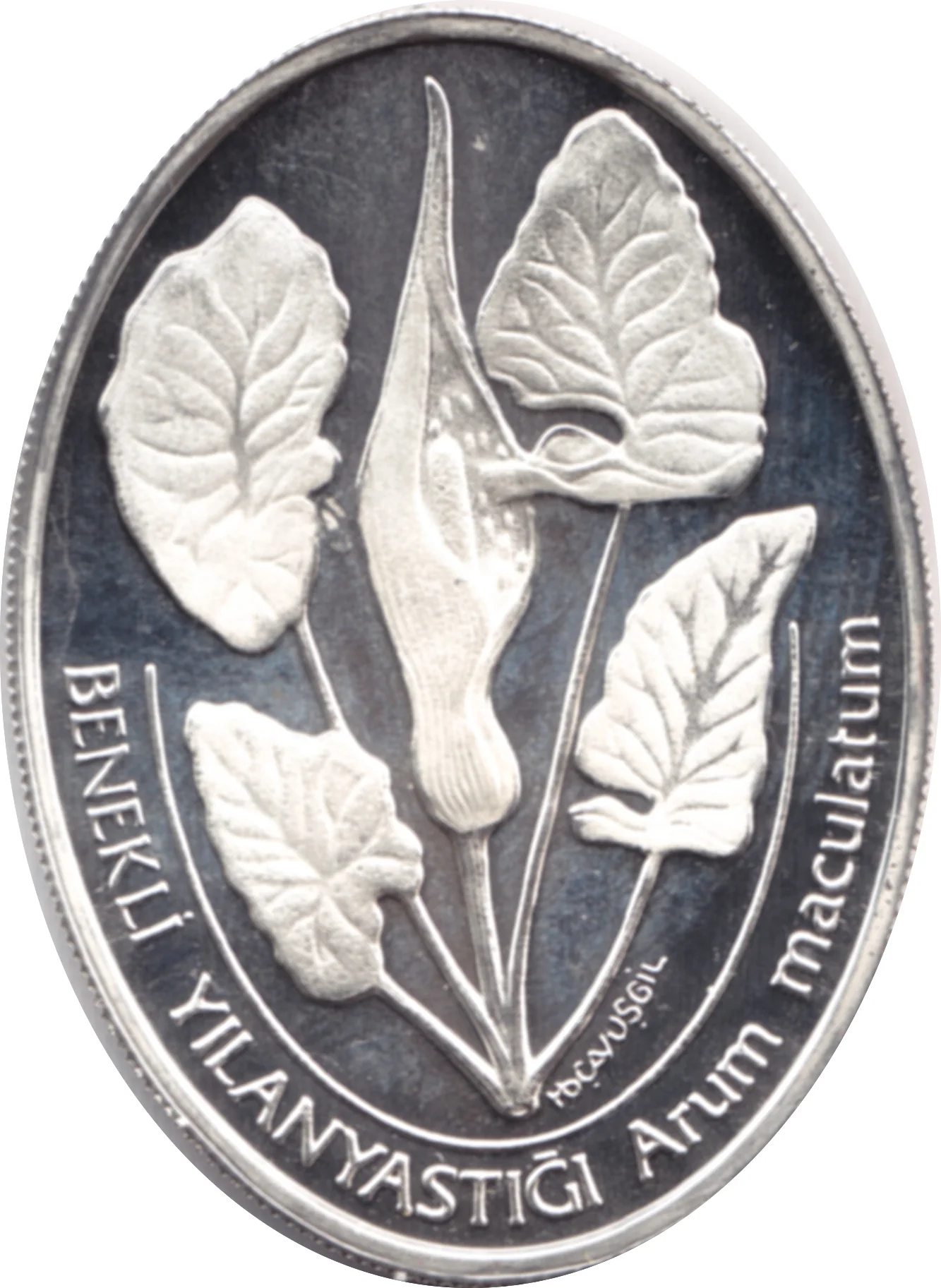
Reverse
Inscription:
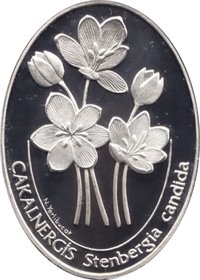
BENEKLİ YILANYASTIĞI Arum maculatum
Translation:
Spotted Arum, Arum maculatum
Script: Latin
Language: Turkish
Engraver: Hakkı Baha Çavuşgil
Edge
Reeded
Mintings
| Year | Mint Mark | Mintage | Quality | Collection |
|---|---|---|---|---|
| 2002 | — | 1,306 | Proof |
Historical background
In 2002, Turkey was emerging from a profound and devastating financial crisis that had struck in February 2001. This crisis was the culmination of years of economic instability characterized by chronic high inflation, large fiscal deficits, and a fragile, over-leveraged banking sector. The immediate trigger was a political dispute between the president and prime minister that sparked a loss of confidence, leading to a massive capital flight, a collapse of the Turkish lira (which lost over 50% of its value), and a sharp spike in interest rates. The government was forced to let the lira float freely and, with the International Monetary Fund (IMF) overseeing a stringent stabilization program, embarked on a radical economic restructuring.
The currency situation was dire and defined by extreme volatility and a loss of faith in the lira. Following the devaluation, annual inflation soared to nearly 70% by year's end, severely eroding purchasing power. The economy contracted by over 9% in 2001, and the country faced a huge burden of domestic debt, much of which was indexed to foreign exchange or short-term interest rates. The banking sector, which had fueled a pre-crisis boom with risky lending, was in a state of collapse and required a massive, costly government bailout funded by debt.
By late 2002, the situation was beginning to stabilize under the IMF program, but the economy remained fragile and the population deeply impoverished. The general election in November 2002 became a pivotal moment, bringing the newly-formed Justice and Development Party (AKP) to power with a strong mandate. The new government, under Prime Minister Recep Tayyip Erdoğan, committed to the IMF's austere reforms and central bank independence. This political shift, combined with the ongoing restructuring, set the stage for the subsequent period of stability and growth, including the introduction of a new Turkish lira in 2005 to remove six zeros from the battered currency.
The currency situation was dire and defined by extreme volatility and a loss of faith in the lira. Following the devaluation, annual inflation soared to nearly 70% by year's end, severely eroding purchasing power. The economy contracted by over 9% in 2001, and the country faced a huge burden of domestic debt, much of which was indexed to foreign exchange or short-term interest rates. The banking sector, which had fueled a pre-crisis boom with risky lending, was in a state of collapse and required a massive, costly government bailout funded by debt.
By late 2002, the situation was beginning to stabilize under the IMF program, but the economy remained fragile and the population deeply impoverished. The general election in November 2002 became a pivotal moment, bringing the newly-formed Justice and Development Party (AKP) to power with a strong mandate. The new government, under Prime Minister Recep Tayyip Erdoğan, committed to the IMF's austere reforms and central bank independence. This political shift, combined with the ongoing restructuring, set the stage for the subsequent period of stability and growth, including the introduction of a new Turkish lira in 2005 to remove six zeros from the battered currency.
✨ Legendary