

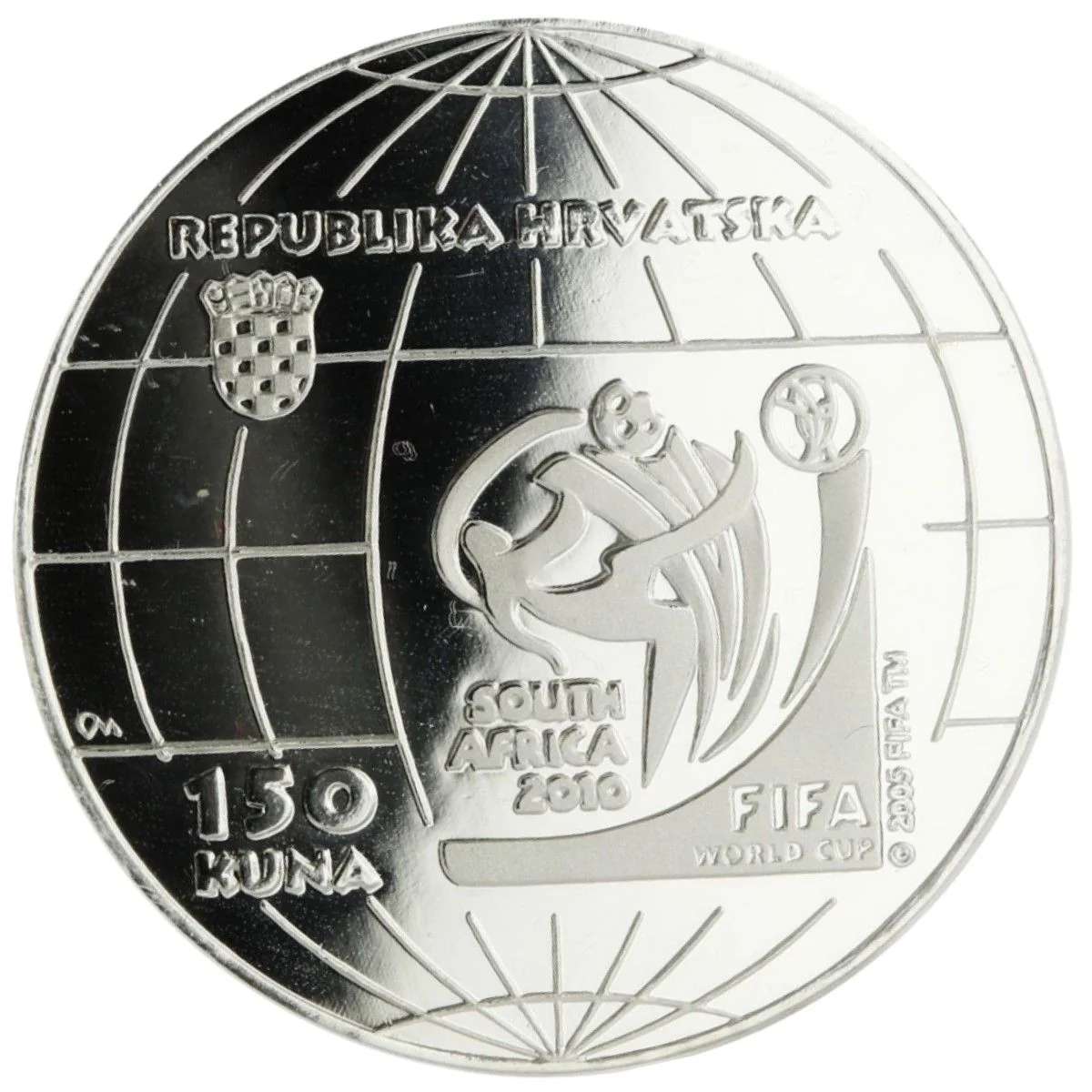
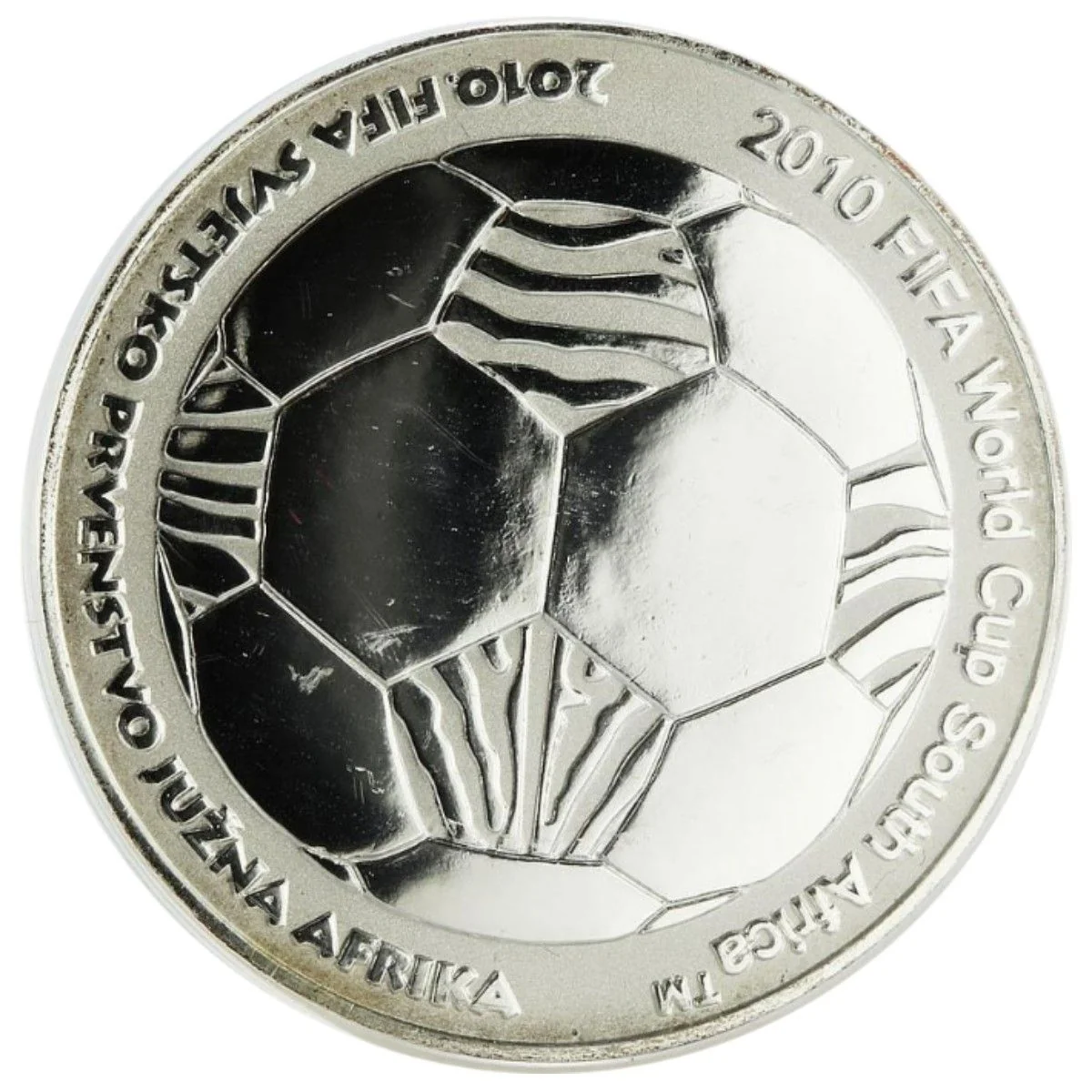
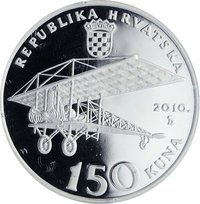
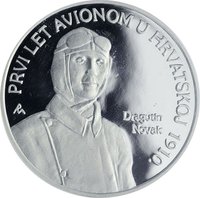
150 kuna – Croatia
Add to wishlist
Non-circulating coins
Commemoration: World Football Championship in South Africa
Croatia
Context
Material
References
KM: #
Numista: #53406
Value
Exchange value: 150 HRK
Bullion value: $55.63
Mintings
| Year | Mint Mark | Mintage | Quality | Collection |
|---|---|---|---|---|
| 2010 | — | 7,500 | Proof |
Historical background
In 2010, Croatia's currency situation was defined by its use of the kuna (HRK) under a managed float regime, a system maintained since the currency's introduction in 1994 following hyperinflation of the Yugoslav dinar. The Croatian National Bank (HNB) played an active role in managing the exchange rate, primarily to ensure stability and low inflation, rather than targeting a specific fixed rate. The kuna was, in practice, heavily influenced by the euro, with the HNB frequently intervening in foreign exchange markets to smooth out excessive volatility. This stability was a key policy priority, as the country was still recovering from the 2008 global financial crisis, which had triggered a severe recession, exposed banking sector vulnerabilities, and led to a sharp contraction in GDP.
The broader economic context was challenging, with the crisis highlighting Croatia's persistent macroeconomic imbalances, including a large current account deficit, high public debt, and low competitiveness. While the managed float provided a buffer against external shocks, the kuna faced occasional downward pressure due to these economic weaknesses and periods of political uncertainty. The HNB utilized its foreign currency reserves to defend the currency, aiming to maintain investor confidence and prevent destabilizing capital outflows. This period reinforced the ongoing debate about Croatia's long-term monetary policy, particularly regarding a potential future adoption of the euro to reduce exchange rate risk and lower borrowing costs.
Ultimately, the currency framework of 2010 was in a state of transition, set against the strategic goal of European Union accession (achieved in 2013). The kuna's stability was seen as a preparatory step for eventually entering the European Exchange Rate Mechanism II (ERM II), the waiting room for euro adoption. Therefore, the HNB's management of the kuna was not only about immediate economic stability but also about aligning with the convergence criteria required for future integration into the Eurozone, a process that would culminate over a decade later with the euro becoming Croatia's official currency in 2023.
The broader economic context was challenging, with the crisis highlighting Croatia's persistent macroeconomic imbalances, including a large current account deficit, high public debt, and low competitiveness. While the managed float provided a buffer against external shocks, the kuna faced occasional downward pressure due to these economic weaknesses and periods of political uncertainty. The HNB utilized its foreign currency reserves to defend the currency, aiming to maintain investor confidence and prevent destabilizing capital outflows. This period reinforced the ongoing debate about Croatia's long-term monetary policy, particularly regarding a potential future adoption of the euro to reduce exchange rate risk and lower borrowing costs.
Ultimately, the currency framework of 2010 was in a state of transition, set against the strategic goal of European Union accession (achieved in 2013). The kuna's stability was seen as a preparatory step for eventually entering the European Exchange Rate Mechanism II (ERM II), the waiting room for euro adoption. Therefore, the HNB's management of the kuna was not only about immediate economic stability but also about aligning with the convergence criteria required for future integration into the Eurozone, a process that would culminate over a decade later with the euro becoming Croatia's official currency in 2023.
✨ Legendary