

25 centimes – Belgium
Add to wishlist
Belgium
Context
Year: 1908
Issuer: Belgium
Ruler: Leopold II
Currency:
(1832—2001)
Demonetized: Yes
Total mintage: 4,011,357
Material
Diameter: 26 mm
Weight: 6.5 g
Thickness: 1.65 mm
Shape: Round with a round hole
Technique: Milled
Alignment: Coin alignment
flip
References
KM: #
Numista: #5323
Value
Exchange value: 0.25 BEF
Obverse
Description:
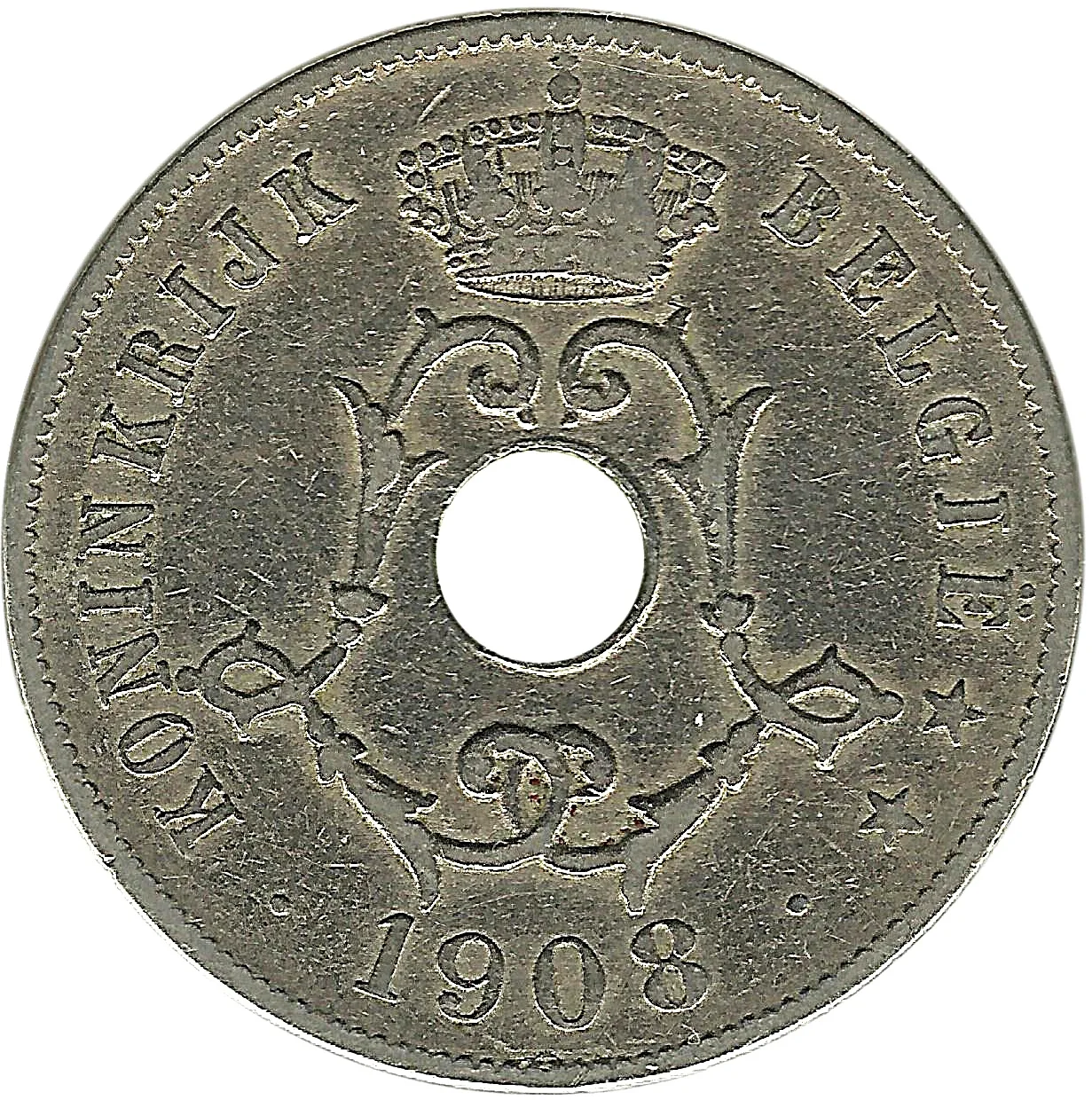
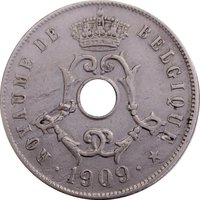
King Leopold II's monogram encircled by Dutch text. Date beneath.
Inscription:
KONINKRIJK BELGIË *
• 1908 •
• 1908 •
Translation:
Kingdom of Belgium *
• 1908 •
• 1908 •
Script: Latin
Engraver: Alphonse Michaux
Reverse
Description:
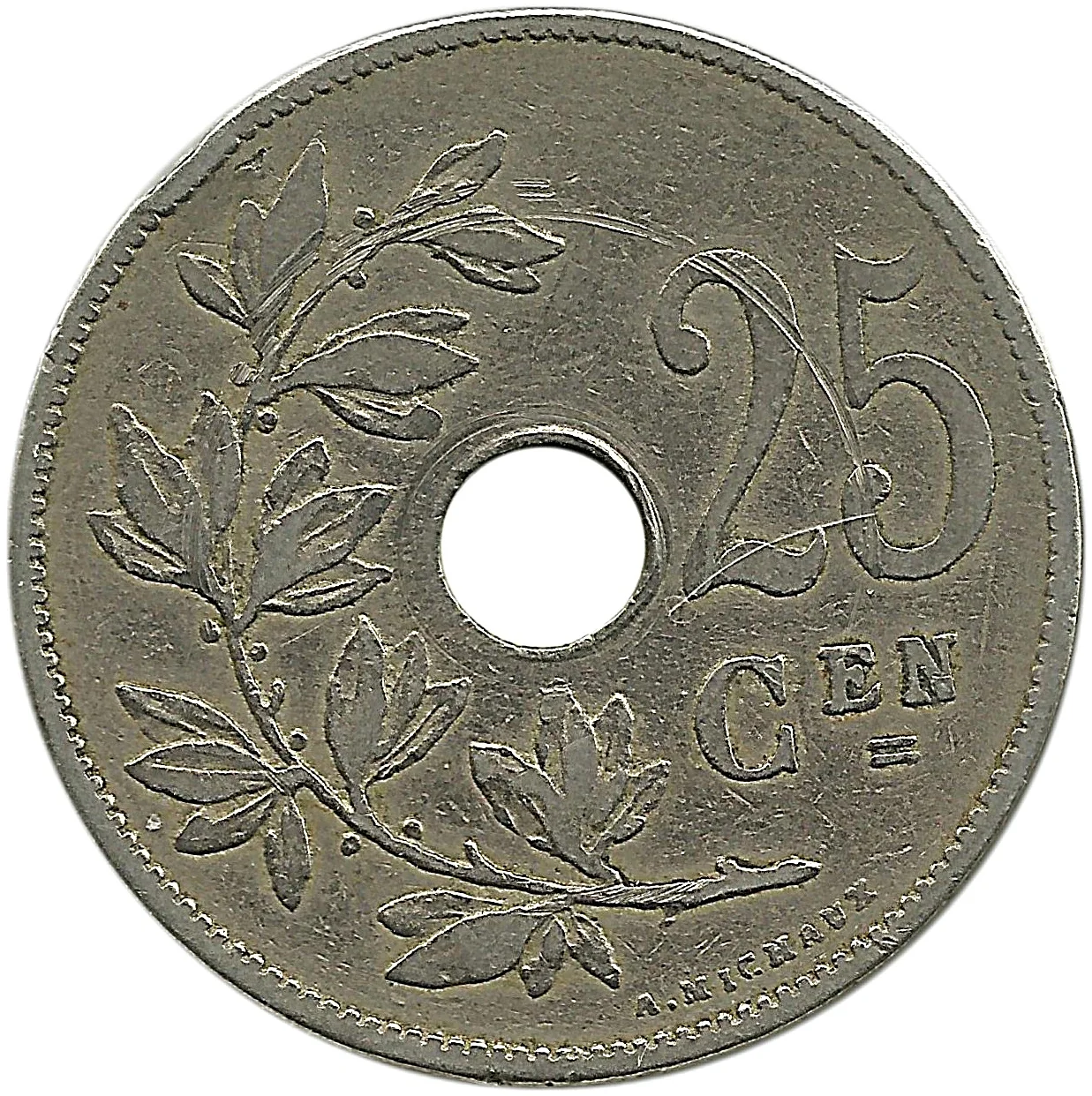
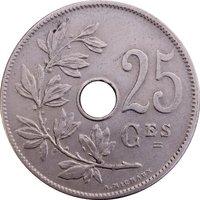
Center hole flanked by olive sprig and value; designer below.
Inscription:
25
CEN
A. MICHAUX
CEN
A. MICHAUX
Script: Latin
Engraver: Alphonse Michaux
Edge
Plain
Mints
| Name | Mark |
|---|---|
| Royal Mint of Belgium | — |
Mintings
| Year | Mint Mark | Mintage | Quality | Collection |
|---|---|---|---|---|
| 1908 | — | 4,011,357 |
Historical background
In 1908, Belgium operated under a stable and well-established monetary system anchored by the Belgian franc, which was part of the Latin Monetary Union (LMU). This multinational agreement, formed in 1865 with France, Italy, Switzerland, and later Greece, standardized gold and silver coinage across member states, ensuring their currencies were interchangeable at fixed values. The system facilitated trade and travel, meaning Belgian francs circulated alongside French francs and other member coins within Belgium, providing a foundation of monetary stability for the country's significant industrial and commercial economy.
However, by the first decade of the 20th century, the Latin Monetary Union was under severe strain. Fluctuations in the value of silver and the unilateral minting practices of some members had created imbalances. Belgium, as a committed member, faced the ongoing challenge of maintaining the required bimetallic (gold and silver) standard while larger economic forces pushed the world toward a pure gold standard. Domestically, the National Bank of Belgium, founded in 1850, held the exclusive right of note issue and managed the currency with a conservative approach, ensuring the franc's credibility even as the international framework around it weakened.
Thus, the currency situation in 1908 was one of domestic stability but within a fragile international system. The Belgian economy was strong, and the franc was trusted, yet policymakers were acutely aware of the structural flaws in the LMU. The period was marked by technical debates among economists and officials about Belgium's monetary future, setting the stage for the country's eventual transition to a pure gold standard, which would be solidified in the years following the First World War after the LMU's effective collapse.
However, by the first decade of the 20th century, the Latin Monetary Union was under severe strain. Fluctuations in the value of silver and the unilateral minting practices of some members had created imbalances. Belgium, as a committed member, faced the ongoing challenge of maintaining the required bimetallic (gold and silver) standard while larger economic forces pushed the world toward a pure gold standard. Domestically, the National Bank of Belgium, founded in 1850, held the exclusive right of note issue and managed the currency with a conservative approach, ensuring the franc's credibility even as the international framework around it weakened.
Thus, the currency situation in 1908 was one of domestic stability but within a fragile international system. The Belgian economy was strong, and the franc was trusted, yet policymakers were acutely aware of the structural flaws in the LMU. The period was marked by technical debates among economists and officials about Belgium's monetary future, setting the stage for the country's eventual transition to a pure gold standard, which would be solidified in the years following the First World War after the LMU's effective collapse.
🌱 Very Common