

1 Pound – Guernsey
Context
Year: 1981
Country: British Crown dependencies
Issuer: Guernsey
Ruler: Elizabeth II
Currency:
(since 1971)
Total mintage: 4,500
Material
References
KM: #Click to copy to clipboard37a
Numista: #53090
Value
Exchange value: 1 GGP
Bullion value: $1225.38
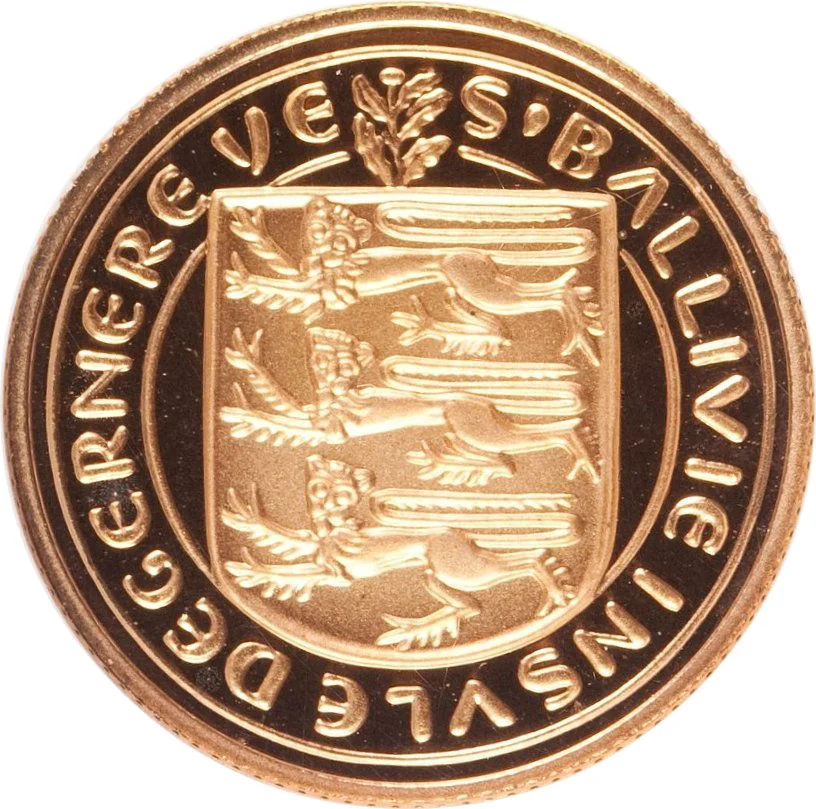
Obverse
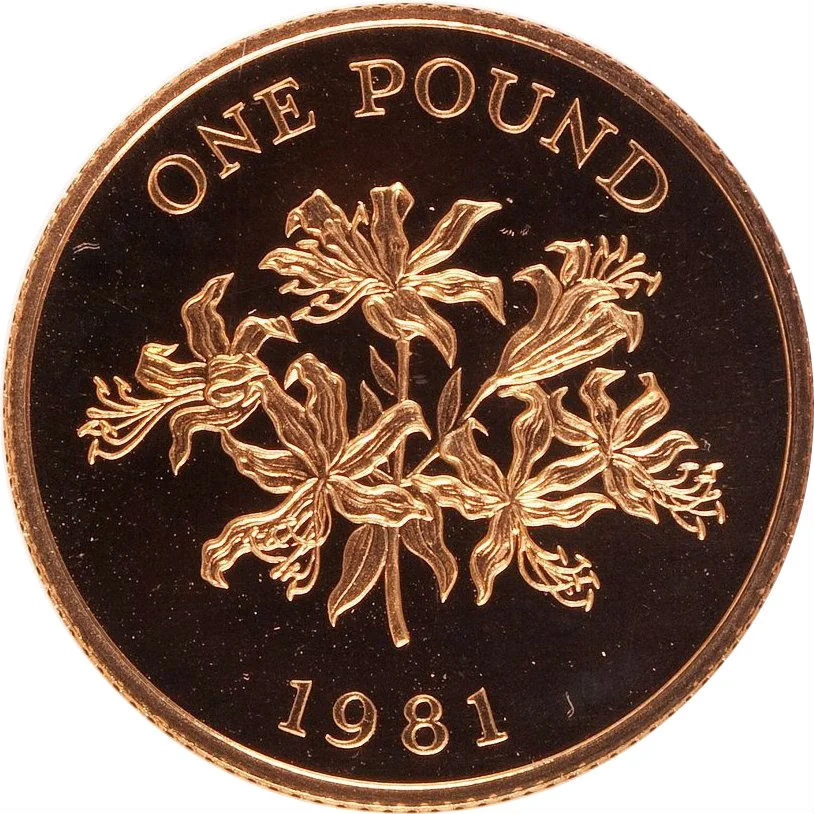
Reverse
Description:
Guernsey Lily center, value above, date below.
Inscription:
ONE POUND
1981
1981
Script: Latin
Engraver: Robert Elderton
Edge
Milled
Mintings
| Year | Mint Mark | Mintage | Quality | Collection |
|---|---|---|---|---|
| 1981 | — | 4,500 | Proof |
Historical background
In 1981, Guernsey's currency situation was characterised by its long-standing and pragmatic dual-currency system. The States of Guernsey issued its own sterling-denominated banknotes and coins (Guernsey pounds), which were legal tender on the island but not in the United Kingdom. Concurrently, Bank of England notes and UK coinage circulated freely and were accepted interchangeably at par value. This system underscored Guernsey's political autonomy as a Crown Dependency, while its economy remained deeply integrated with the UK monetary area.
The period was one of economic transition and inflationary pressure, influenced by UK monetary policy. The early 1980s saw high interest rates set by the Bank of England to combat inflation, which directly impacted Guernsey as it shadowed UK rates. This, combined with a growing finance sector, prompted careful management by the States' Board of Finance to maintain stability. The local currency issue was primarily a practical mechanism to retain seigniorage profits (the revenue from issuing currency) for the benefit of Guernsey's public finances, rather than ceding them to the UK Treasury.
Furthermore, 1981 fell within a era before the later, more formalised agreements on currency issue with the UK Treasury. The system operated on convention and mutual understanding, relying on the backing of Guernsey's substantial sterling reserves held in UK government securities. This arrangement ensured full convertibility and absolute confidence in the Guernsey pound, both domestically and for the growing number of international banks establishing operations on the island, solidifying its position as a stable offshore financial centre.
The period was one of economic transition and inflationary pressure, influenced by UK monetary policy. The early 1980s saw high interest rates set by the Bank of England to combat inflation, which directly impacted Guernsey as it shadowed UK rates. This, combined with a growing finance sector, prompted careful management by the States' Board of Finance to maintain stability. The local currency issue was primarily a practical mechanism to retain seigniorage profits (the revenue from issuing currency) for the benefit of Guernsey's public finances, rather than ceding them to the UK Treasury.
Furthermore, 1981 fell within a era before the later, more formalised agreements on currency issue with the UK Treasury. The system operated on convention and mutual understanding, relying on the backing of Guernsey's substantial sterling reserves held in UK government securities. This arrangement ensured full convertibility and absolute confidence in the Guernsey pound, both domestically and for the growing number of international banks establishing operations on the island, solidifying its position as a stable offshore financial centre.
✨ Legendary