

20 pesos – Uruguay
Add to wishlist
Uruguay
Context
Year: 1970
Issuer: Uruguay
Period:
(since 1825)
Currency:
(1863—1975)
Demonetization: 1 July 1975
Total mintage: 50,000,000
Material
Diameter: 21.5 mm
Weight: 3.75 g
Thickness: 1.5 mm
Shape: Round
Composition: Copper-nickel
Technique: Milled
Alignment: Medal alignment
flip
References
KM: #
Numista: #5294
Value
Exchange value: 20 UYP
Obverse
Description:
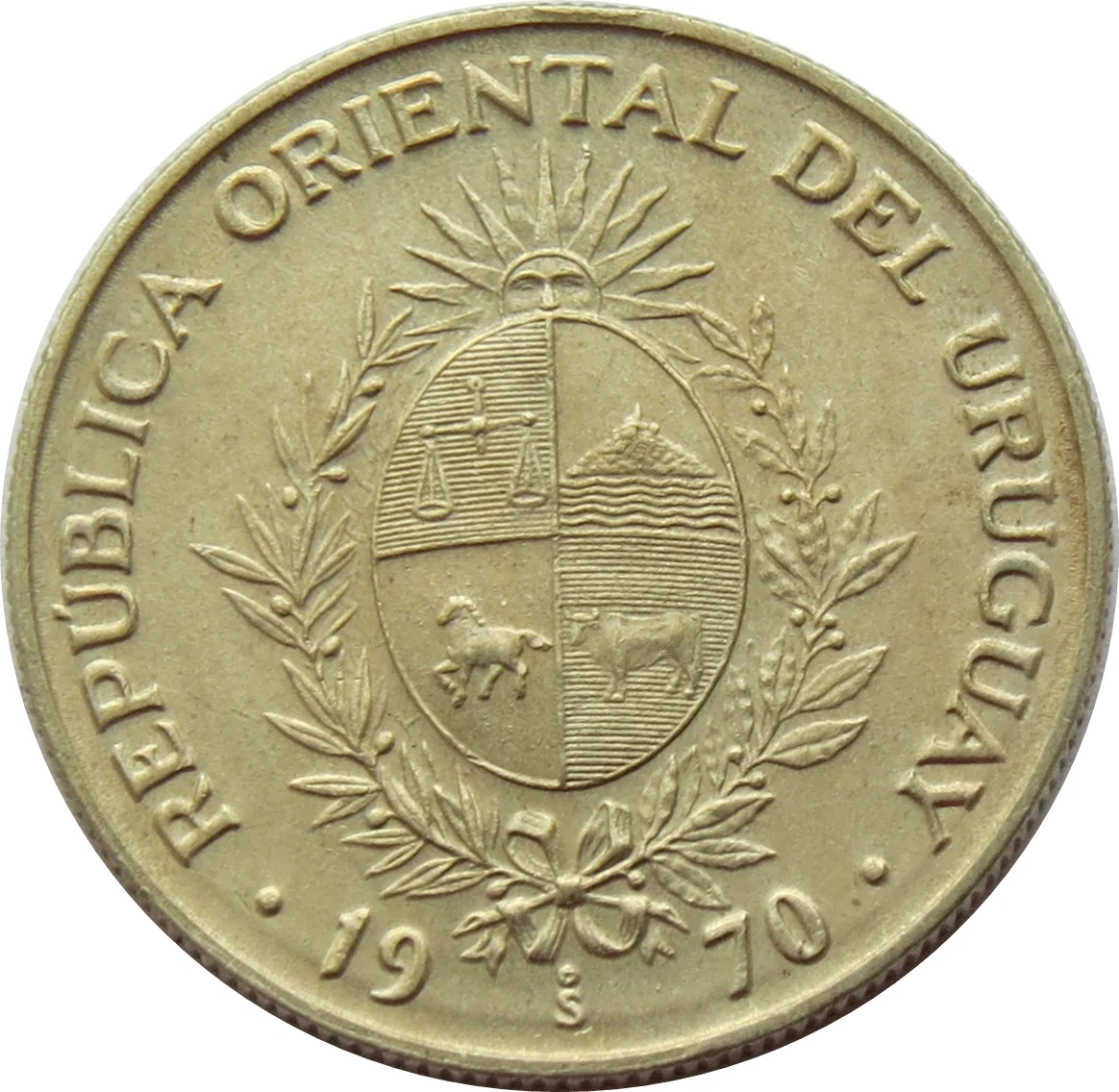
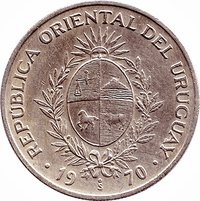
National arms, country name above, date and mintmark below.
Inscription:
REPUBLICA ORIENTAL DEL URUGUAY
· 19 So 70 ·
· 19 So 70 ·
Translation:
ORIENTAL REPUBLIC OF URUGUAY
· 19 So 70 ·
· 19 So 70 ·
Script: Latin
Language: Spanish
Engraver: Francisco Orellana Pavés
Reverse
Description:
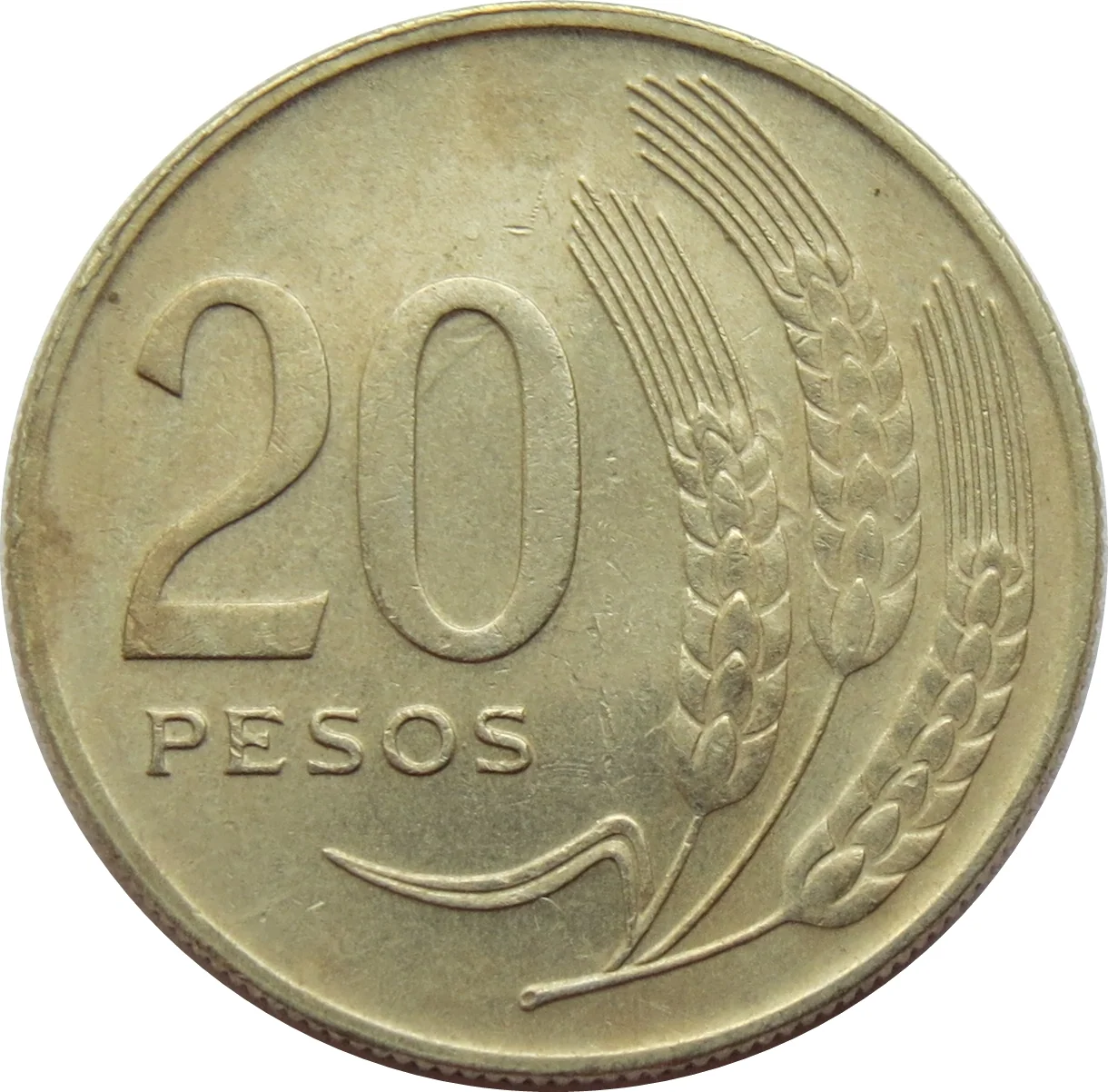
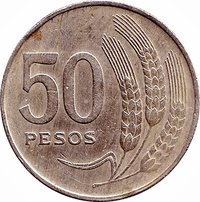
Wheat ears right, value left.
Inscription:
20
PESOS
PESOS
Script: Latin
Engraver: Francisco Orellana Pavés
Edge
Milled
Mints
| Name | Mark |
|---|---|
| Casa de Moneda de Chile | (So) |
Mintings
| Year | Mint Mark | Mintage | Quality | Collection |
|---|---|---|---|---|
| 1970 | So | — | Proof | |
| 1970 | So | 50,000,000 |
Historical background
By 1970, Uruguay was in the midst of a prolonged economic and political crisis that had severely destabilized its currency. The model of Batllismo, a welfare state built on beef and wool exports, had been in decline since the mid-1950s. Chronic inflation, stagnant growth, and a large fiscal deficit plagued the economy. In response, successive governments had employed a stop-and-go cycle of devaluations, wage freezes, and price controls, which failed to address structural problems and fueled social unrest. The Uruguayan peso was under constant pressure, losing value and public confidence, while multiple exchange rates created a complex and distorted financial system.
The immediate currency situation was characterized by high inflation, which reached approximately 20% annually, and a heavily controlled foreign exchange regime. The Central Bank of Uruguay maintained a fixed official exchange rate for essential imports and debt servicing, but a parallel black market for dollars flourished, with a significant premium over the official rate. This "financial dollar" reflected the true market scarcity of foreign currency and the lack of confidence in the peso. The government's attempts to defend the official parity drained international reserves, while wage adjustments lagged behind price increases, eroding purchasing power and triggering strikes.
This monetary instability was both a cause and a symptom of a deeper societal breakdown. The economic distress, including the currency crisis, fueled the rise of the leftist Tupamaro guerrilla movement and strengthened authoritarian tendencies within the state. By 1970, the political system was paralyzed, unable to enact coherent fiscal or monetary reform. The currency situation thus mirrored the nation's trajectory: a once-stable democracy and prosperous economy was unraveling, setting the stage for the civic-military dictatorship that would seize power in 1973 and implement a radically different economic and monetary policy.
The immediate currency situation was characterized by high inflation, which reached approximately 20% annually, and a heavily controlled foreign exchange regime. The Central Bank of Uruguay maintained a fixed official exchange rate for essential imports and debt servicing, but a parallel black market for dollars flourished, with a significant premium over the official rate. This "financial dollar" reflected the true market scarcity of foreign currency and the lack of confidence in the peso. The government's attempts to defend the official parity drained international reserves, while wage adjustments lagged behind price increases, eroding purchasing power and triggering strikes.
This monetary instability was both a cause and a symptom of a deeper societal breakdown. The economic distress, including the currency crisis, fueled the rise of the leftist Tupamaro guerrilla movement and strengthened authoritarian tendencies within the state. By 1970, the political system was paralyzed, unable to enact coherent fiscal or monetary reform. The currency situation thus mirrored the nation's trajectory: a once-stable democracy and prosperous economy was unraveling, setting the stage for the civic-military dictatorship that would seize power in 1973 and implement a radically different economic and monetary policy.
🌱 Very Common