

1 Dollar – Hong Kong
Circulating commemorative coins
Commemoration: Retrocession to China
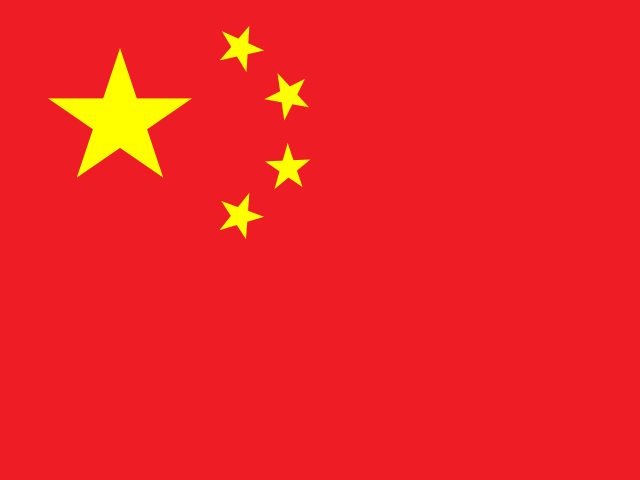
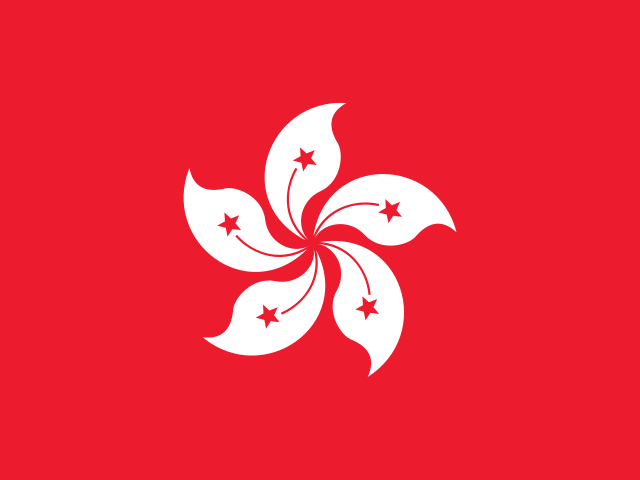
China
Material
Diameter: 25.5 mm
Weight: 7.1 g
Thickness: 1.9 mm
Shape: Round
Composition: Copper-nickel
Technique: Milled
Alignment: Medal alignment
flip
References
KM: #Click to copy to clipboard75
Numista: #5279
Value
Exchange value: 1 HKD = $0.13
Inflation-adjusted value: 1.64 HKD
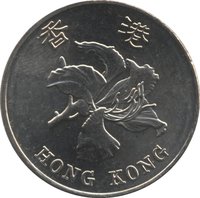
Obverse
Description:
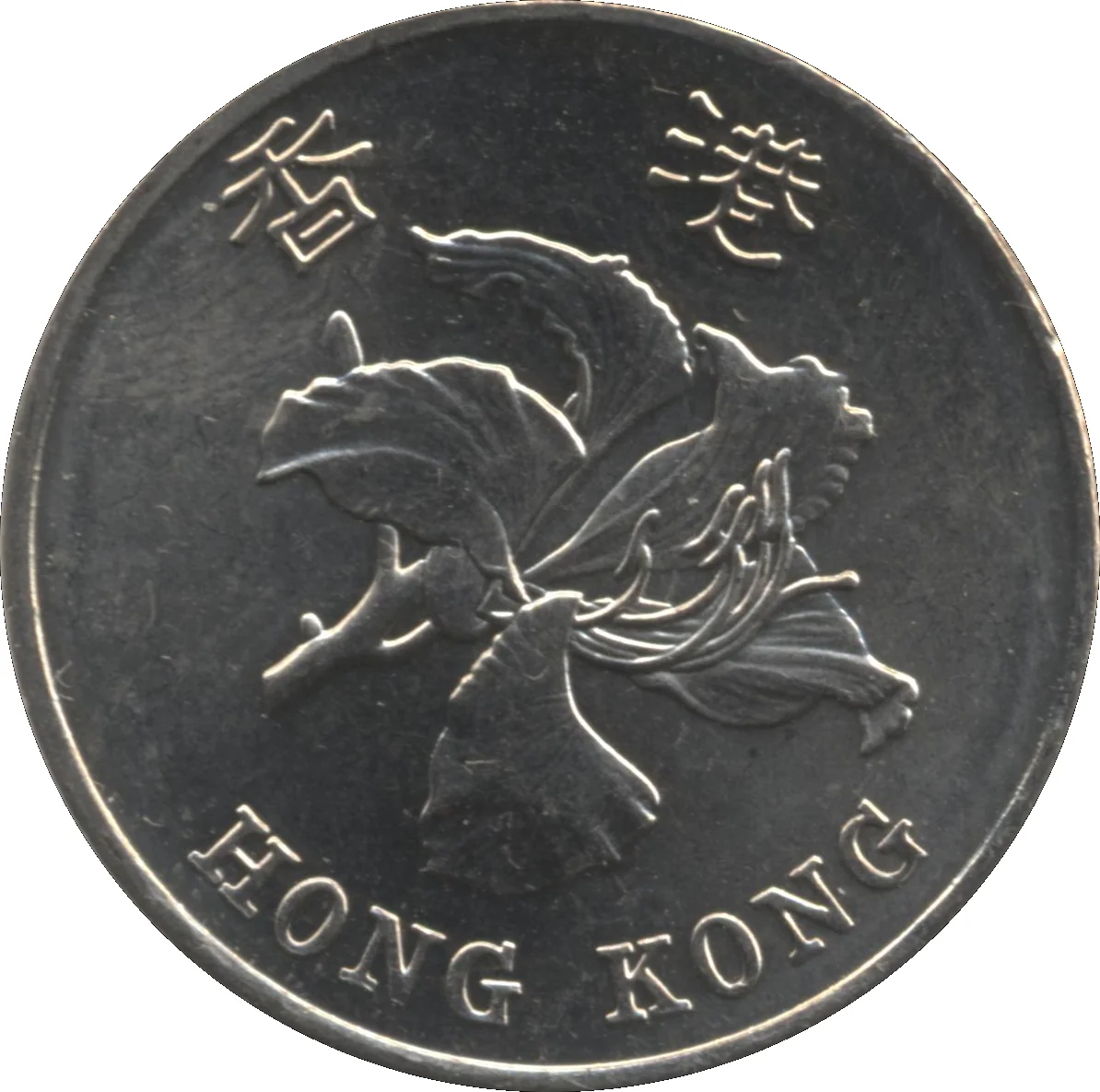
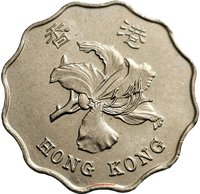
Bauhinia (Bauhinia blakeana) above issuer.
Inscription:
香 港
HONG KONG
HONG KONG
Translation:
HONG KONG
Language: Chinese
Engraver: Joseph Yam
Reverse
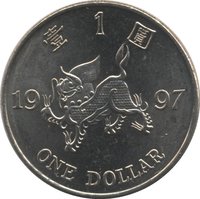
Description:
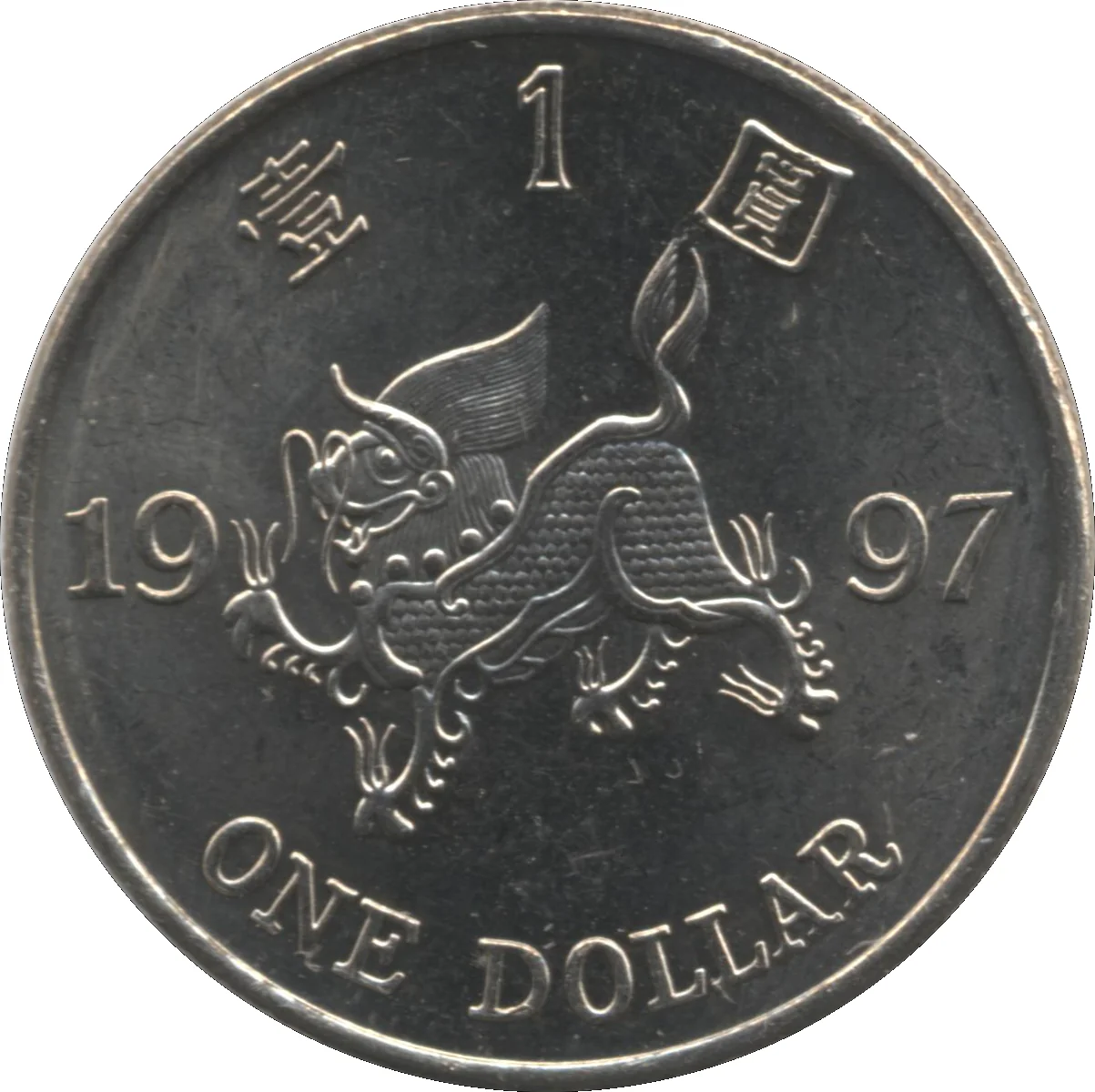
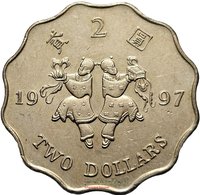
The Qi Lin (Kirin), a unicorn symbolizing auspiciousness and noble lineage.
Inscription:
壹 1 圓
19 97
ONE DOLLAR
19 97
ONE DOLLAR
Translation:
One Dollar
19 97
19 97
Engraver: Lady Haddon-Cave
Edge
Reeded
Mints
| Name | Mark |
|---|---|
| Royal Mint | — |
Mintings
| Year | Mint Mark | Mintage | Quality | Collection |
|---|---|---|---|---|
| 1997 | — | — | ||
| 1997 | — | — | Proof |
Historical background
In the lead-up to the 1997 handover from British to Chinese sovereignty, Hong Kong's currency situation was a cornerstone of its economic stability and a major focus of international attention. The Hong Kong dollar had been pegged to the US dollar since 1983 under a unique and strict Linked Exchange Rate System (LERS), established to halt a crisis of confidence. This mechanism required the Hong Kong Monetary Authority (HKMA) to issue local currency only when backed by US dollar reserves at a fixed rate of HK$7.80 to US$1. The peg was widely seen as non-negotiable, a critical anchor intended to reassure markets and citizens that Hong Kong's financial system would remain robust and insulated from potential volatility or inflationary pressures post-handover.
The primary concern in 1997 was not about the peg itself, which enjoyed strong credibility, but about its resilience in the face of potential speculative attacks. The year coincided with the outbreak of the Asian Financial Crisis, which began in Thailand and quickly spread, causing severe currency devaluations and economic turmoil across the region. Speculators viewed Hong Kong, with its open capital markets and high property valuations, as a potential target. They anticipated that pressure on the peg might force the HKMA to raise interest rates dramatically to defend it, which would in turn crash the stock and property markets, allowing them to profit from short positions.
Consequently, as 1997 progressed, the currency situation evolved from one of stable pre-handover assurance to one of active defense. While the handover on July 1, 1997, passed without immediate currency disruption, the full force of the Asian crisis reached Hong Kong in the subsequent months. This set the stage for the intense speculative attacks of 1998, where the HKMA famously intervened directly in the stock and futures markets to defend the peg, underscoring that the currency regime established before 1997 would be defended at all costs as the foundation of Hong Kong's financial identity under "One Country, Two Systems."
The primary concern in 1997 was not about the peg itself, which enjoyed strong credibility, but about its resilience in the face of potential speculative attacks. The year coincided with the outbreak of the Asian Financial Crisis, which began in Thailand and quickly spread, causing severe currency devaluations and economic turmoil across the region. Speculators viewed Hong Kong, with its open capital markets and high property valuations, as a potential target. They anticipated that pressure on the peg might force the HKMA to raise interest rates dramatically to defend it, which would in turn crash the stock and property markets, allowing them to profit from short positions.
Consequently, as 1997 progressed, the currency situation evolved from one of stable pre-handover assurance to one of active defense. While the handover on July 1, 1997, passed without immediate currency disruption, the full force of the Asian crisis reached Hong Kong in the subsequent months. This set the stage for the intense speculative attacks of 1998, where the HKMA famously intervened directly in the stock and futures markets to defend the peg, underscoring that the currency regime established before 1997 would be defended at all costs as the foundation of Hong Kong's financial identity under "One Country, Two Systems."
🌱 Common