

100 Gulden (Central Bank of the Netherlands Antilles) – Netherlands Antilles
Non-circulating coins
Commemoration: 150th Anniversary of the Central Bank of the Netherlands Antilles
Netherlands
Context
Year: 1978
Country: Netherlands 
Issuer: Netherlands Antilles
Ruler: Juliana
Currency:
(since 1828)
Demonetization: 31 March 2025
Total mintage: 50,000
Material
References
KM: #Click to copy to clipboard21
Numista: #52736
Value
Exchange value: 100 ANG
Bullion value: $1008.39
Inflation-adjusted value: 321.28 ANG
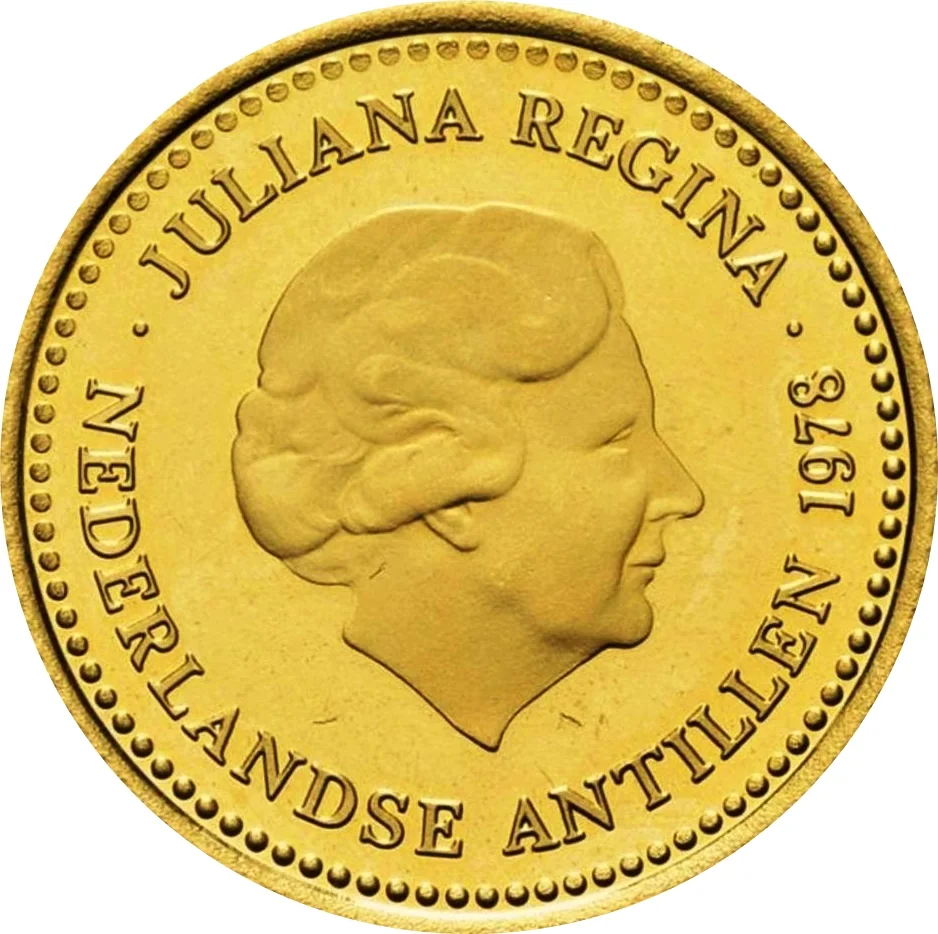
Obverse
Description:
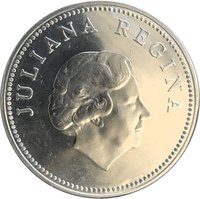
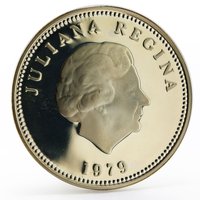
Queen Juliana facing right
Inscription:
JULIANA REGINA
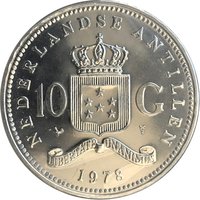
NEDERLANDSE ANTILLEN 1978
NEDERLANDSE ANTILLEN 1978
Translation:
Juliana Queen
Netherlands Antilles 1978
Netherlands Antilles 1978
Script: Latin
Engraver: Katinka Bruyn-van Rood
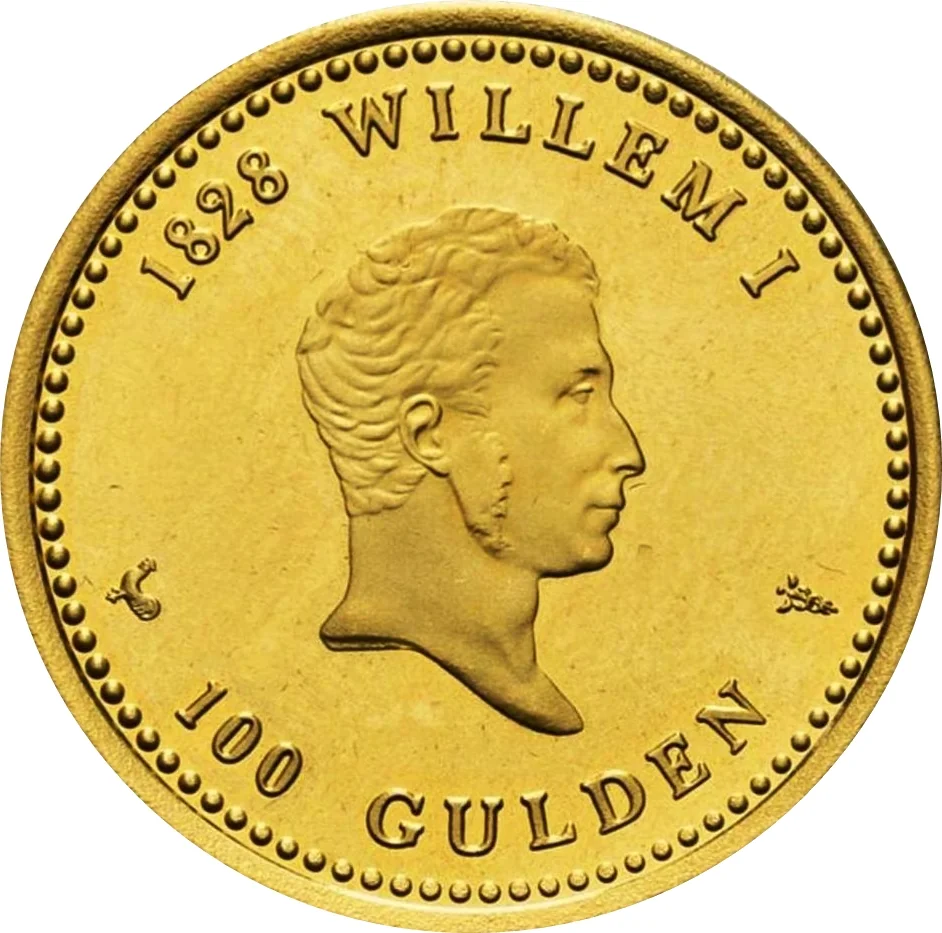
Reverse
Description:
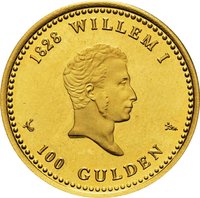
King Willem I facing right, mintmarks flank, value below.
Inscription:
1828 WILLEM I
100 GULDEN
100 GULDEN
Script: Latin
Engraver: Auguste-François Michaut
Edge
Reeded
Mints
| Name | Mark |
|---|---|
| Royal Dutch Mint | — |
Mintings
| Year | Mint Mark | Mintage | Quality | Collection |
|---|---|---|---|---|
| 1978 | — | 23,500 | Proof | |
| 1978 | — | 26,500 |
Historical background
In 1978, the currency situation in the Netherlands Antilles was defined by its unique and stable arrangement under the Netherlands Antillean guilder (ANG), which was pegged to the U.S. dollar at a fixed rate of 1.79 ANG = 1 USD. This peg, established in 1971 following the collapse of the Bretton Woods system, provided crucial monetary stability for the federation's open, tourism- and oil-dependent economy. The currency was issued by the Bank van de Nederlandse Antillen (Central Bank of the Netherlands Antilles), founded in 1828, which managed the peg and held substantial foreign exchange reserves, primarily in dollars, to maintain confidence and facilitate international trade.
This monetary system operated within a complex political framework, as the Netherlands Antilles was an autonomous country within the Kingdom of the Netherlands. While the islands managed their own internal finances and currency, ultimate responsibility for foreign affairs and defense lay with the Netherlands. This relationship provided an implicit backing for the currency, reinforcing its stability. The economy itself was bolstered by the presence of the Isla oil refinery on Curaçao, a major employer and source of foreign exchange, and a growing tourism sector, both of which benefited from the predictable dollar peg.
However, the situation was not without underlying tensions. Economic disparities existed between the larger, more industrialized islands of Curaçao and Aruba and the smaller "Windward Islands." Furthermore, political movements, particularly in Aruba, were actively campaigning for "Status Aparte" (separate status) and greater autonomy, which included aspirations for their own monetary arrangements. While 1978 represented a period of surface-level monetary stability, these simmering political currents would eventually lead to Aruba's secession from the federation in 1986 and the eventual dissolution of the Netherlands Antilles itself in 2010, fundamentally altering the currency landscape in the decades to follow.
This monetary system operated within a complex political framework, as the Netherlands Antilles was an autonomous country within the Kingdom of the Netherlands. While the islands managed their own internal finances and currency, ultimate responsibility for foreign affairs and defense lay with the Netherlands. This relationship provided an implicit backing for the currency, reinforcing its stability. The economy itself was bolstered by the presence of the Isla oil refinery on Curaçao, a major employer and source of foreign exchange, and a growing tourism sector, both of which benefited from the predictable dollar peg.
However, the situation was not without underlying tensions. Economic disparities existed between the larger, more industrialized islands of Curaçao and Aruba and the smaller "Windward Islands." Furthermore, political movements, particularly in Aruba, were actively campaigning for "Status Aparte" (separate status) and greater autonomy, which included aspirations for their own monetary arrangements. While 1978 represented a period of surface-level monetary stability, these simmering political currents would eventually lead to Aruba's secession from the federation in 1986 and the eventual dissolution of the Netherlands Antilles itself in 2010, fundamentally altering the currency landscape in the decades to follow.
💎 Extremely Rare