

500 Zlotys – Poland
Non-circulating coins
Commemoration: Tadeusz Kosciuszko
Poland

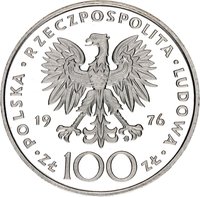
Obverse
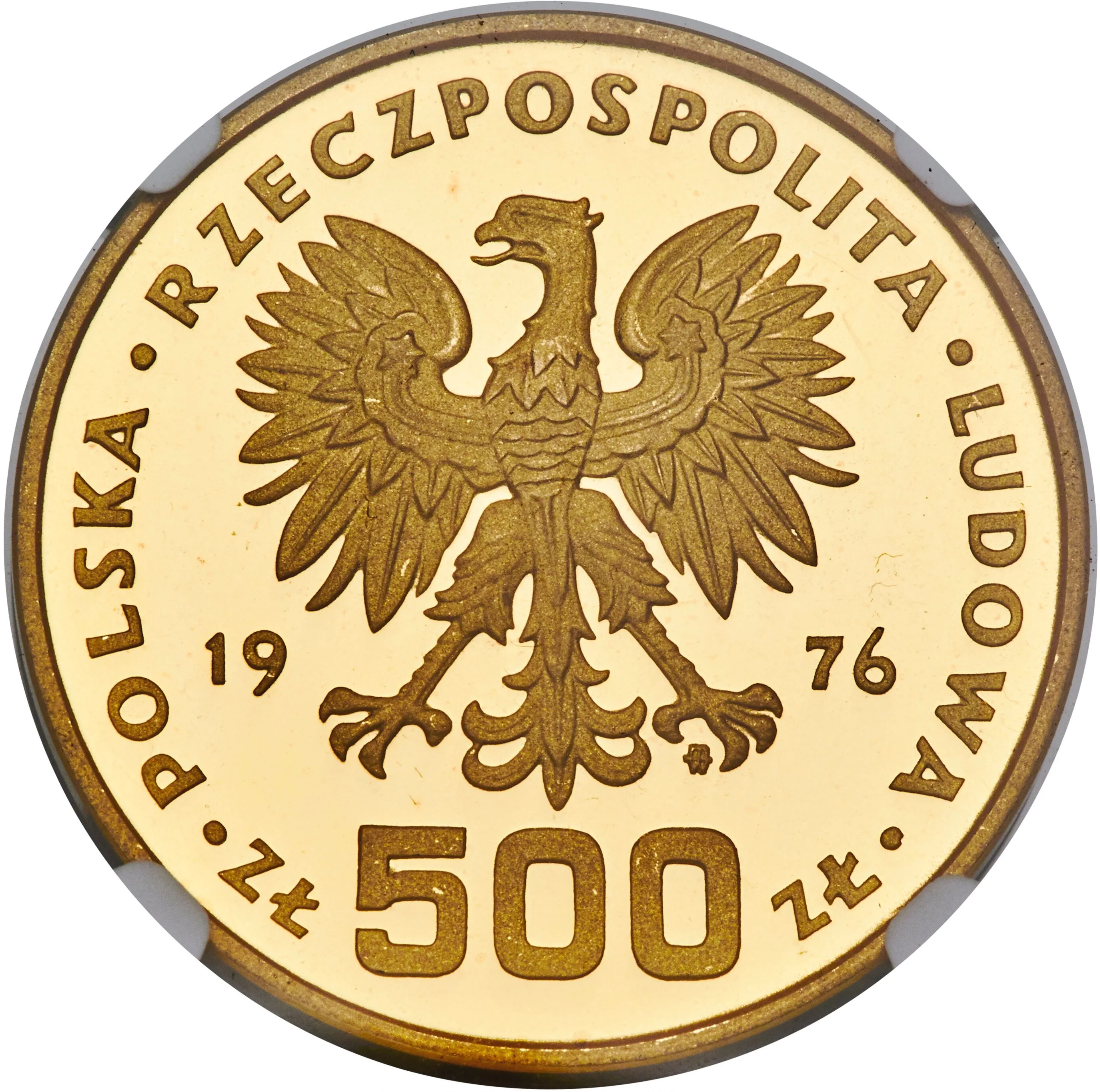
Inscription:
POLSKA • RZECZPOSPOLITA • LUDOWA
1976
mw
• ZŁ 500 ZŁ •
1976
mw
• ZŁ 500 ZŁ •
Translation:
PEOPLE'S REPUBLIC OF POLAND
1976
mw
• 500 ZŁ ZŁ •
1976
mw
• 500 ZŁ ZŁ •
Script: Latin
Language: Polish
Engraver: Stanisława Wątróbska-Frindt
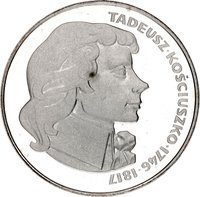
Reverse
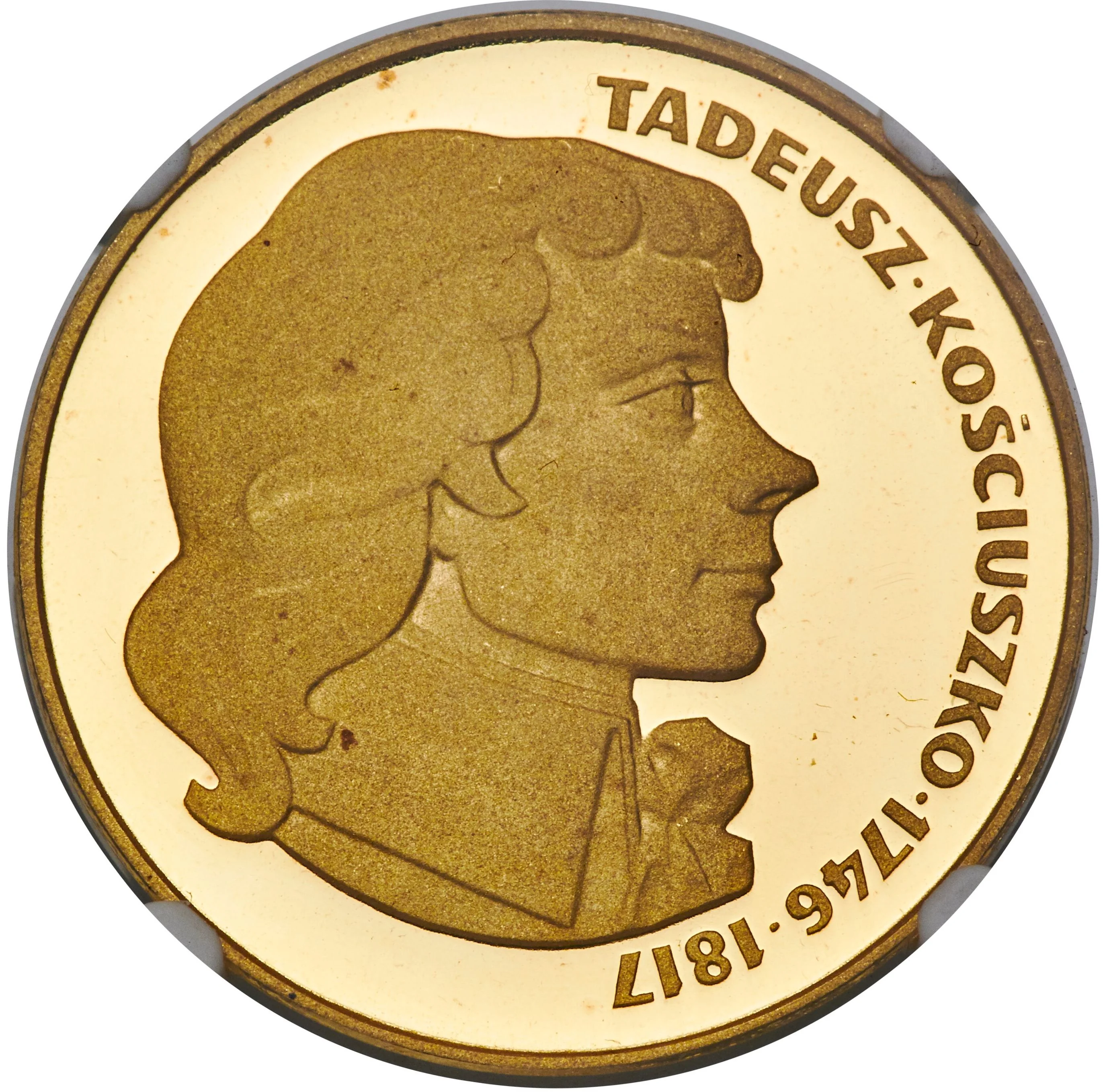
Inscription:
TADEUSZ • KOŚCIUSZKO • 1746 • 1817
Translation:
Tadeusz Kościuszko 1746 1817
Script: Latin
Engraver: Stanisław Plęskowski
Edge
Plain
Mints
| Name | Mark |
|---|---|
| Mint of Poland | (mw) |
Mintings
| Year | Mint Mark | Mintage | Quality | Collection |
|---|---|---|---|---|
| 1976 | MW | 2,318 | Proof |
Historical background
In 1976, Poland's currency situation was a critical symptom of the deepening economic and political crisis within the People's Republic. The state-controlled economy, burdened by inefficient heavy industry, massive subsidies, and a growing foreign debt, was struggling with widespread shortages of consumer goods. This created a severe disconnect: while the Polish złoty (PLN) was the official currency, its purchasing power was eroding rapidly due to repressed inflation, leading to a thriving black market where goods were available but at significantly higher effective prices. The government, led by First Secretary Edward Gierek, faced a fundamental dilemma between maintaining the illusion of price stability and implementing necessary but painful economic reforms.
The crisis culminated in June 1976 when the government announced a sudden, drastic attempt to address economic imbalances through a sharp increase in the prices of basic foodstuffs, including sugar, meat, and butter, by an average of 60%. This de facto devaluation of the złoty's purchasing power for essentials was intended to reduce the state's subsidy burden and align official prices closer to real economic costs. However, the move was made without any corresponding increase in wages, meaning it would cause an immediate and severe drop in the living standards of the working class, the very group the regime claimed to represent.
The announcement triggered immediate and massive worker protests across the country, most notably in the cities of Radom and Ursus. Faced with this widespread social unrest, the authorities made a panicked retreat, repealing the price hikes within just 24 hours. This reversal was a major political defeat for the Gierek regime, exposing its weakness and undermining its authority. The currency and price reform had failed, leaving the underlying economic problems unsolved and instead fostering the growth of organized political opposition, such as the Workers' Defence Committee (KOR), which would play a pivotal role in the rise of Solidarity a few years later. The 1976 episode thus cemented a cycle of economic dysfunction, attempted shock therapy, and social resistance that would define the remainder of the decade.
The crisis culminated in June 1976 when the government announced a sudden, drastic attempt to address economic imbalances through a sharp increase in the prices of basic foodstuffs, including sugar, meat, and butter, by an average of 60%. This de facto devaluation of the złoty's purchasing power for essentials was intended to reduce the state's subsidy burden and align official prices closer to real economic costs. However, the move was made without any corresponding increase in wages, meaning it would cause an immediate and severe drop in the living standards of the working class, the very group the regime claimed to represent.
The announcement triggered immediate and massive worker protests across the country, most notably in the cities of Radom and Ursus. Faced with this widespread social unrest, the authorities made a panicked retreat, repealing the price hikes within just 24 hours. This reversal was a major political defeat for the Gierek regime, exposing its weakness and undermining its authority. The currency and price reform had failed, leaving the underlying economic problems unsolved and instead fostering the growth of organized political opposition, such as the Workers' Defence Committee (KOR), which would play a pivotal role in the rise of Solidarity a few years later. The 1976 episode thus cemented a cycle of economic dysfunction, attempted shock therapy, and social resistance that would define the remainder of the decade.
✨ Legendary