

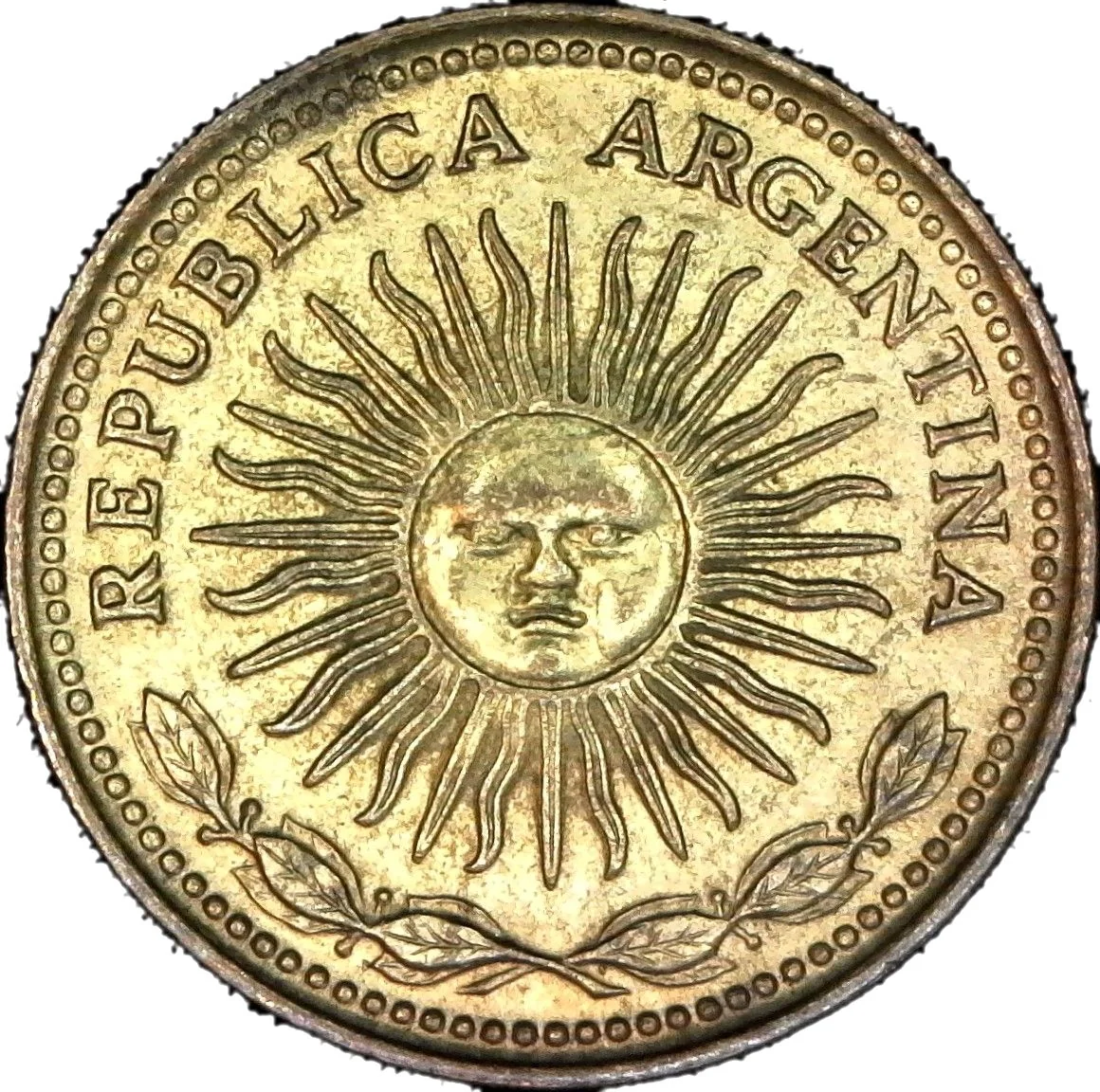
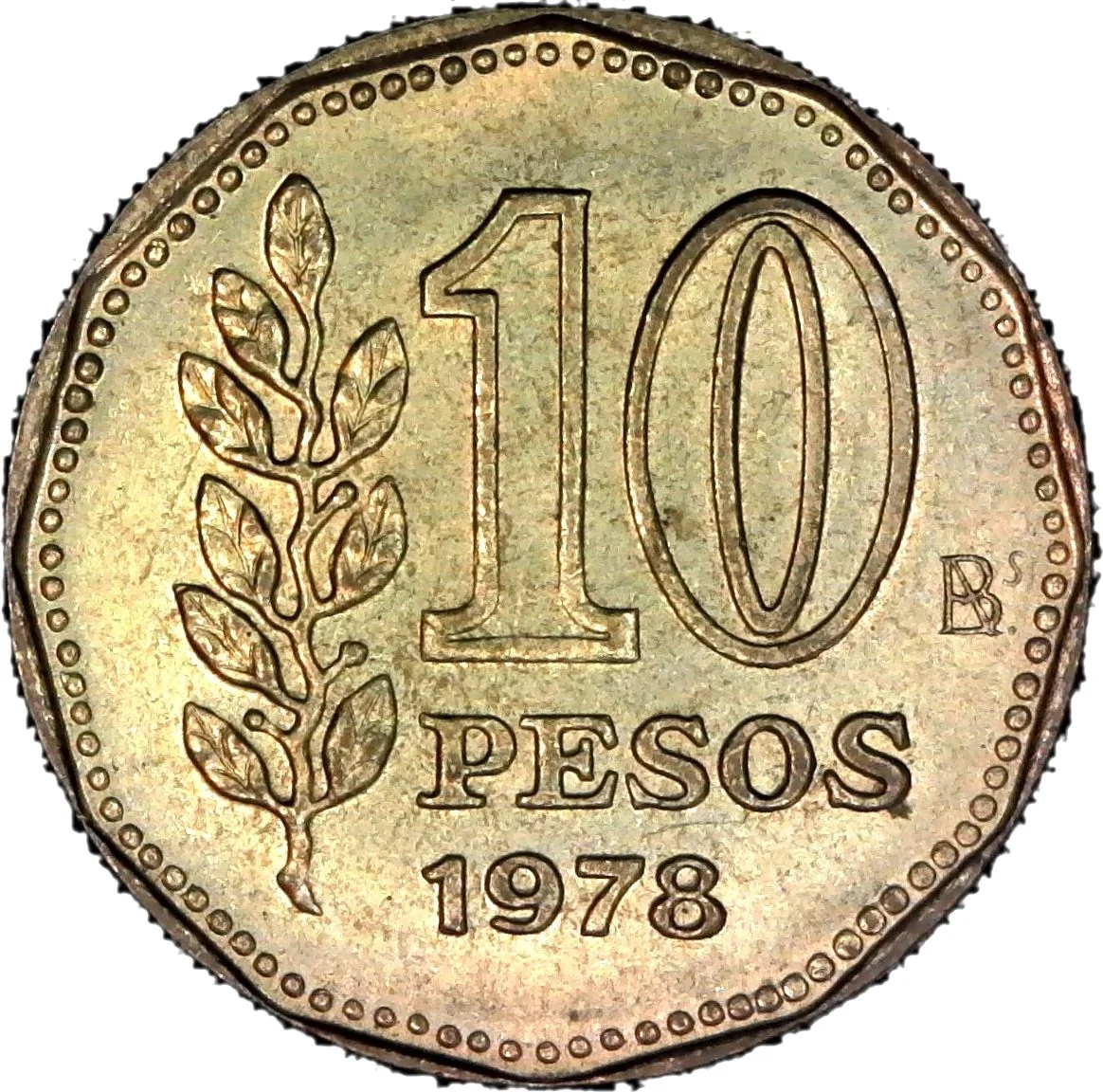
10 Pesos – Argentina
Argentina
Context
Years: 1976–1978
Issuer: Argentina 
Period:
(since 1861)
Currency:
(1970—1983)
Demonetization: 30 March 1984
Total mintage: 581,161,416
Material
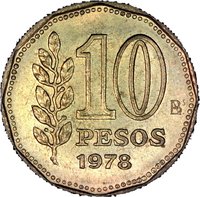
References
KM: #Click to copy to clipboard72
Numista: #5229
Value
Exchange value: 10 ARL
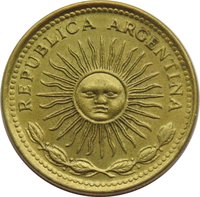
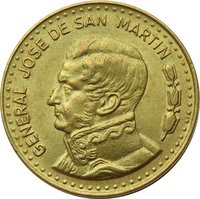
Obverse
Reverse
Edge
Milled
Mints
| Name | Mark |
|---|---|
| Buenos Aires | BAˢ |
Mintings
Historical background
In 1976, Argentina was engulfed in a profound economic and political crisis that set the stage for the military coup on March 24. The economy was characterized by rampant inflation, which had soared to over 300% annually, severe fiscal deficits, and a massive external debt burden. The Peronist government of Isabel Perón had failed to stabilize the situation, with price controls, rampant public spending, and a complex system of multiple exchange rates leading to widespread distortions, a booming black market for dollars, and a severe loss of confidence in the Argentine peso.
Upon seizing power, the military junta, led by General Jorge Rafael Videla, immediately implemented a radical shift in economic policy, appointing José Alfredo Martínez de Hoz as Minister of the Economy. His plan centered on orthodox liberalization, aiming to crush inflation and restore financial order. Key initial measures included a sharp devaluation to unify the exchange rate, the removal of many price controls, and the opening of financial markets. However, the cornerstone was the implementation of a pre-announced, tablita cambiaria (a crawling peg exchange rate regime) designed to gradually devalue the peso at a rate slower than inflation, in an attempt to anchor expectations and curb price rises.
This policy initially succeeded in reducing inflation and attracting speculative capital inflows, creating a brief period of apparent stability. However, it ultimately proved unsustainable. The overvalued peso devastated local industry through increased imports, led to a dramatic rise in foreign debt as the private sector borrowed cheap dollars, and sowed the seeds for the even deeper financial crisis of the early 1980s. Thus, the currency situation in 1976 was a volatile transition from the chaotic populism of the mid-1970s to a rigid, financially repressive regime that offered temporary relief but exacerbated Argentina's long-term structural economic problems.
Upon seizing power, the military junta, led by General Jorge Rafael Videla, immediately implemented a radical shift in economic policy, appointing José Alfredo Martínez de Hoz as Minister of the Economy. His plan centered on orthodox liberalization, aiming to crush inflation and restore financial order. Key initial measures included a sharp devaluation to unify the exchange rate, the removal of many price controls, and the opening of financial markets. However, the cornerstone was the implementation of a pre-announced, tablita cambiaria (a crawling peg exchange rate regime) designed to gradually devalue the peso at a rate slower than inflation, in an attempt to anchor expectations and curb price rises.
This policy initially succeeded in reducing inflation and attracting speculative capital inflows, creating a brief period of apparent stability. However, it ultimately proved unsustainable. The overvalued peso devastated local industry through increased imports, led to a dramatic rise in foreign debt as the private sector borrowed cheap dollars, and sowed the seeds for the even deeper financial crisis of the early 1980s. Thus, the currency situation in 1976 was a volatile transition from the chaotic populism of the mid-1970s to a rigid, financially repressive regime that offered temporary relief but exacerbated Argentina's long-term structural economic problems.
🌱 Very Common