

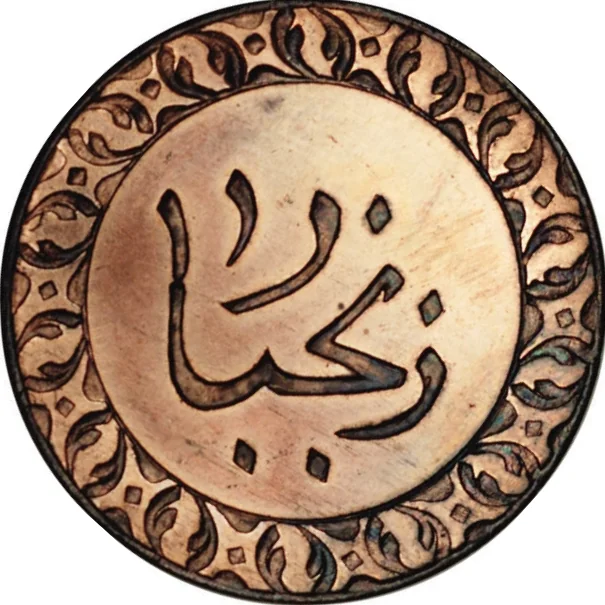
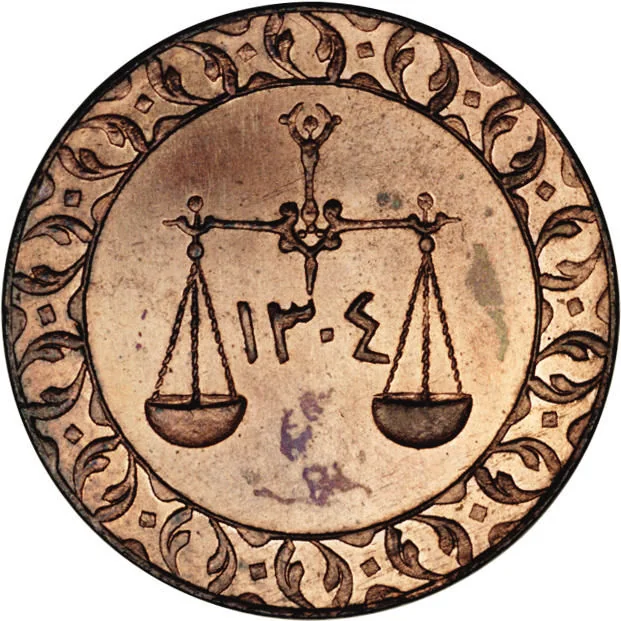
1 pysa – Zanzibar
Add to wishlist
Tanzania
Context
Year: 1886
Islamic (Hijri) Year:: 1304
Country: Tanzania
Issuer: Zanzibar
Ruler: Barghash bin Said
Currency:
(1882—1908)
Demonetized: Yes
Total mintage: 18,680,000
Material
References
KM: #
Numista: #15176
Value
Exchange value: 1⁄136 ZZY
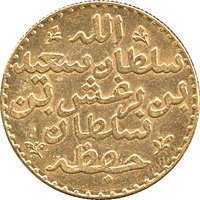
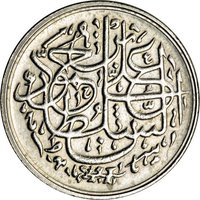
Obverse
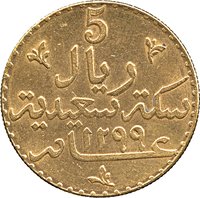
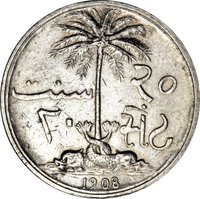
Reverse
Edge
Plain
Mints
| Name | Mark |
|---|---|
| Heaton and Sons / The Mint Birmingham | — |
Mintings
| Year | Mint Mark | Mintage | Quality | Collection |
|---|---|---|---|---|
| 1886 | — | 18,680,000 | ||
| 1886 | — | — | Proof |
Historical background
In 1886, Zanzibar’s currency situation was a complex reflection of its political and economic position, caught between deep indigenous traditions, Indian Ocean trade networks, and escalating European colonial influence. The primary medium of exchange remained the silver Maria Theresa thaler, a venerable trade coin minted in Austria but ubiquitous throughout the Red Sea and Western Indian Ocean. Alongside this, a multitude of other silver coins circulated, including British rupees and Indian annas, a legacy of the island's central role in the caravan trade and its strong commercial ties with merchants from the Indian subcontinent. This created a de facto multi-currency system where values fluctuated based on weight, purity, and the demands of long-distance commerce.
However, this system was under direct pressure from British imperial interests. Following the establishment of a British protectorate over Zanzibar in 1890, the groundwork was being laid in 1886. The British sought to impose monetary order and integrate Zanzibar into their wider Indian Ocean economic sphere. The Zanzibar rupee, first minted in 1882 but not yet dominant, was being actively promoted to replace the Maria Theresa thaler and standardize transactions. This move was closely tied to the political machinations of the Heligoland-Zanzibar Treaty of 1890, where spheres of influence were being carved out, and monetary control was a key lever of colonial authority.
Beneath this high-level monetary struggle, the majority of the local population engaged in daily markets using a much older system of small-denomination copper and bronze coins known as pysa (pice). These were essential for local trade, and their value was traditionally pegged to the silver rupee (e.g., 64 pysa to one rupee). The period was thus one of monetary layering and transition, where the international trade in ivory and cloves was financed with silver thalers and rupees, while domestic life relied on pysa, all under the growing shadow of a formal colonial currency system that would soon seek to supersede them.
However, this system was under direct pressure from British imperial interests. Following the establishment of a British protectorate over Zanzibar in 1890, the groundwork was being laid in 1886. The British sought to impose monetary order and integrate Zanzibar into their wider Indian Ocean economic sphere. The Zanzibar rupee, first minted in 1882 but not yet dominant, was being actively promoted to replace the Maria Theresa thaler and standardize transactions. This move was closely tied to the political machinations of the Heligoland-Zanzibar Treaty of 1890, where spheres of influence were being carved out, and monetary control was a key lever of colonial authority.
Beneath this high-level monetary struggle, the majority of the local population engaged in daily markets using a much older system of small-denomination copper and bronze coins known as pysa (pice). These were essential for local trade, and their value was traditionally pegged to the silver rupee (e.g., 64 pysa to one rupee). The period was thus one of monetary layering and transition, where the international trade in ivory and cloves was financed with silver thalers and rupees, while domestic life relied on pysa, all under the growing shadow of a formal colonial currency system that would soon seek to supersede them.
🌱 Fairly Common