

50 cents – Trinidad and Tobago
Add to wishlist
Trinidad and Tobago
Context
Years: 1976–2003
Issuer: Trinidad and Tobago
Period:
(since 1976)
Currency:
(since 1964)
Total mintage: 6,608,346
Material
Diameter: 26 mm
Weight: 7 g
Thickness: 1.85 mm
Shape: Round
Composition: Copper-nickel
Technique: Milled
Alignment: Medal alignment
flip
References
KM: #
Numista: #5206
Value
Exchange value: 0.50 TTD
Obverse
Description:
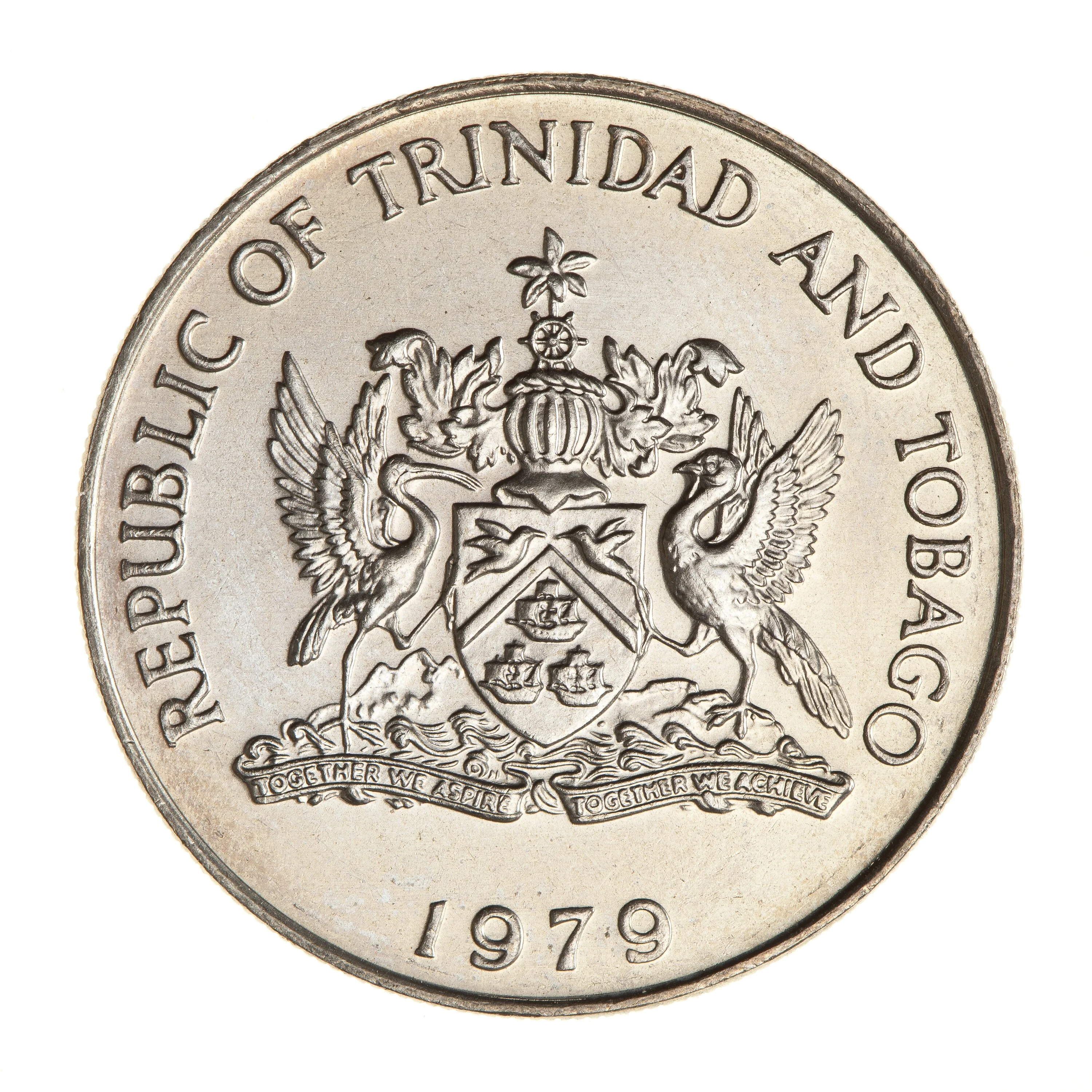
Coat of arms with date beneath.
Inscription:
REPUBLIC OF TRINIDAD AND TOBAGO
TOGETHER WE ASPIRE TOGETHER WE ACHIEVE
FM
1976
TOGETHER WE ASPIRE TOGETHER WE ACHIEVE
FM
1976
Script: Latin
Reverse
Description:
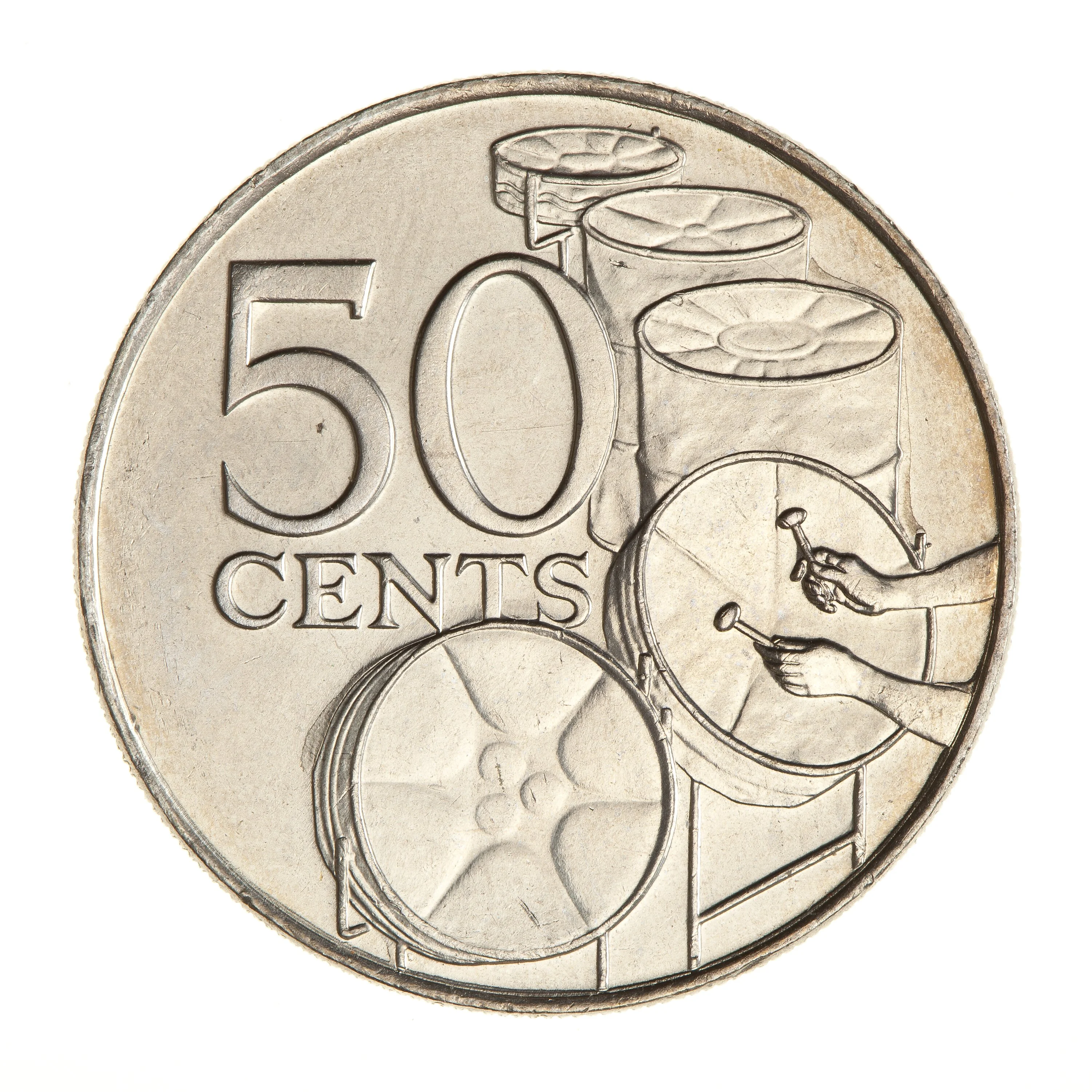
Oil barrel kettle drums, left denomination.
Inscription:
50
CENTS
CENTS
Script: Latin
Designer: Ernest Lauser
Edge
Reeded
Categories
| Art> Music |
| Symbols> Coat of Arms |
Mints
| Name | Mark |
|---|---|
| Royal Mint | — |
| Franklin Mint | (FM) |
Mintings
| Year | Mint Mark | Mintage | Quality | Collection |
|---|---|---|---|---|
| 1976 | FM | 3,000 | Matte | |
| 1976 | FM | 10,000 | Proof | |
| 1976 | FM | 582 | Special Uncirculated | |
| 1977 | — | 1,500,000 | ||
| 1977 | FM | 3,000 | Matte | |
| 1977 | FM | 5,337 | Proof | |
| 1977 | FM | 633 | Special Uncirculated | |
| 1978 | — | 563,000 | ||
| 1978 | FM | 4,845 | Proof | |
| 1978 | FM | 472 | Special Uncirculated | |
| 1978 | FM | 3,000 | Matte | |
| 1979 | FM | 3,000 | Matte | |
| 1979 | — | 750,000 | ||
| 1979 | FM | 3,270 | Proof | |
| 1979 | FM | 518 | Special Uncirculated | |
| 1980 | — | 3,750,000 | ||
| 1980 | FM | 1,500 | Matte | |
| 1980 | FM | 2,393 | Proof | |
| 1980 | FM | 796 | Special Uncirculated | |
| 1981 | FM | — | Matte | |
| 1981 | FM | — | Proof | |
| 1981 | FM | — | Special Uncirculated | |
| 1999 | — | — | ||
| 1999 | — | 3,000 | Proof | |
| 2003 | — | — |
Historical background
In 1976, Trinidad and Tobago's currency situation was defined by its recent transition to a fully independent monetary system, a move that symbolized the nation's growing economic sovereignty. Just three years prior, in 1973, the country had abandoned the Eastern Caribbean Dollar and introduced its own currency, the Trinidad and Tobago Dollar (TTD), which was initially pegged to the US Dollar. This shift was a direct result of the oil boom, which began in the early 1970s and provided the financial confidence and foreign reserves necessary to support a national currency.
The year 1976 itself was one of significant economic and political change, occurring against the backdrop of the first OPEC oil price shock. As a major oil exporter, Trinidad and Tobago experienced a massive influx of petrodollars, leading to substantial growth in foreign exchange reserves. This wealth allowed the government, under Prime Minister Eric Williams, to maintain a stable and strong fixed exchange rate of TT$2.40 to US$1.00. The currency's stability was a cornerstone of the period's economic policy, facilitating ambitious public spending and industrialization projects, such as the development of state-owned enterprises and infrastructure.
However, this stability was underpinned by a mono-resource economy, creating a long-term vulnerability that would later become apparent. While 1976 saw a currency buoyed by oil revenues, it also marked the year the government established the Revenue Stabilization Fund (a precursor to the Heritage and Stabilization Fund) to save excess oil income. This foresight acknowledged the inherent volatility of commodity prices, setting the stage for future challenges when oil prices eventually declined, testing the strength of the fixed exchange rate regime established during this prosperous era.
The year 1976 itself was one of significant economic and political change, occurring against the backdrop of the first OPEC oil price shock. As a major oil exporter, Trinidad and Tobago experienced a massive influx of petrodollars, leading to substantial growth in foreign exchange reserves. This wealth allowed the government, under Prime Minister Eric Williams, to maintain a stable and strong fixed exchange rate of TT$2.40 to US$1.00. The currency's stability was a cornerstone of the period's economic policy, facilitating ambitious public spending and industrialization projects, such as the development of state-owned enterprises and infrastructure.
However, this stability was underpinned by a mono-resource economy, creating a long-term vulnerability that would later become apparent. While 1976 saw a currency buoyed by oil revenues, it also marked the year the government established the Revenue Stabilization Fund (a precursor to the Heritage and Stabilization Fund) to save excess oil income. This foresight acknowledged the inherent volatility of commodity prices, setting the stage for future challenges when oil prices eventually declined, testing the strength of the fixed exchange rate regime established during this prosperous era.
🌱 Common