

2 Hryvni (Institute for Wine Growing and Making) – Ukraine
Non-circulating coins
Commemoration: 100th Anniversary of the Foundation of the Institute for Wine Growing and Making
Ukraine
Context
Year: 2005
Issuer: Ukraine 
Issuing organization: National Bank of Ukraine
Period:
(since 1991)
Currency:
(since 1996)
Total mintage: 20,000
Material
Diameter: 31 mm
Weight: 12.8 g
Shape: Round
Composition: Nickel brass
Magnetic: No
Technique: Milled
Alignment: Medal alignment
flip
References
KM: #Click to copy to clipboard359
Numista: #51973
Value
Exchange value: 2 UAH
Obverse
Description:
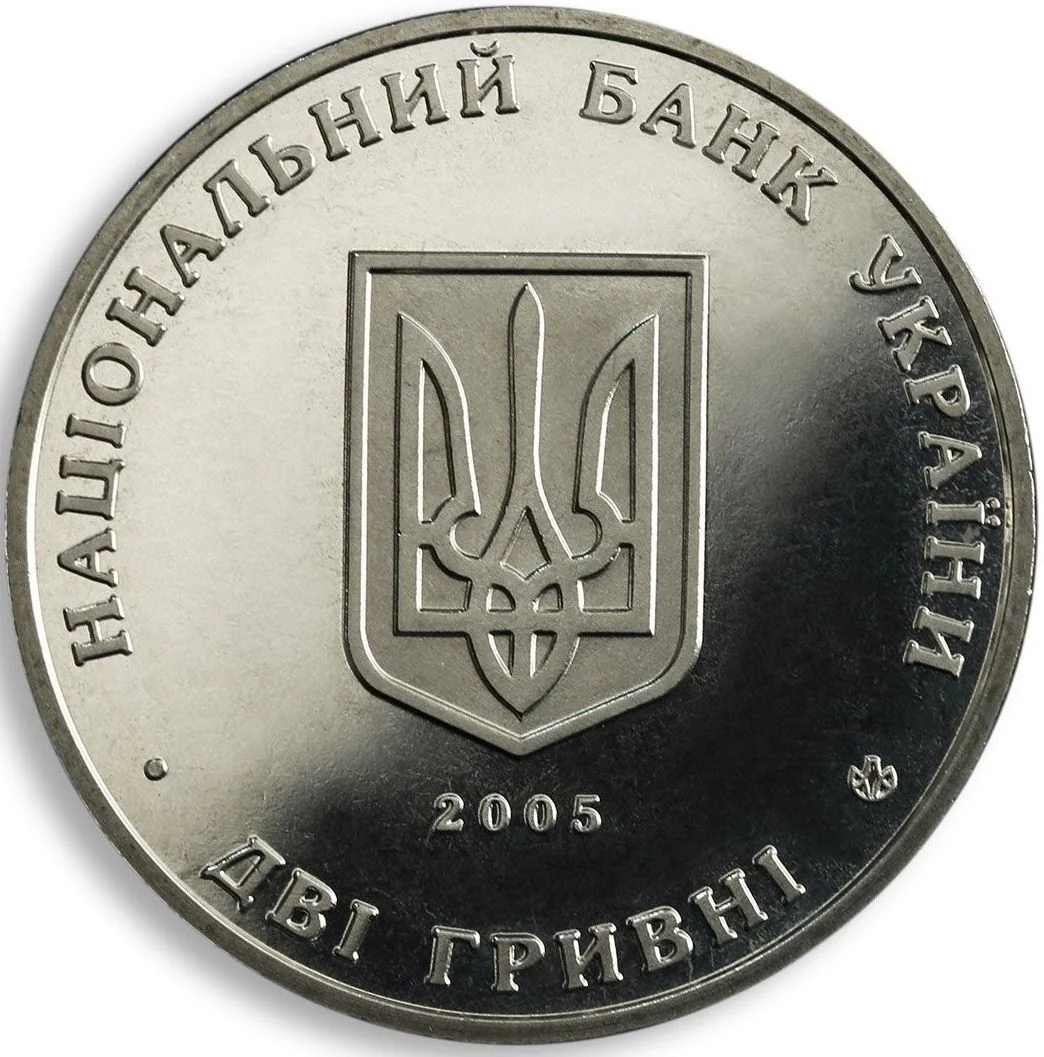
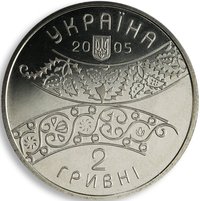
The small National Emblem of Ukraine is in the center, above the year 2005. Around the circumference are the inscriptions "НАЦІОНАЛЬНИЙ БАНК УКРАЇНИ" above and "ДВІ ГРИВНІ" below, along with the NBU Mint logotype.
Inscription:
НАЦIОНАЛЬНИЙ БАНК УКРАЇНИ
2005
ДВI ГРИВНІ
2005
ДВI ГРИВНІ
Translation:
NATIONAL BANK OF UKRAINE
2005
TWO HRYVNIAS
2005
TWO HRYVNIAS
Script: Cyrillic
Language: Ukrainian
Designer and engraver: Sviatoslav Ivanenko
Reverse
Description:
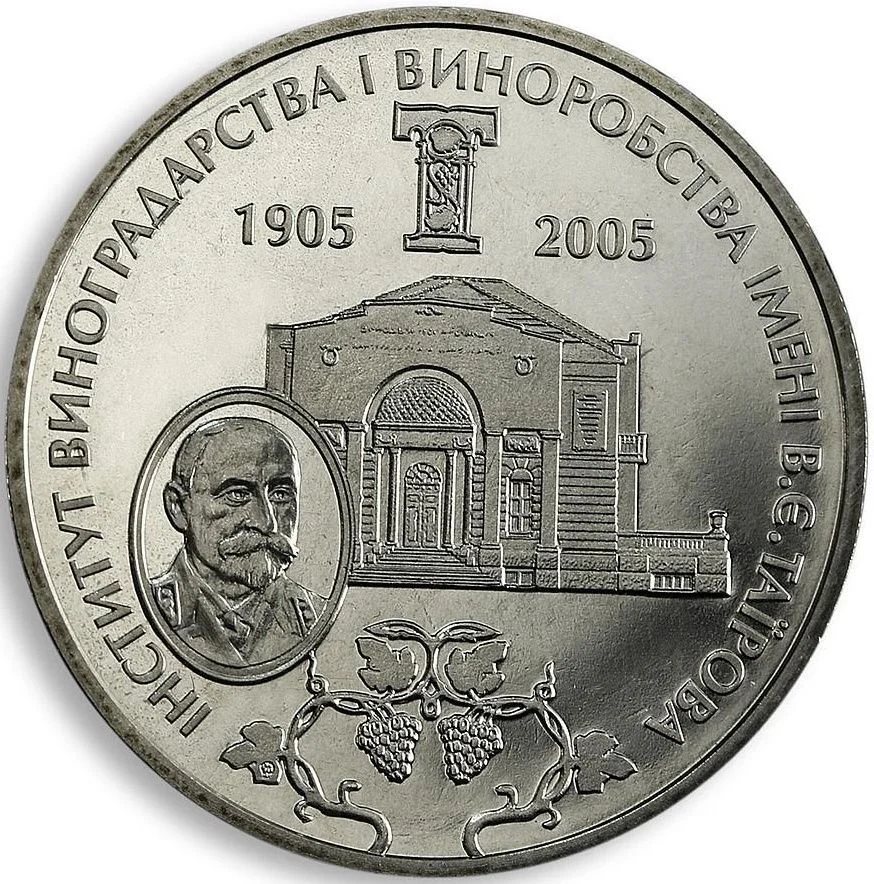
The institute's structure is shown with a portrait of V.E. Tairov in the background. Above the portrait, between the dates 1905 and 2005, is the institute's logo. Below is a stylized vine and a circular inscription: ІНСТИТУТ ВИНОГРАДАРСТВА І ВИНОРОБСТВА ІМЕНІ В.Є.ТАЇРОВА.
Inscription:
ІНСТИТУТ ВИНОГРАДАРСТВА І ВИНОРОБСТВА ІМЕНІ В.Е.ТАЇРОВА
1905 2005
1905 2005
Translation:
Institute of Viticulture and Winemaking named after V.E. Tairov
1905 2005
1905 2005
Script: Cyrillic
Language: Ukrainian
Designer and engraver: Sviatoslav Ivanenko
Edge
Reeded
Categories
| Agriculture |
Mints
| Name | Mark |
|---|---|
| National Bank of Ukraine Banknote Printing and Minting Works | — |
Mintings
| Year | Mint Mark | Mintage | Quality | Collection |
|---|---|---|---|---|
| 2005 | — | 20,000 | Special Uncirculated |
Historical background
In 2005, Ukraine’s currency situation was defined by a period of remarkable stability and strength for the hryvnia (UAH), following the tumultuous economic reforms and volatility of the late 1990s and early 2000s. The National Bank of Ukraine (NBU) maintained a managed float exchange rate regime, successfully keeping the hryvnia tightly pegged at approximately 5 UAH to 1 USD for the entire year. This stability was a key achievement of President Viktor Yushchenko’s new government, which took power after the Orange Revolution, and it bolstered business confidence and helped curb inflation.
The stability was underpinned by several factors, most notably strong export revenues from steel and chemical industries amid a favorable global market, which led to a significant current account surplus. Furthermore, substantial foreign direct investment inflows and growing remittances from Ukrainian workers abroad increased the supply of foreign currency. The NBU actively intervened in the market to purchase excess foreign currency, which allowed it to build up international reserves robustly, reaching a record high of over $19 billion by year’s end, more than doubling from the start of the year.
However, this stable facade concealed underlying vulnerabilities. The economy remained heavily dependent on a few cyclical export sectors, making it susceptible to global price shocks. Additionally, the fixed exchange rate, combined with loose fiscal and credit policies, contributed to a rapid growth in domestic demand and imports, which began to widen the trade surplus. Economists warned that maintaining the peg was becoming increasingly costly for the NBU and risked fueling inflation, setting the stage for the pressures that would challenge the currency in the coming years.
The stability was underpinned by several factors, most notably strong export revenues from steel and chemical industries amid a favorable global market, which led to a significant current account surplus. Furthermore, substantial foreign direct investment inflows and growing remittances from Ukrainian workers abroad increased the supply of foreign currency. The NBU actively intervened in the market to purchase excess foreign currency, which allowed it to build up international reserves robustly, reaching a record high of over $19 billion by year’s end, more than doubling from the start of the year.
However, this stable facade concealed underlying vulnerabilities. The economy remained heavily dependent on a few cyclical export sectors, making it susceptible to global price shocks. Additionally, the fixed exchange rate, combined with loose fiscal and credit policies, contributed to a rapid growth in domestic demand and imports, which began to widen the trade surplus. Economists warned that maintaining the peg was becoming increasingly costly for the NBU and risked fueling inflation, setting the stage for the pressures that would challenge the currency in the coming years.
⭐ Rare