

1 Rupee – Bengal Presidency
India
Context

Material
References
KM: #Click to copy to clipboard78
Numista: #51553
Value
Bullion value: $29.98
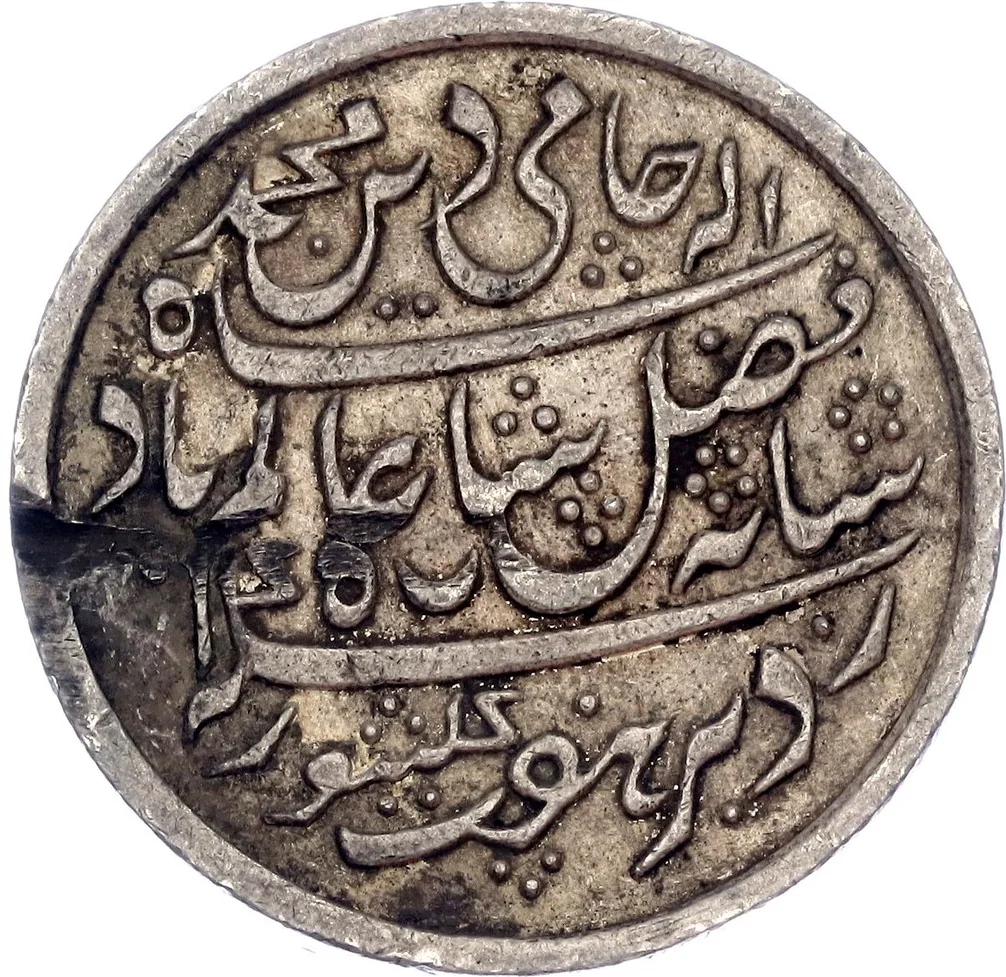
Obverse
Description:
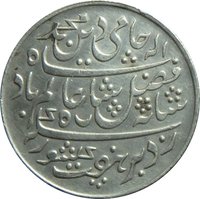
Sikka zad bar haft kishwar: Fazl Ilah, Hami ud-din, Muhammad Shah Alam Badshah.
Inscription:
شاه عالم بادشاه
حامي دين محمد
ساى فضل لله
سكة زد بر حفت كشور
حامي دين محمد
ساى فضل لله
سكة زد بر حفت كشور
Translation:
Shah Alam, Emperor
Protector of the religion of Muhammad
By the grace of God
Struck coin throughout the seven climes
Protector of the religion of Muhammad
By the grace of God
Struck coin throughout the seven climes
Language: Persian
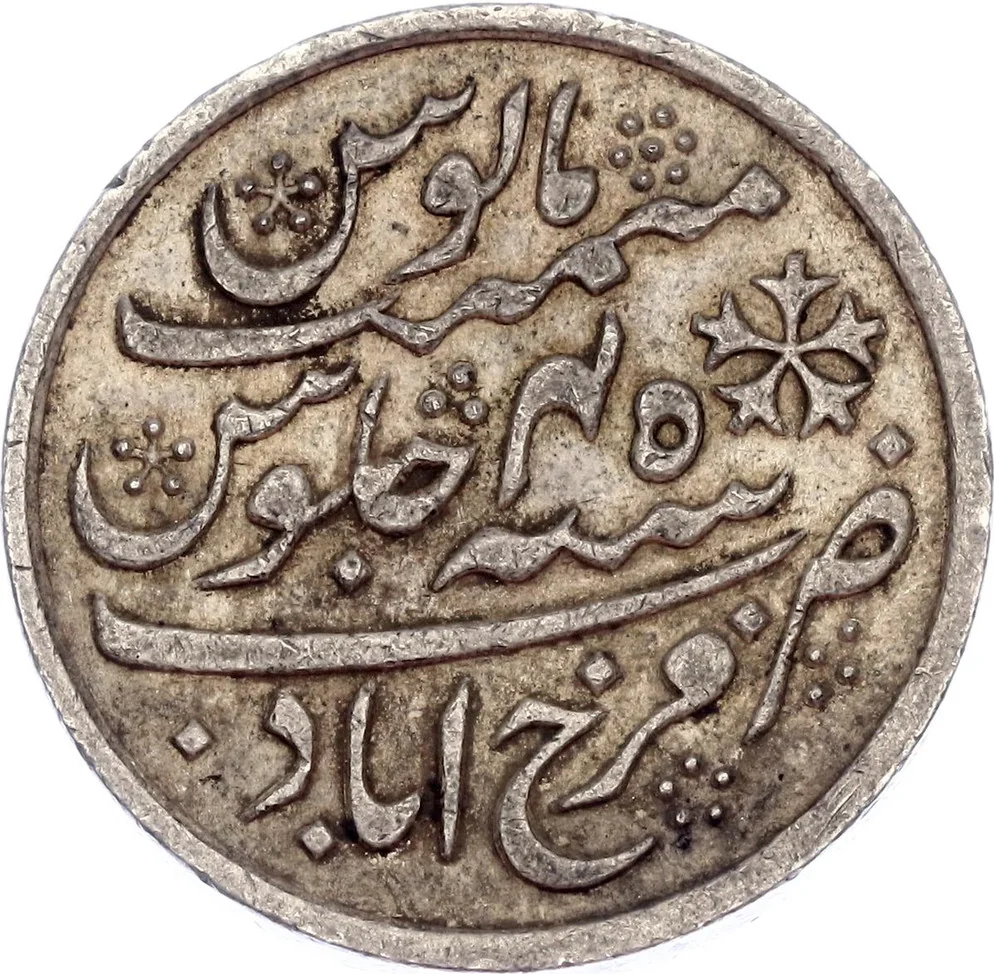
Reverse
Edge
Plain
Mints
| Name | Mark |
|---|---|
| Kolkata / Calcutta / Murshidabad | — |
Mintings
| Year | Mint Mark | Mintage | Quality | Collection |
|---|---|---|---|---|
| — | — | — |
Historical background
In 1833, the Bengal Presidency's currency system was in a state of transition and confusion, caught between a collapsing traditional order and an imposed colonial standard. The dominant medium for large transactions was the silver rupee, primarily the Company's sicca rupee, but its value and physical integrity were problematic. Decades of debasement and the circulation of many older, worn, and varied rupee types from different mints created a complex exchange landscape where coins traded not just by count but by assessed weight and purity, leading to inefficiency and fraud.
The British East India Company was actively trying to impose uniformity through the Coinage Act of 1835, which was in preparation and would be enacted two years later. This act aimed to replace the plethora of existing coins with a single, standard silver rupee bearing the image of the reigning monarch. However, in 1833, this reform was imminent but not yet realized, meaning the chaotic multiplicity of coins—including the sicca, sonat, and farrukhabad rupees—still circulated, each with different values in relation to the Company's accounting rupee, the sicca.
Furthermore, the currency situation was exacerbated by a scarcity of small change for everyday transactions, a gap often filled by unreliable pice (copper coins) and cut fragments of silver rupees. The presidency also grappled with the theoretical existence of a gold mohur, but its value was fixed artificially against silver, failing to reflect global market ratios and thus driving it out of circulation. Consequently, in 1833, the monetary system was characterized by a lack of a single standard, widespread disorder in the exchange, and an acute need for the comprehensive reform that the Act of 1835 was designed to achieve.
The British East India Company was actively trying to impose uniformity through the Coinage Act of 1835, which was in preparation and would be enacted two years later. This act aimed to replace the plethora of existing coins with a single, standard silver rupee bearing the image of the reigning monarch. However, in 1833, this reform was imminent but not yet realized, meaning the chaotic multiplicity of coins—including the sicca, sonat, and farrukhabad rupees—still circulated, each with different values in relation to the Company's accounting rupee, the sicca.
Furthermore, the currency situation was exacerbated by a scarcity of small change for everyday transactions, a gap often filled by unreliable pice (copper coins) and cut fragments of silver rupees. The presidency also grappled with the theoretical existence of a gold mohur, but its value was fixed artificially against silver, failing to reflect global market ratios and thus driving it out of circulation. Consequently, in 1833, the monetary system was characterized by a lack of a single standard, widespread disorder in the exchange, and an acute need for the comprehensive reform that the Act of 1835 was designed to achieve.
⭐ Somewhat Rare