

2 Naira – Nigeria
Nigeria
Context

Material
References
KM: #Click to copy to clipboard19
Numista: #5143
Value
Exchange value: 2 NGN
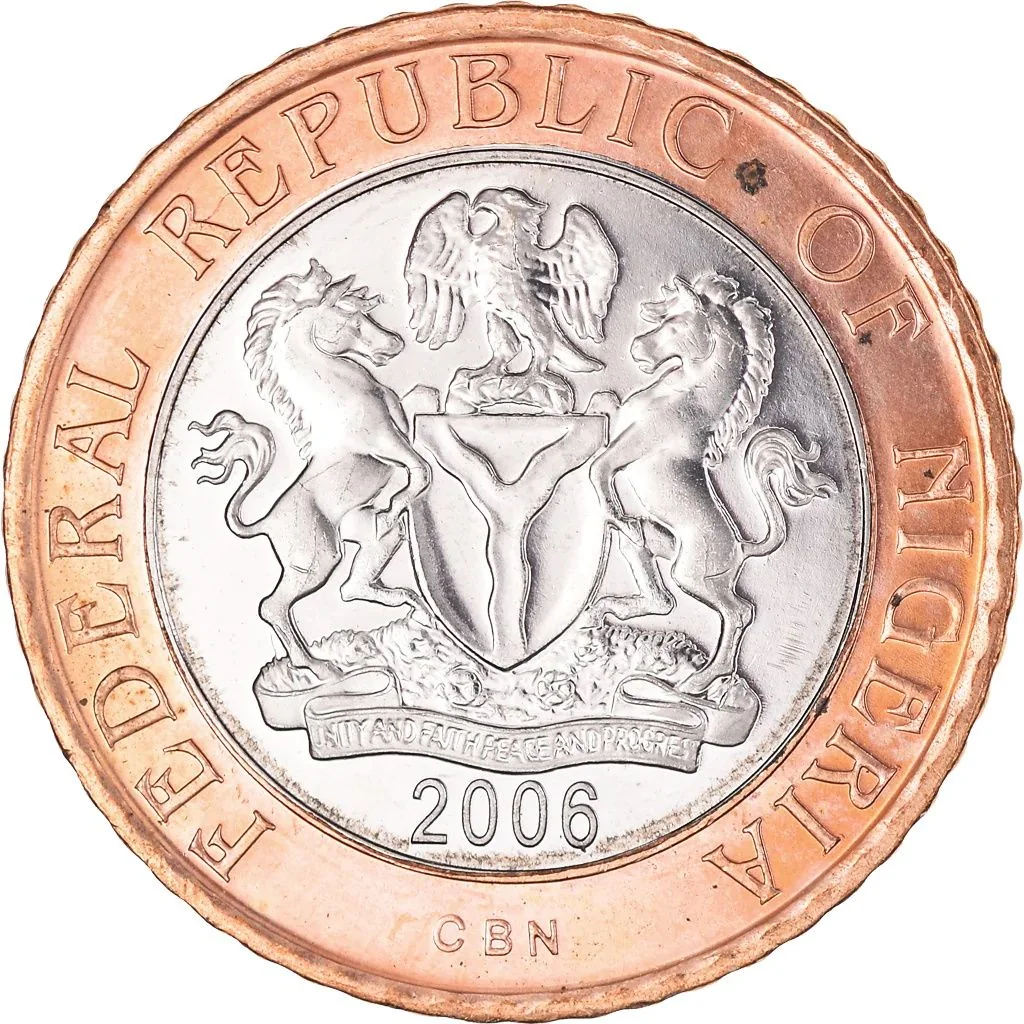
Obverse
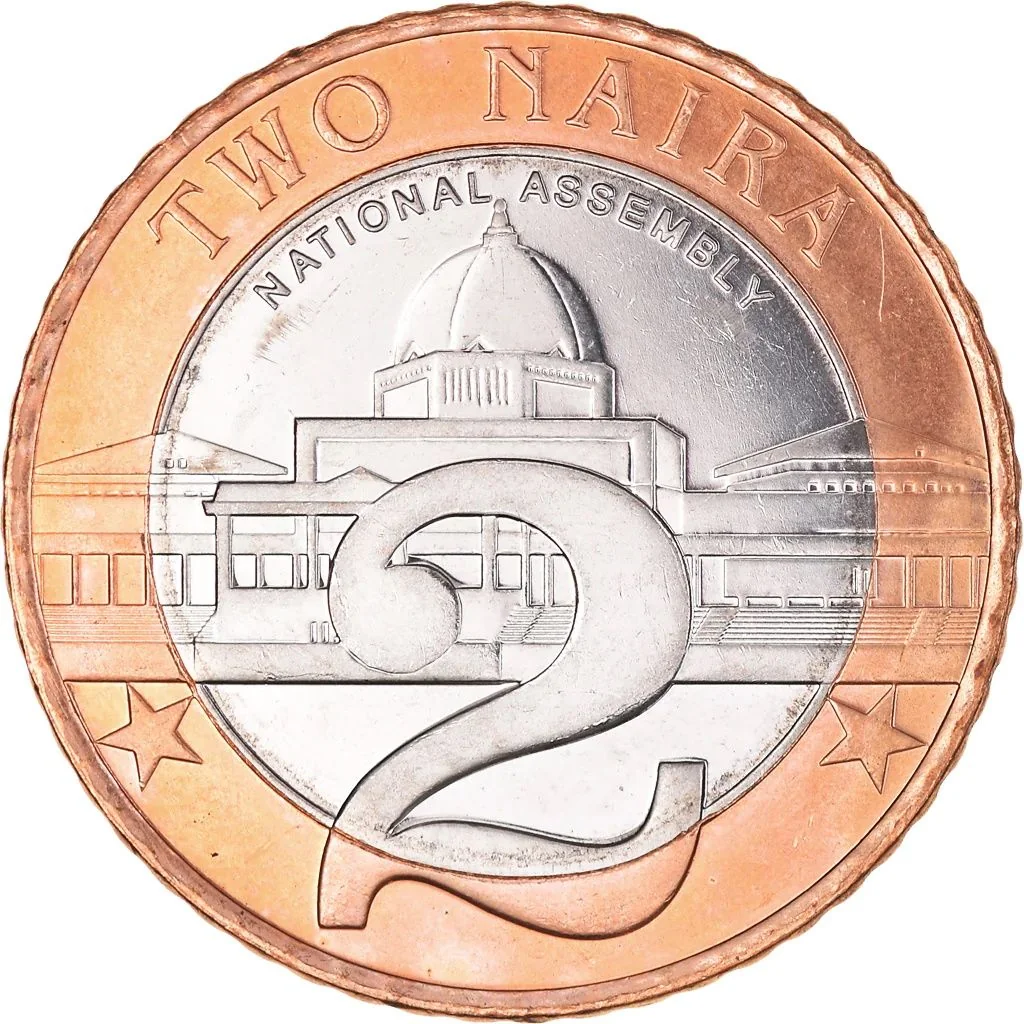
Reverse
Description:
The Abuja National Assembly Building's value.
Inscription:
TWO NAIRA
NATIONAL ASSEMBLY
2
NATIONAL ASSEMBLY
2
Script: Latin
Edge
Milled
Mints
| Name | Mark |
|---|---|
| Royal Mint | — |
Mintings
| Year | Mint Mark | Mintage | Quality | Collection |
|---|---|---|---|---|
| 2006 | — | 107,500,000 |
Historical background
In 2006, Nigeria's currency situation was characterized by a period of relative stability and cautious optimism under a managed float regime, a significant shift from earlier decades of volatility. The Central Bank of Nigeria (CBN), led by Governor Charles Soludo, had successfully implemented a major currency reform in 2005 by introducing new banknotes (the ₦5, ₦10, ₦20, and ₦50) and coins, phasing out the old designs to combat counterfeiting and modernize the monetary system. The key policy focus was on maintaining exchange rate stability for the Naira against the US Dollar, which was largely achieved through strategic interventions using the nation's substantial foreign exchange reserves, bolstered by high global crude oil prices.
The macroeconomic backdrop was favorable, with Nigeria benefiting from a period of robust economic growth and debt relief. The country had secured a landmark deal to wipe out most of its Paris Club debt in 2005, which reduced external pressures and improved investor sentiment. High oil revenues allowed the CBN to accumulate reserves, providing a strong buffer to defend the Naira's value. Consequently, the official exchange rate held steady at approximately ₦128 to US$1 for much of the year, while the parallel market premium, though persistent, was kept in check compared to previous eras.
However, underlying vulnerabilities remained. The economy was heavily dependent on oil exports, making it susceptible to external price shocks. There were also concerns about inflationary pressures, with inflation rising to double digits by the end of the year, partly due to high liquidity and structural issues in the agricultural sector. Furthermore, the stability was somewhat artificial, reliant on continuous CBN dollar sales. This period, therefore, represented a calm before the storm, as the global financial crisis of 2008-2009 would later expose the fragility of an oil-dependent forex regime and test the resilience of the policies established in the mid-2000s.
The macroeconomic backdrop was favorable, with Nigeria benefiting from a period of robust economic growth and debt relief. The country had secured a landmark deal to wipe out most of its Paris Club debt in 2005, which reduced external pressures and improved investor sentiment. High oil revenues allowed the CBN to accumulate reserves, providing a strong buffer to defend the Naira's value. Consequently, the official exchange rate held steady at approximately ₦128 to US$1 for much of the year, while the parallel market premium, though persistent, was kept in check compared to previous eras.
However, underlying vulnerabilities remained. The economy was heavily dependent on oil exports, making it susceptible to external price shocks. There were also concerns about inflationary pressures, with inflation rising to double digits by the end of the year, partly due to high liquidity and structural issues in the agricultural sector. Furthermore, the stability was somewhat artificial, reliant on continuous CBN dollar sales. This period, therefore, represented a calm before the storm, as the global financial crisis of 2008-2009 would later expose the fragility of an oil-dependent forex regime and test the resilience of the policies established in the mid-2000s.
🌱 Very Common