

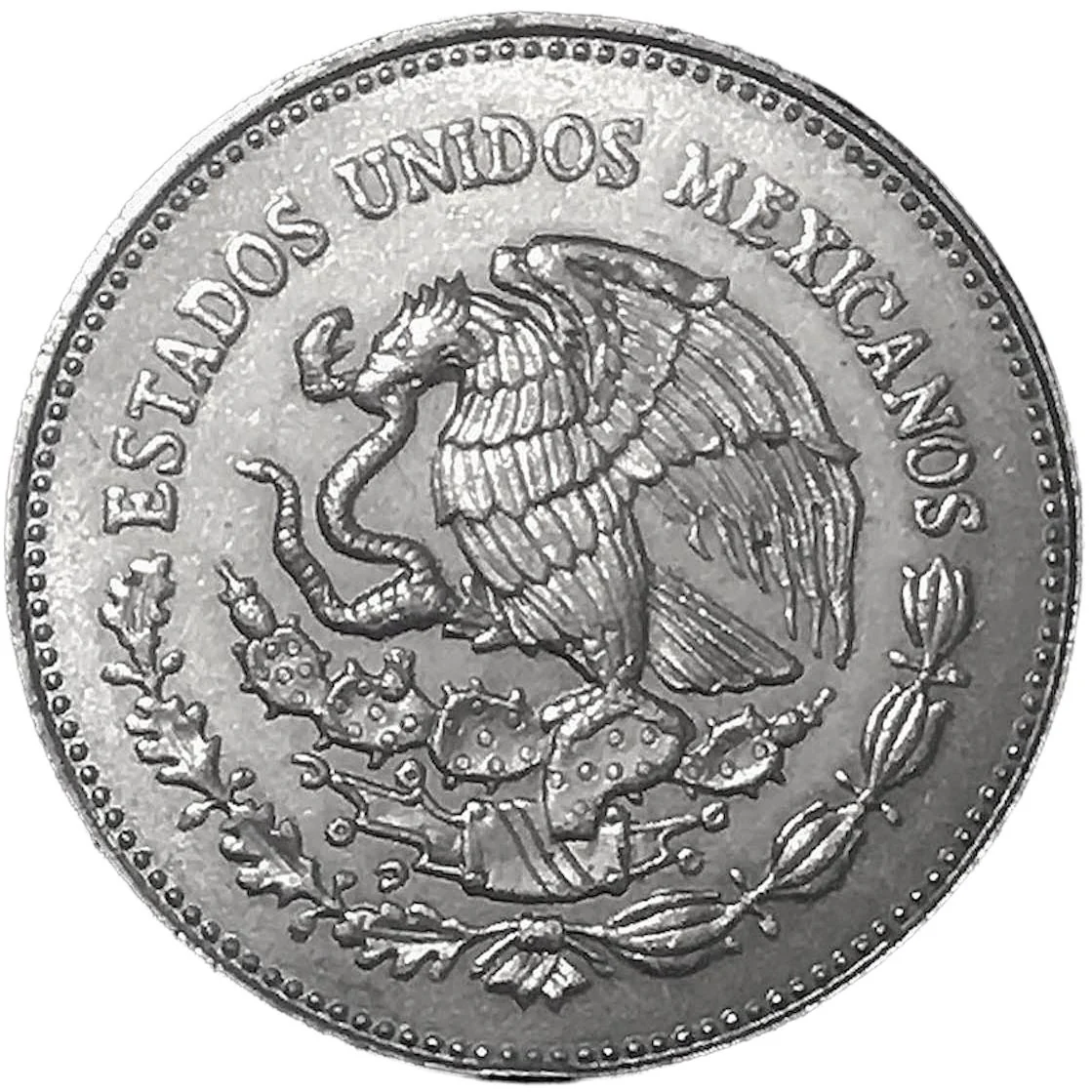
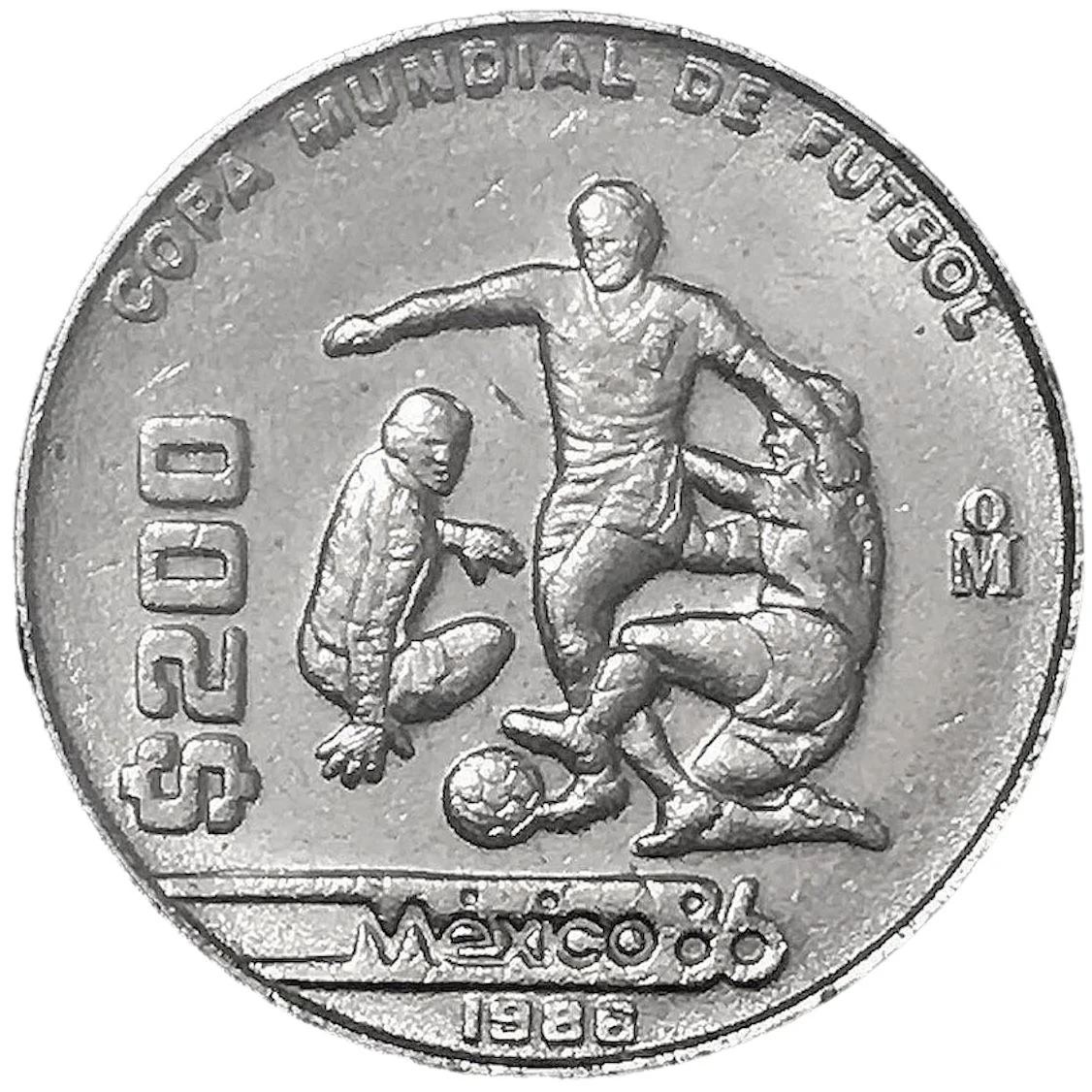
200 pesos – Mexico
Add to wishlist
Circulating commemorative coins
Commemoration: World Cup - Mexico 1986
Mexico
Context
Year: 1986
Issuer: Mexico
Period:
(since 1823)
Currency:
(1863—1992)
Demonetization: 15 November 1995
Total mintage: 50,000,000
Material
Diameter: 29.5 mm
Weight: 17.2 g
Shape: Round
Composition: Copper-nickel
Technique: Milled
Alignment: Coin alignment
flip
References
KM: #
Numista: #5137
Value
Exchange value: 200 MXP
Inflation-adjusted value: 43872.33 MXP
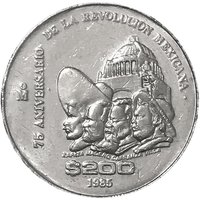
Obverse
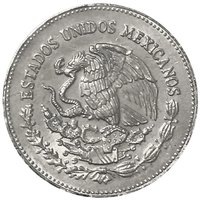
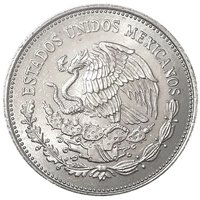
Reverse
Edge
Reeded
Categories
| Sport> Football |
| Symbols> Coat of Arms |
Mints
| Name | Mark |
|---|---|
| Mexican Mint | (Mo) |
Mintings
| Year | Mint Mark | Mintage | Quality | Collection |
|---|---|---|---|---|
| 1986 | Mo | 50,000,000 |
Historical background
In 1986, Mexico was in the throes of a profound economic crisis, with its currency, the peso, under severe pressure. The backdrop was the Latin American debt crisis, ignited in 1982 when Mexico defaulted on its foreign debt. By 1986, the situation was exacerbated by a collapse in global oil prices—oil being Mexico's primary export—which slashed government revenues and devastated the trade balance. This "external shock" created a massive fiscal deficit and a critical shortage of U.S. dollars, forcing the government to repeatedly devalue the peso within a managed exchange rate system. Inflation soared into triple digits, eroding purchasing power and triggering capital flight as confidence in the economy evaporated.
The government of President Miguel de la Madrid responded with a strict austerity program under the guidance of the International Monetary Fund (IMF). This included deep cuts to public spending, reductions in subsidies, and a commitment to trade liberalization, which culminated in Mexico joining the General Agreement on Tariffs and Trade (GATT) that same year. Despite these efforts, the peso's controlled depreciation could not be sustained. The central bank was hemorrhaging reserves in a futile attempt to defend the currency's peg, leading to a profound loss of market confidence. The economic pain was widespread, with falling real wages and rising unemployment, setting the stage for a more radical shift in economic policy.
Ultimately, 1986 represented the final, volatile phase before a major regime change. The failed attempts to manage the exchange rate through desliz (a controlled daily devaluation) exposed the system's fragility. This experience directly paved the way for the dramatic reforms of the subsequent Salinas administration, including the introduction of a fixed exchange rate and the Pacto de Solidaridad Económica in 1987, and later, the 1993 currency re-denomination that created the "Nuevo Peso." Thus, the currency turmoil of 1986 was a pivotal chapter in Mexico's transition from a protected, oil-dependent economy to one oriented toward open markets and neoliberal orthodoxy.
The government of President Miguel de la Madrid responded with a strict austerity program under the guidance of the International Monetary Fund (IMF). This included deep cuts to public spending, reductions in subsidies, and a commitment to trade liberalization, which culminated in Mexico joining the General Agreement on Tariffs and Trade (GATT) that same year. Despite these efforts, the peso's controlled depreciation could not be sustained. The central bank was hemorrhaging reserves in a futile attempt to defend the currency's peg, leading to a profound loss of market confidence. The economic pain was widespread, with falling real wages and rising unemployment, setting the stage for a more radical shift in economic policy.
Ultimately, 1986 represented the final, volatile phase before a major regime change. The failed attempts to manage the exchange rate through desliz (a controlled daily devaluation) exposed the system's fragility. This experience directly paved the way for the dramatic reforms of the subsequent Salinas administration, including the introduction of a fixed exchange rate and the Pacto de Solidaridad Económica in 1987, and later, the 1993 currency re-denomination that created the "Nuevo Peso." Thus, the currency turmoil of 1986 was a pivotal chapter in Mexico's transition from a protected, oil-dependent economy to one oriented toward open markets and neoliberal orthodoxy.
🌱 Very Common