

50 Dollars (World War I) – Solomon Islands
Non-circulating coins
Commemoration: 90th Anniversary of World War I
Solomon Islands
Context

Material
Diameter: 65 mm
Weight: 155.5 g
Silver weight: 143.84 g
Shape: Round
Composition: 92.5% Silver
Standard: Silver 5 ounces
Magnetic: No
Technique: Milled
Alignment: Medal alignment
flip
References
Numista: #513162
Value
Exchange value: 50 SBD
Bullion value: $417.84
Obverse
Description:
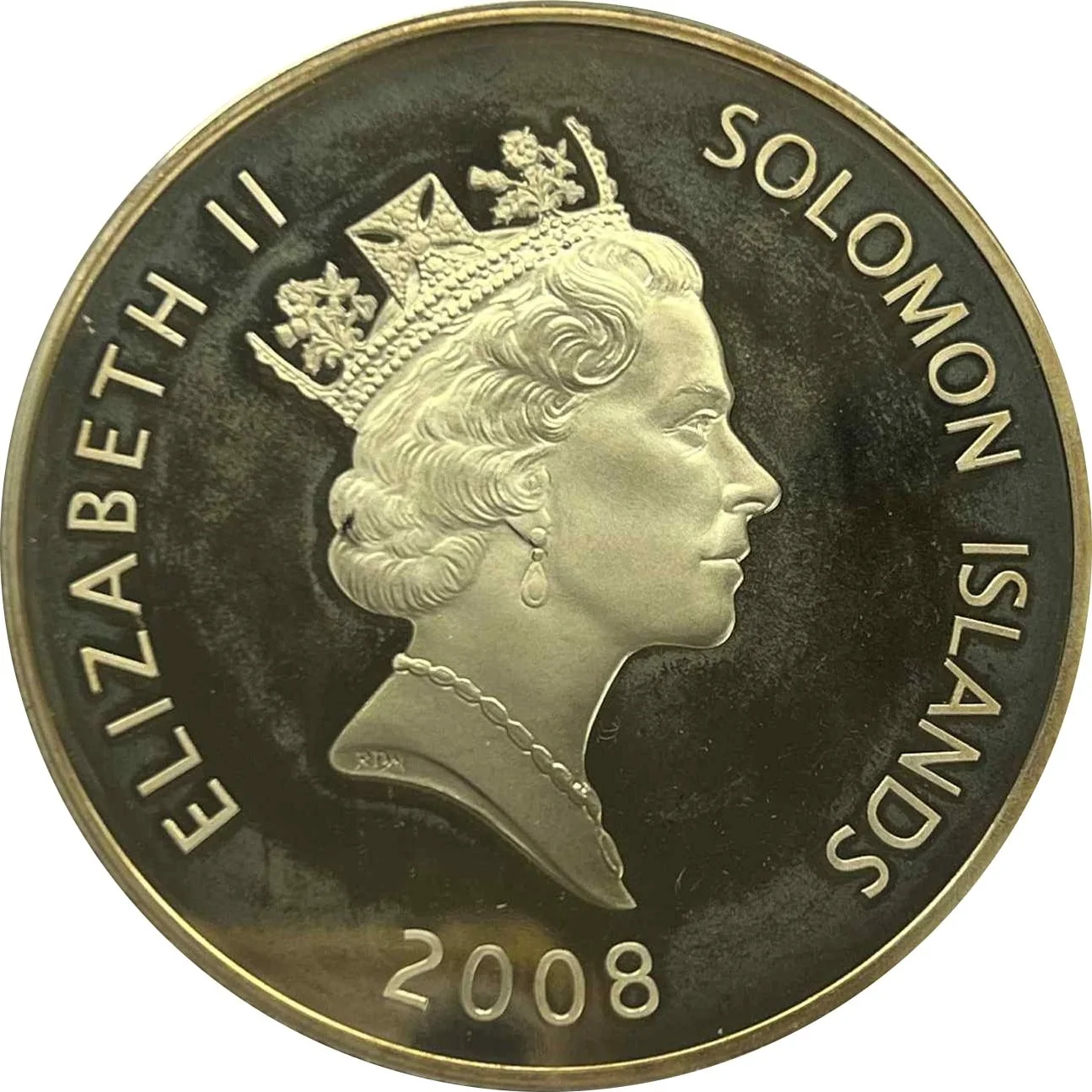
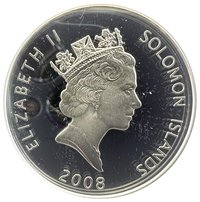
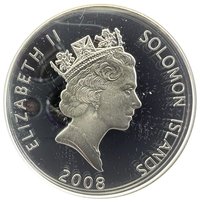
Elizabeth II crowned bust right, date below.
Inscription:
ELIZABETH II SOLOMON ISLANDS
RDM
2008
RDM
2008
Translation:
ELIZABETH II SOLOMON ISLANDS
RDM
2008
RDM
2008
Script: Latin
Language: English
Designer: Raphael David Maklouf
Reverse
Description:
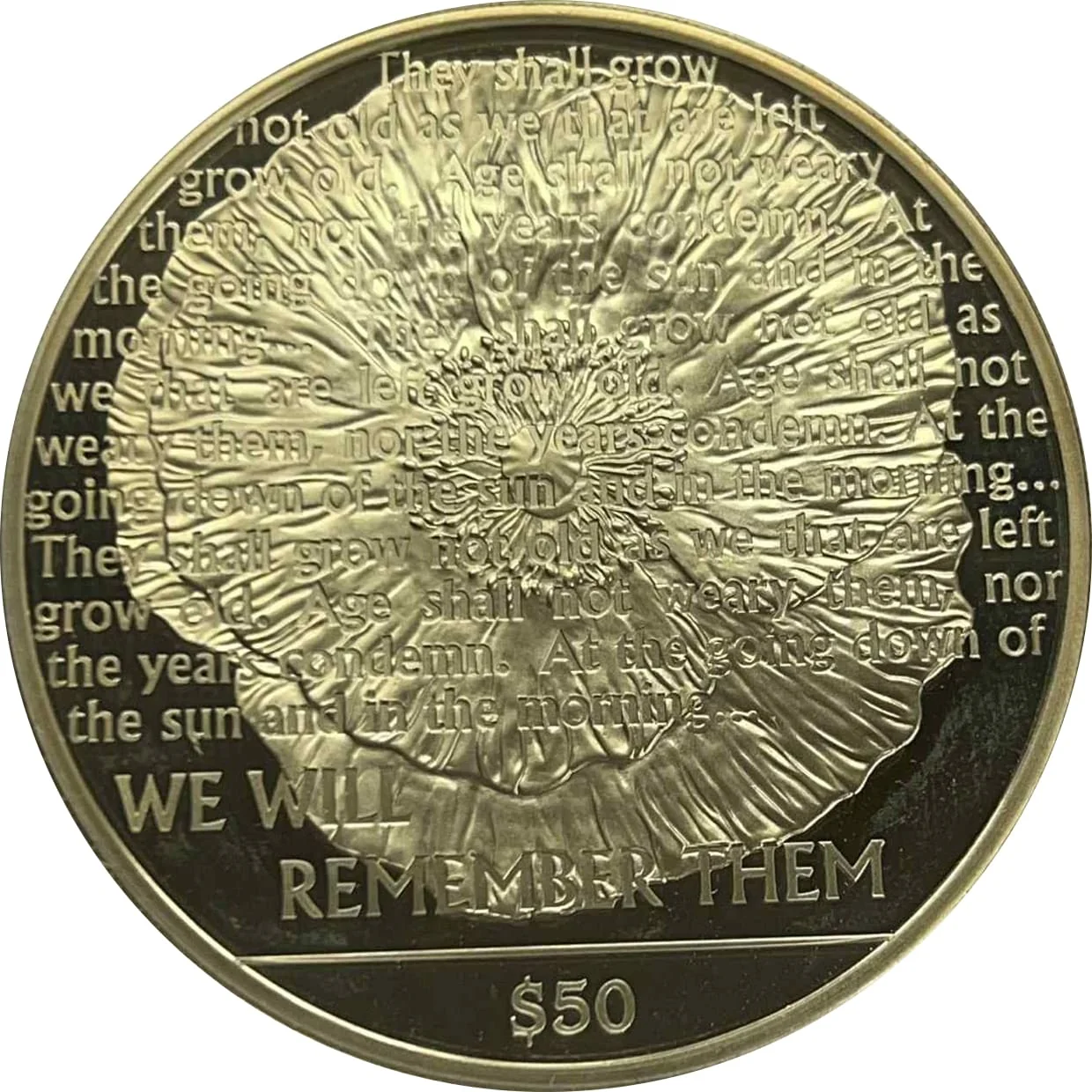
Poppy with a line from Binyon's "For the Fallen."
Inscription:
They shall grow
not old as we that are left
grow old. Age shall not weary
them, nor the years condemn. At
the going down of the sun and in the
morning... They shall grow not old as
we that are left grow old. Age shall not
weary them, nor the years condemn. At the
going down of the sun and in the morning...
They shall grow not old as we that are left
grow old. Age shall not weary them, nor
the years condemn. At the going down of
the sun and in the morning...
WE WILL
REMEMBER THEM
$50
not old as we that are left
grow old. Age shall not weary
them, nor the years condemn. At
the going down of the sun and in the
morning... They shall grow not old as
we that are left grow old. Age shall not
weary them, nor the years condemn. At the
going down of the sun and in the morning...
They shall grow not old as we that are left
grow old. Age shall not weary them, nor
the years condemn. At the going down of
the sun and in the morning...
WE WILL
REMEMBER THEM
$50
Script: Latin
Edge
Reeded
Mintings
| Year | Mint Mark | Mintage | Quality | Collection |
|---|---|---|---|---|
| 2008 | — | 150 |
Historical background
In 2008, the Solomon Islands' currency situation was defined by its use of the Solomon Islands dollar (SBD), which operated under a managed float regime. The Central Bank of Solomon Islands (CBSI) maintained a primary policy focus on maintaining a stable exchange rate, particularly against major trading partner currencies like the Australian and US dollars. This stability was considered crucial for controlling inflation and fostering confidence in an economy heavily reliant on imports for essential goods, fuel, and machinery.
The period was significantly influenced by the aftermath of the April 2007 tsunami and earthquake, which devastated parts of the country and strained fiscal resources. Furthermore, the global commodities boom of 2007-2008 presented a complex picture: while high global prices for the nation's key exports of timber, palm oil, and copra boosted export earnings and foreign reserves, they also contributed to imported inflation. This created a challenging balancing act for the CBSI, needing to manage money supply growth from buoyant export sectors while mitigating rising domestic costs.
Overall, 2008 saw a currency environment of relative stability but underlying pressures. The SBD experienced modest depreciation pressures during the year, partly due to strong domestic demand for imports. The CBSI utilized its foreign reserves to smooth volatility, aiming to keep the exchange rate within a target band. The year ended with the currency stable but with policymakers attentive to the dual impacts of the global financial crisis unfolding in late 2008 and its potential to dampen export demand and affect remittance flows, which were vital sources of foreign exchange.
The period was significantly influenced by the aftermath of the April 2007 tsunami and earthquake, which devastated parts of the country and strained fiscal resources. Furthermore, the global commodities boom of 2007-2008 presented a complex picture: while high global prices for the nation's key exports of timber, palm oil, and copra boosted export earnings and foreign reserves, they also contributed to imported inflation. This created a challenging balancing act for the CBSI, needing to manage money supply growth from buoyant export sectors while mitigating rising domestic costs.
Overall, 2008 saw a currency environment of relative stability but underlying pressures. The SBD experienced modest depreciation pressures during the year, partly due to strong domestic demand for imports. The CBSI utilized its foreign reserves to smooth volatility, aiming to keep the exchange rate within a target band. The year ended with the currency stable but with policymakers attentive to the dual impacts of the global financial crisis unfolding in late 2008 and its potential to dampen export demand and affect remittance flows, which were vital sources of foreign exchange.
✨ Legendary