

50 pence – Gibraltar
Add to wishlist
Circulating commemorative coins
Commemoration: British Capture of Gibraltar 1704
United Kingdom
Context
Years: 2012–2013
Country: United Kingdom
Issuer: Gibraltar
Ruler: Elizabeth II
Currency:
(since 1971)
Material
Diameter: 27.3 mm
Weight: 8 g
Thickness: 1.78 mm
Shape: Heptagonal
Composition: Copper-nickel
Technique: Milled
Alignment: Medal alignment
flip
References
Numista: #51128
Value
Exchange value: 0.50 GIP
Inflation-adjusted value: 0.78 GIP
Obverse
Description:
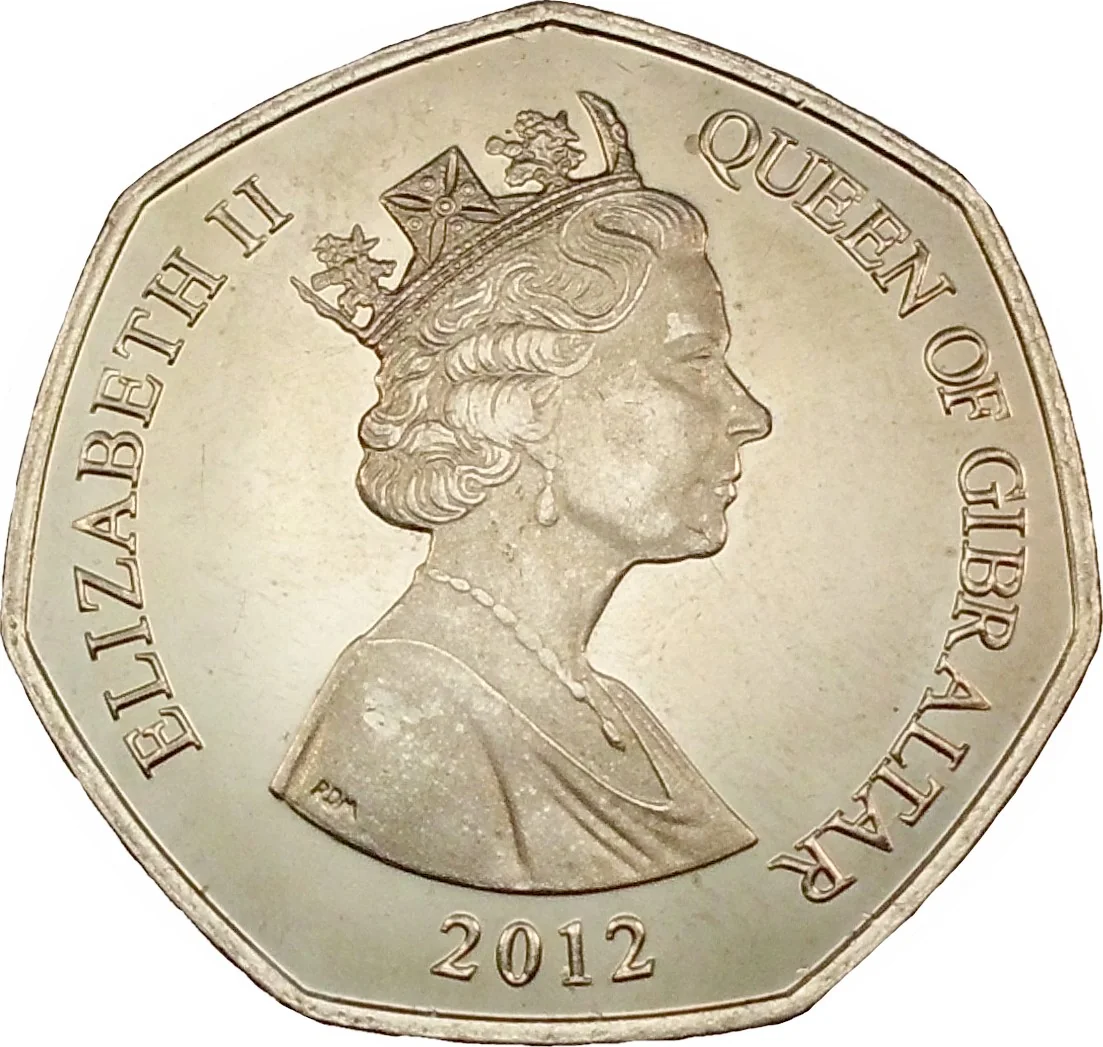
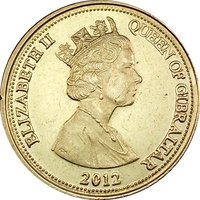
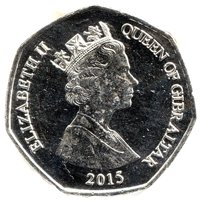
Queen Elizabeth II right-facing bust in George IV State Diadem, with legend and date.
Inscription:
ELIZABETH II QUEEN OF GIBRALTAR
RDM
2012
RDM
2012
Script: Latin
Engraver: Raphael David Maklouf
Reverse
Description:
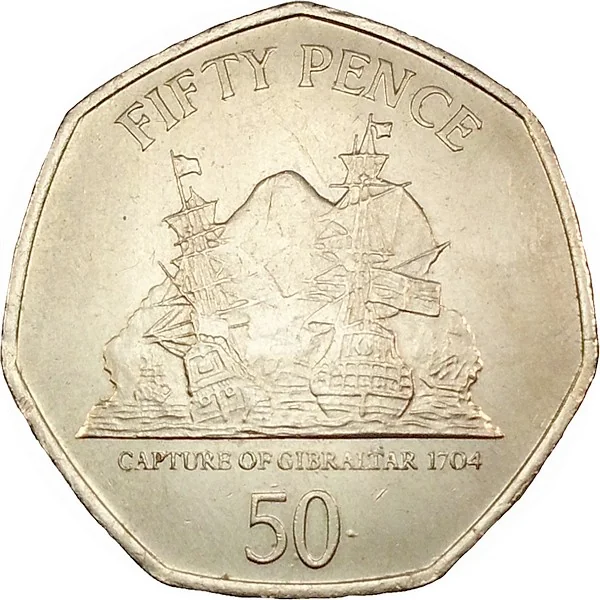
18th century warships at Gibraltar during its capture by the Grand Alliance in the War of the Spanish Succession.
Inscription:
FIFTY PENCE
CAPTURE OF GIBRALTAR 1704
50
CAPTURE OF GIBRALTAR 1704
50
Script: Latin
Edge
Plain
Categories
| History> War |
| Transportation> Watercraft |
Mints
| Name | Mark |
|---|---|
| Tower Mint | — |
Mintings
| Year | Mint Mark | Mintage | Quality | Collection |
|---|---|---|---|---|
| 2012 | — | — | ||
| 2013 | — | — |
Historical background
In 2012, Gibraltar's currency situation was defined by its unique political status and its practical economic integration with neighbouring Spain. As a British Overseas Territory, its official currency was (and remains) the Gibraltar pound (GIP), issued by the Government of Gibraltar and pegged at par with the Pound Sterling (GBP). Sterling notes and coins also circulated freely and were accepted interchangeably with local notes, creating a de facto dual-currency system underpinned by the UK's monetary policy.
However, the reality on the ground was more complex due to Gibraltar's location on the Iberian Peninsula. The euro, and particularly the Spanish peseta before it, had long been widely accepted in many retail and hospitality sectors to accommodate the large influx of day-visitors and cross-border workers from Spain. This created a highly dollarized environment where transactions could often be conducted in three currencies: GIP, GBP, and EUR. Exchange rates for euros were prominently displayed in shops and restaurants, reflecting the economic dependency on Spanish trade and tourism.
The year 2012 was significant as it fell during the prolonged aftermath of the Eurozone debt crisis, which heightened economic uncertainty in the region. While Gibraltar's banking sector remained stable, the volatility of the euro and pressures on the Spanish economy underscored the risks of its informal multi-currency system. This period reinforced Gibraltar's commitment to its Sterling peg as a symbol of economic stability and political identity, even as its businesses continued pragmatic acceptance of the euro to facilitate daily cross-border economic life.
However, the reality on the ground was more complex due to Gibraltar's location on the Iberian Peninsula. The euro, and particularly the Spanish peseta before it, had long been widely accepted in many retail and hospitality sectors to accommodate the large influx of day-visitors and cross-border workers from Spain. This created a highly dollarized environment where transactions could often be conducted in three currencies: GIP, GBP, and EUR. Exchange rates for euros were prominently displayed in shops and restaurants, reflecting the economic dependency on Spanish trade and tourism.
The year 2012 was significant as it fell during the prolonged aftermath of the Eurozone debt crisis, which heightened economic uncertainty in the region. While Gibraltar's banking sector remained stable, the volatility of the euro and pressures on the Spanish economy underscored the risks of its informal multi-currency system. This period reinforced Gibraltar's commitment to its Sterling peg as a symbol of economic stability and political identity, even as its businesses continued pragmatic acceptance of the euro to facilitate daily cross-border economic life.
🌱 Fairly Common