

1 Crown (Horse Tram) – Isle of Man
Non-circulating coins
Commemoration: 100th Anniversary of the Horse Tram
Context
Year: 1976
Country: British Crown dependencies
Issuer: Isle of Man 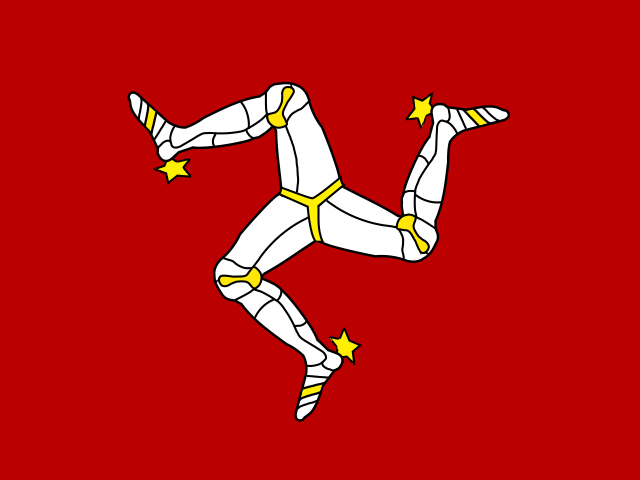
Ruler: Elizabeth II
Currency:
(since 1971)
Total mintage: 50,000
Material
Diameter: 38.61 mm
Weight: 28.4 g
Thickness: 2.2 mm
Shape: Round
Composition: Copper-nickel
Technique: Milled
Alignment: Medal alignment
flip
References
KM: #Click to copy to clipboard38
Numista: #5042
Value
Exchange value: 0.25 IMP
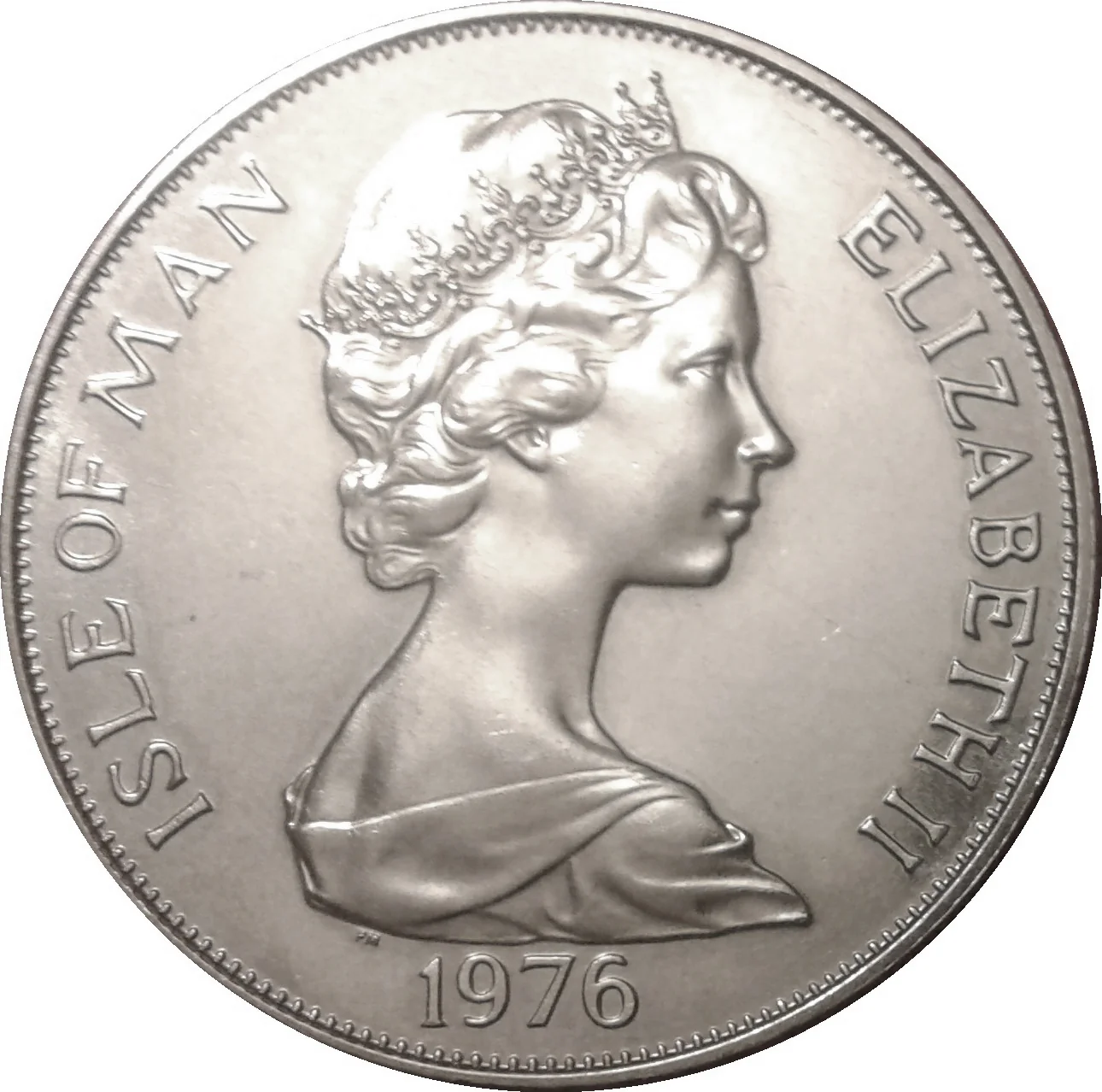
Obverse
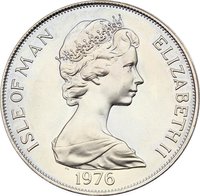
Description:
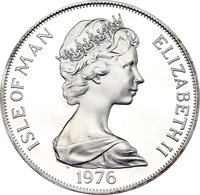
Right-facing crowned portrait. Lettering encircles, date beneath. Toothed border.
Inscription:
ISLE OF MAN ELIZABETH II
1976
PM
1976
PM
Translation:
ISLE OF MAN ELIZABETH II
1976
PM
1976
PM
Script: Latin
Language: English
Engraver: Arnold Machin
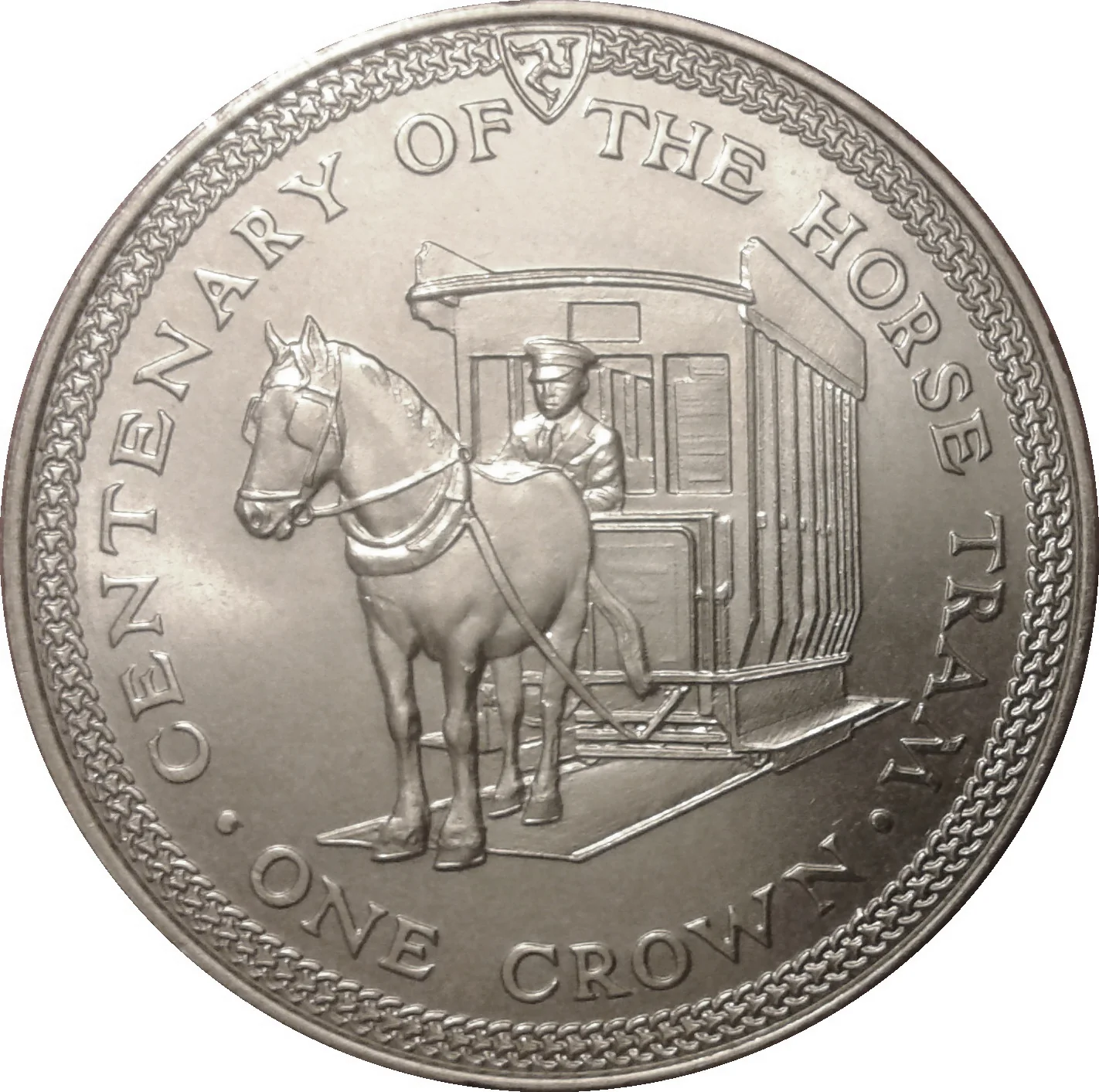
Reverse
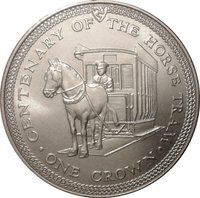
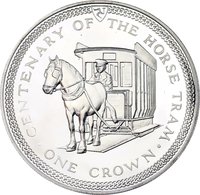
Description:
Horse-drawn tram left, driver aboard. Lettered border, value below. Linked shield top.
Inscription:
CENTENARY OF THE HORSE TRAM
· ONE CROWN ·
· ONE CROWN ·
Script: Latin
Edge
Reeded
Categories
| Animal> Horse |
| Symbol> Triskelion |
Mints
| Name | Mark |
|---|---|
| Pobjoy Mint | (PM) |
Mintings
| Year | Mint Mark | Mintage | Quality | Collection |
|---|---|---|---|---|
| 1976 | — | 50,000 |
Historical background
In 1976, the Isle of Man's currency situation was defined by its unique constitutional relationship with the United Kingdom. While not part of the UK, the Isle of Man is a Crown Dependency, and its monetary system was, and remains, intricately linked to the British pound sterling. The Manx government issued its own distinct banknotes and coins, known as Manx pounds, which were legal tender only on the Island. Crucially, these operated on a one-for-one parity with sterling and were backed by reserves held at the UK Treasury, ensuring seamless interchangeability with British currency.
This period fell within a decade of significant economic transition for the Isle of Man, which was actively developing its offshore finance sector to diversify from traditional industries like agriculture and tourism. The stability of its currency, pegged firmly to sterling, was a cornerstone of this strategy, providing confidence to nascent banking and business services. However, the mid-1970s was also a time of economic turbulence in the UK, marked by high inflation and a sterling crisis, which culminated in a formal loan from the International Monetary Fund in 1976. While the Isle of Man managed its own fiscal affairs, its tied currency meant it was not insulated from the macroeconomic pressures and devaluation fears affecting the pound.
Consequently, the 1976 currency situation reflected a careful balance: the Isle of Man enjoyed the symbolic autonomy of its own notes and coins and the economic benefits of a stable, internationally recognized currency, but it also inherited the vulnerabilities of the sterling zone. There was no serious move to break the link with sterling, as the dependency's small, open economy relied heavily on trade with the UK. The system affirmed the Island's special status—possessing monetary identity without full monetary sovereignty—a arrangement that provided essential stability during a volatile economic period.
This period fell within a decade of significant economic transition for the Isle of Man, which was actively developing its offshore finance sector to diversify from traditional industries like agriculture and tourism. The stability of its currency, pegged firmly to sterling, was a cornerstone of this strategy, providing confidence to nascent banking and business services. However, the mid-1970s was also a time of economic turbulence in the UK, marked by high inflation and a sterling crisis, which culminated in a formal loan from the International Monetary Fund in 1976. While the Isle of Man managed its own fiscal affairs, its tied currency meant it was not insulated from the macroeconomic pressures and devaluation fears affecting the pound.
Consequently, the 1976 currency situation reflected a careful balance: the Isle of Man enjoyed the symbolic autonomy of its own notes and coins and the economic benefits of a stable, internationally recognized currency, but it also inherited the vulnerabilities of the sterling zone. There was no serious move to break the link with sterling, as the dependency's small, open economy relied heavily on trade with the UK. The system affirmed the Island's special status—possessing monetary identity without full monetary sovereignty—a arrangement that provided essential stability during a volatile economic period.
🌱 Common