

100 mon – Sendai Domain
Add to wishlist
Japan
Context
Material
Shape: Square with rounded corners
Composition: Lead
Technique: Cast
Alignment: Medal alignment
flip
References
KM: #
Numista: #50149
Obverse
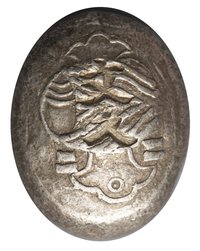
Description:
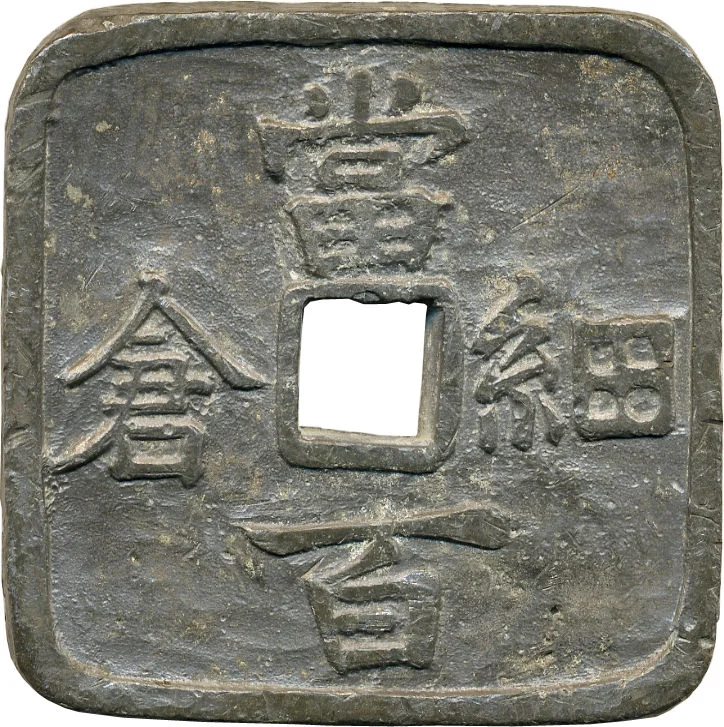
Four figures circle a pit.
Inscription:
當
倉 細
百
倉 細
百
Translation:
When the granary is meticulous, it is worth a hundred.
Language: Classical Chinese
Reverse
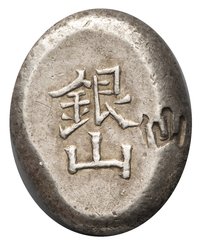
Description:
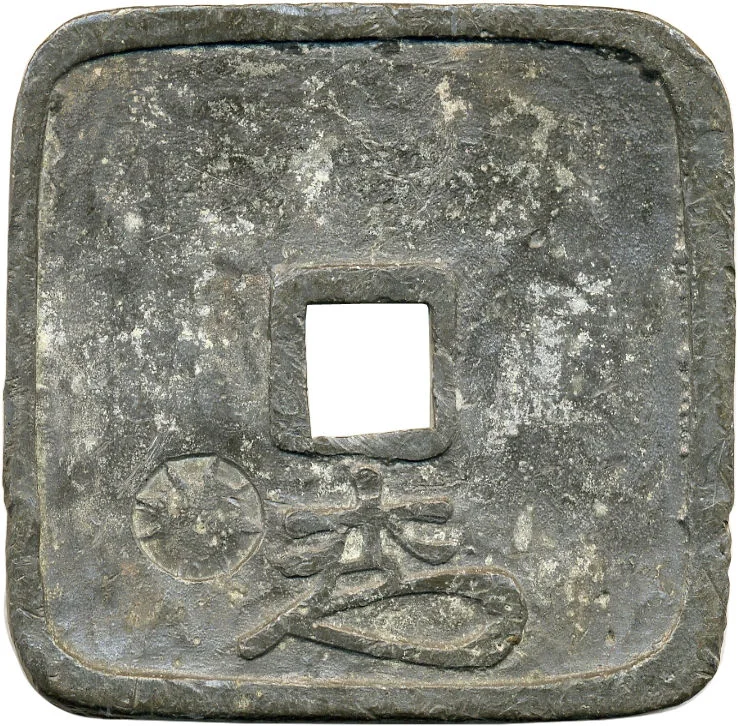
Fujiwara no Hidehira's signature with "秀" hole.
Inscription:
秀
Translation:
Elegant
Language: Classical Chinese
Edge
Mintings
| Year | Mint Mark | Mintage | Quality | Collection |
|---|---|---|---|---|
| 1863 | — | — |
Historical background
In 1863, the Sendai Domain, like much of Tokugawa Japan, was grappling with severe monetary instability rooted in the shogunate's systemic debasement of currency. The central Bakufu, facing a fiscal crisis exacerbated by foreign treaties and internal strife, repeatedly issued inferior zeni copper coins and debased gold and silver koban. This created a chaotic multi-currency environment where the Domain's own notes and the official coinage circulated at fluctuating values, often at a significant discount. For Sendai, a large and powerful tozama domain, this directly eroded its economic sovereignty and complicated the payment of its fixed annual sankin-kōtai obligations to Edo.
The Domain's response was to aggressively issue its own paper currency, known as hansatsu, to exert control over its local economy and insulate itself from the shogunate's failing monetary policy. These notes, backed by the Domain's credit and rice reserves, were essential for internal transactions and samurai stipends. However, the proliferation of hansatsu across different regions created complex exchange problems with neighboring domains, hindering trade. Furthermore, the Domain secretly engaged in the production of "Sendai silver" (Sendai-gin), a high-quality, illegally minted silver coin that was prized in the Osaka markets. This lucrative but risky enterprise provided critical hard currency to offset domain debts.
By the end of 1863, Sendai's currency situation was a microcosm of the late Tokugawa period's political decay: outwardly complying with shogunal mandates while pragmatically subverting them to ensure survival. The reliance on hansatsu and clandestine minting underscored the Domain's weakening ties to the central Bakufu's economic system and its need for financial independence. This monetary fragmentation foreshadowed the larger political breakdown to come, as domains like Sendai increasingly operated as autonomous entities, setting the stage for the Boshin War and the Meiji Restoration's subsequent unification of the currency.
The Domain's response was to aggressively issue its own paper currency, known as hansatsu, to exert control over its local economy and insulate itself from the shogunate's failing monetary policy. These notes, backed by the Domain's credit and rice reserves, were essential for internal transactions and samurai stipends. However, the proliferation of hansatsu across different regions created complex exchange problems with neighboring domains, hindering trade. Furthermore, the Domain secretly engaged in the production of "Sendai silver" (Sendai-gin), a high-quality, illegally minted silver coin that was prized in the Osaka markets. This lucrative but risky enterprise provided critical hard currency to offset domain debts.
By the end of 1863, Sendai's currency situation was a microcosm of the late Tokugawa period's political decay: outwardly complying with shogunal mandates while pragmatically subverting them to ensure survival. The reliance on hansatsu and clandestine minting underscored the Domain's weakening ties to the central Bakufu's economic system and its need for financial independence. This monetary fragmentation foreshadowed the larger political breakdown to come, as domains like Sendai increasingly operated as autonomous entities, setting the stage for the Boshin War and the Meiji Restoration's subsequent unification of the currency.
✨ Legendary