

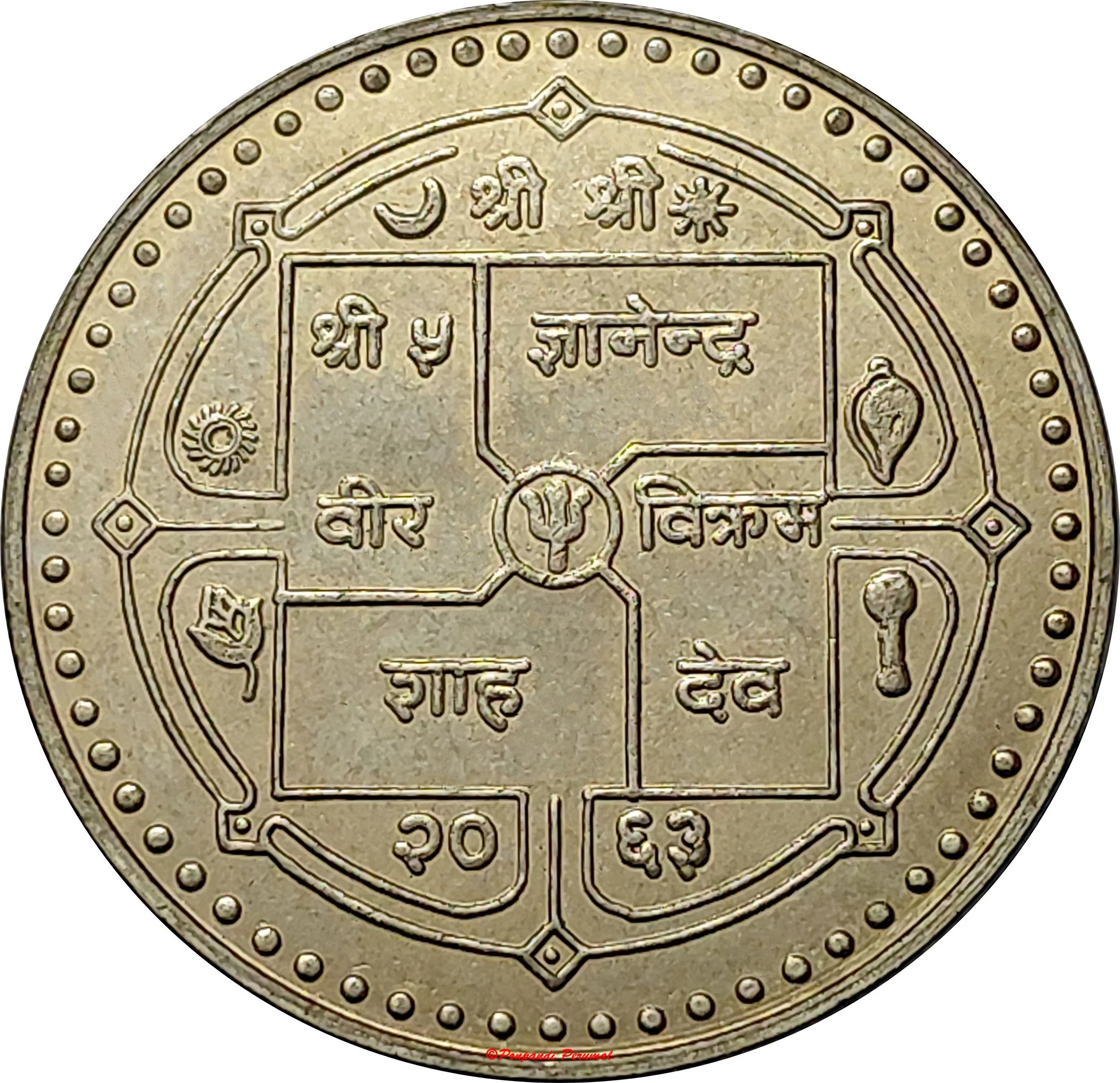
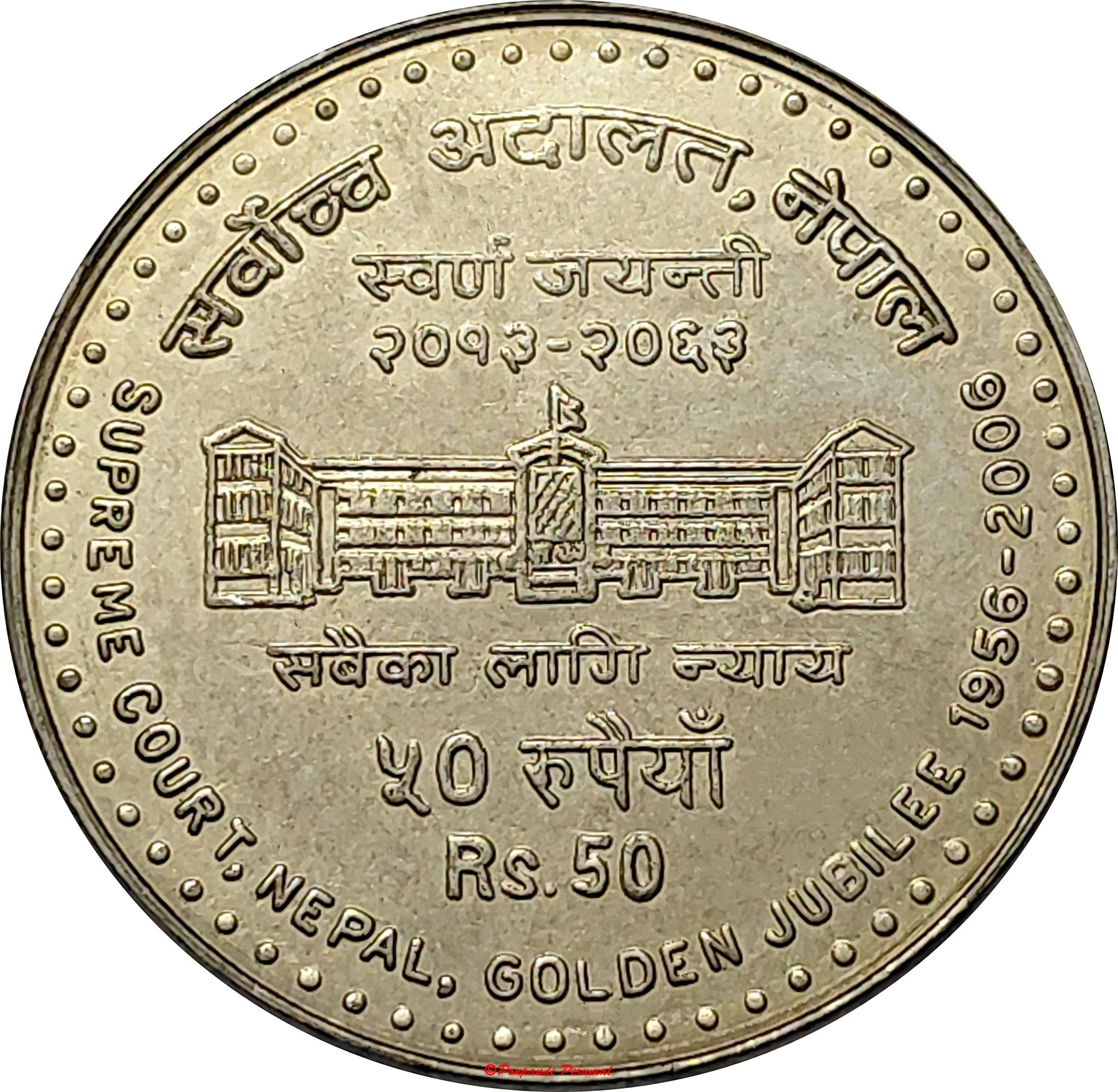
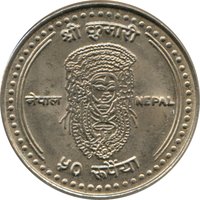
50 rupees (Supreme Court) – Nepal
Add to wishlist
Non-circulating coins
Commemoration: 50th Anniversary of the Supreme Court
Nepal
Context
Year: 2006
Vikram Samvat Year:: 2063
Issuer: Nepal
Ruler: Gyanendra Bir Bikram Shah
Currency:
(since 1932)
Material
Diameter: 29 mm
Weight: 8.6 g
Shape: Round
Composition: Copper-nickel
Technique: Milled
Alignment: Medal alignment
flip
References
KM: #
Numista: #49997
Value
Exchange value: 50 NPR
Obverse
Description:
Classic style
Reverse
Edge
Plain
Mintings
| Year | Mint Mark | Mintage | Quality | Collection |
|---|---|---|---|---|
| 2006 | — | — |
Historical background
In 2006, Nepal's currency situation was characterized by relative stability in the exchange rate but underlying pressures stemming from significant political and economic transition. The year was dominated by the culmination of the peace process, ending a decade-long civil war, and the restoration of parliament, which shifted the monarchy's power. This political upheaval created an environment of uncertainty that impacted economic confidence and investment. Despite this, the Nepalese Rupee (NPR), which is pegged to the Indian Rupee (INR) at a fixed rate of 1.6 NPR to 1 INR, maintained its formal stability. This peg provided a crucial anchor, preventing volatile fluctuations and ensuring predictability in trade with India, which accounts for the majority of Nepal's commerce.
Economically, the country faced challenges including sluggish growth, high public debt, and rising inflation, which began to accelerate due to higher global oil and commodity prices. Remittances, already a critical lifeline, continued to grow as overseas employment increased, providing essential foreign exchange reserves and supporting the national current account. These reserves were vital for maintaining the currency peg and ensuring the ability to finance imports. However, the fiscal situation was strained due to the costs of the peace process and reconstruction, limiting the government's capacity for significant economic intervention.
Overall, while the external value of the currency was artificially stable due to the peg, internal economic pressures were building. The focus in 2006 was less on a currency crisis and more on the broader economic fragility that could threaten long-term stability. The success of the nascent peace process and the establishment of a functional government were seen as prerequisites for addressing deeper structural issues, attracting foreign investment, and creating the conditions for sustainable economic growth that would ultimately support the currency.
Economically, the country faced challenges including sluggish growth, high public debt, and rising inflation, which began to accelerate due to higher global oil and commodity prices. Remittances, already a critical lifeline, continued to grow as overseas employment increased, providing essential foreign exchange reserves and supporting the national current account. These reserves were vital for maintaining the currency peg and ensuring the ability to finance imports. However, the fiscal situation was strained due to the costs of the peace process and reconstruction, limiting the government's capacity for significant economic intervention.
Overall, while the external value of the currency was artificially stable due to the peg, internal economic pressures were building. The focus in 2006 was less on a currency crisis and more on the broader economic fragility that could threaten long-term stability. The success of the nascent peace process and the establishment of a functional government were seen as prerequisites for addressing deeper structural issues, attracting foreign investment, and creating the conditions for sustainable economic growth that would ultimately support the currency.
⭐ Somewhat Rare