

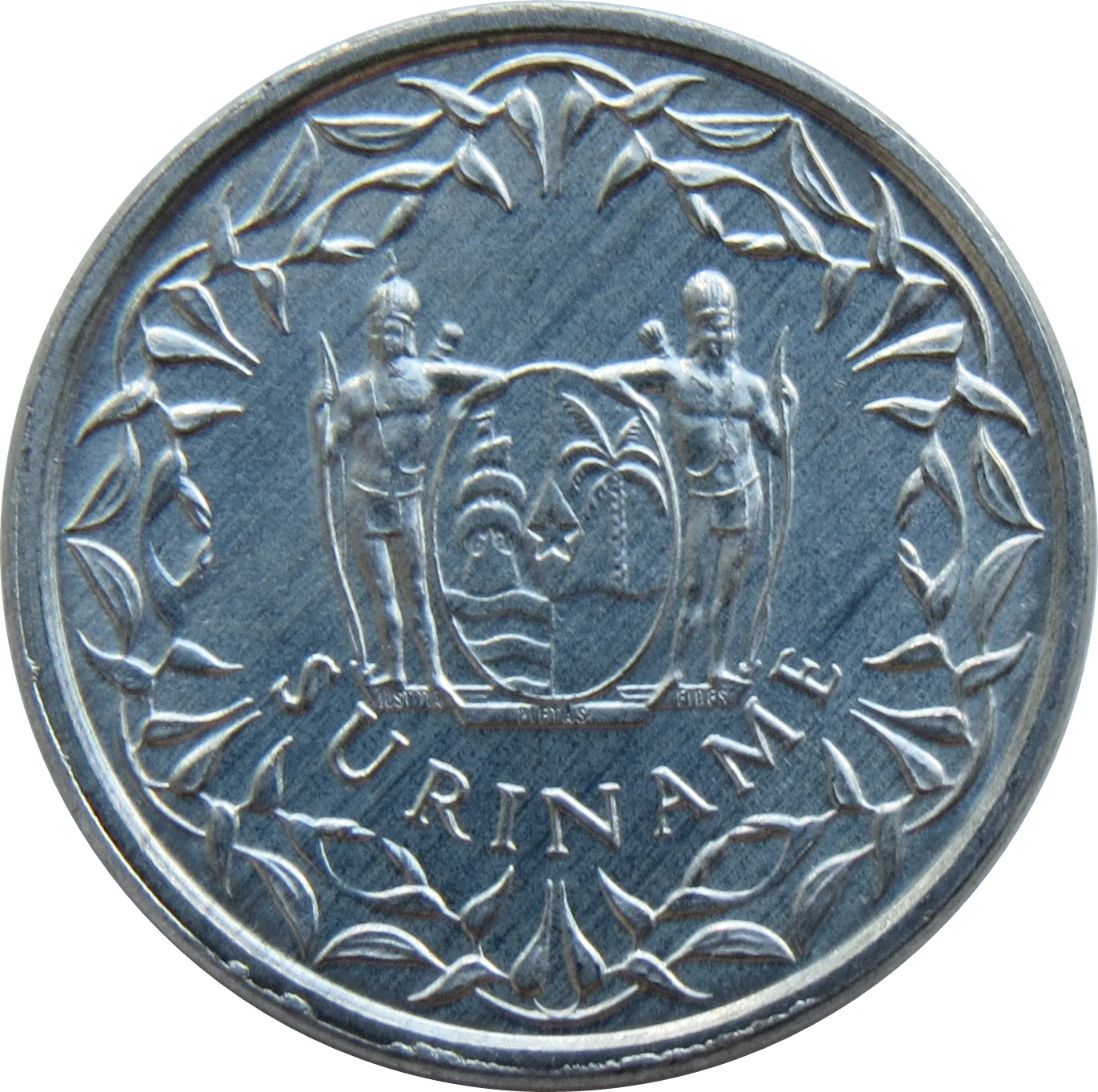
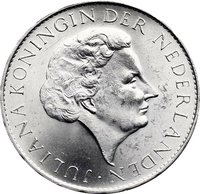
Obverse
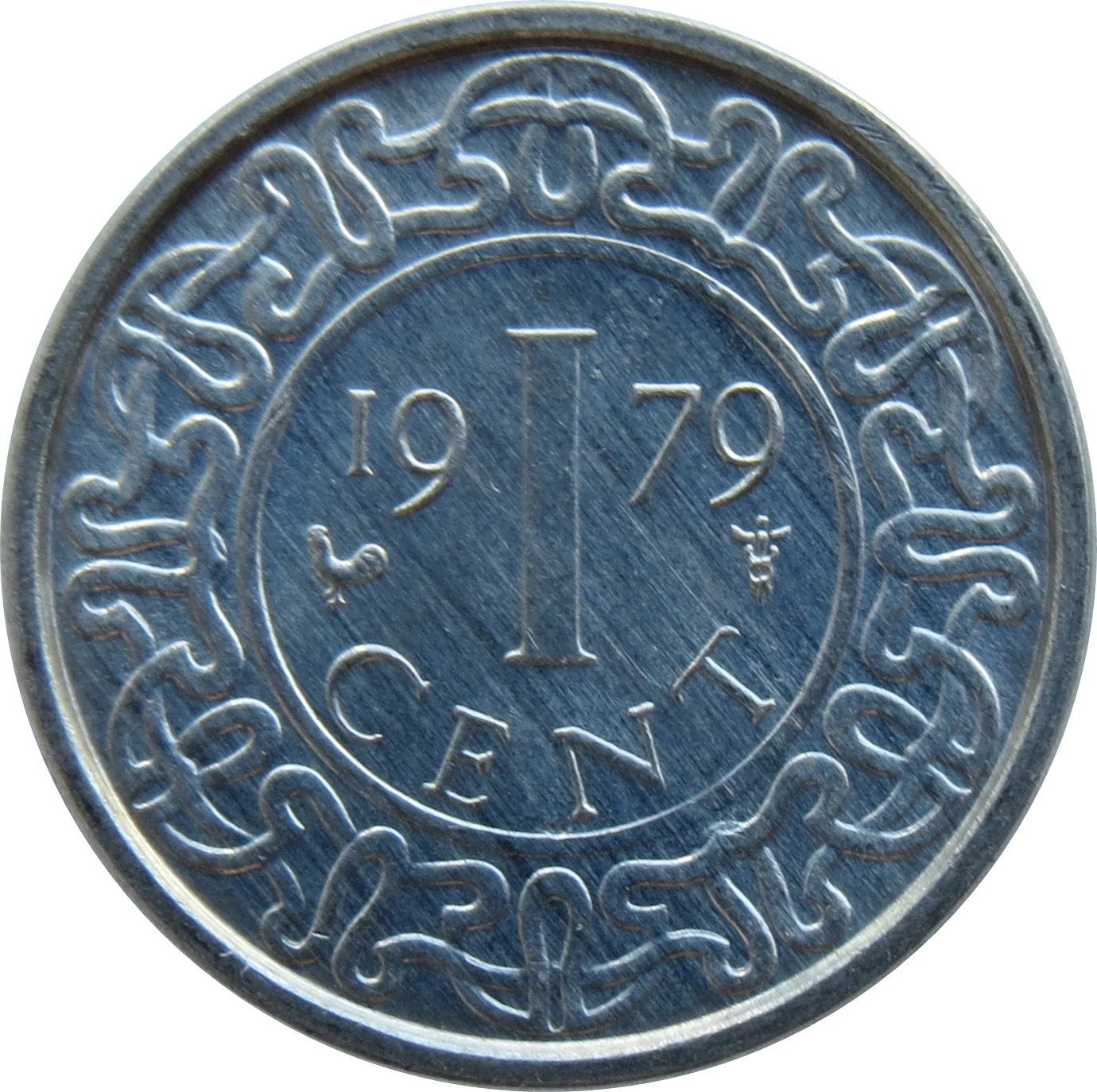
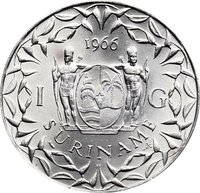
Reverse
Description:
Design encircled by year, value, privy, and Utrecht mint mark (caduceus), inspired by Surinamese Maroon wood carvings.
Inscription:
1979
1
CENT
1
CENT
Script: Latin
Edge
Plain
Categories
| Symbols> Coat of Arms |
| Symbol> Wreath |
Mints
| Name | Mark |
|---|---|
| Royal Dutch Mint | — |
Mintings
| Year | Mint Mark | Mintage | Quality | Collection |
|---|---|---|---|---|
| 1974 | — | 10 | Proof | |
| 1974 | — | 1,000,000 | ||
| 1975 | — | 1,000,000 | ||
| 1976 | — | 10 | Proof | |
| 1976 | — | 3,000,000 | ||
| 1977 | — | 10,000,000 | ||
| 1978 | — | 6,000,000 | ||
| 1979 | — | 10,000,000 | ||
| 1980 | — | 8,000,000 | ||
| 1982 | — | 8,000,000 | ||
| 1984 | — | 5,000,000 | ||
| 1985 | — | 2,000,000 | ||
| 1986 | — | 3,000,000 |
Historical background
In 1974, Suriname was an autonomous country within the Kingdom of the Netherlands, operating under a currency board system. The official currency was the Surinamese guilder (SRG), which was pegged at par to the Dutch guilder (NLG). This peg provided significant monetary stability and low inflation, as the currency was fully backed by Dutch foreign reserves. The arrangement reflected Suriname's deep economic and political ties to the Netherlands, facilitating trade and investment while outsourcing complex monetary policy decisions to Amsterdam.
However, this stability existed within a context of growing political momentum for full independence, which was formally achieved on November 25, 1975. Economic discussions in 1974 were therefore heavily focused on the future monetary system of the soon-to-be sovereign nation. A key question was whether Suriname would maintain the peg to the Dutch guilder or establish its own central bank with greater control over its currency and monetary policy to pursue domestic economic goals.
The period was thus one of monetary calm but impending transition. The currency board provided a stable platform, but Surinamese policymakers were actively planning for a post-independence financial architecture. The decision to eventually maintain the peg to the Dutch guilder after 1975, albeit with a new central bank (the Centrale Bank van Suriname established in 1957) taking a more active role, was shaped by the debates and assessments of this pre-independence year, balancing the desire for sovereignty with the benefits of anchored credibility.
However, this stability existed within a context of growing political momentum for full independence, which was formally achieved on November 25, 1975. Economic discussions in 1974 were therefore heavily focused on the future monetary system of the soon-to-be sovereign nation. A key question was whether Suriname would maintain the peg to the Dutch guilder or establish its own central bank with greater control over its currency and monetary policy to pursue domestic economic goals.
The period was thus one of monetary calm but impending transition. The currency board provided a stable platform, but Surinamese policymakers were actively planning for a post-independence financial architecture. The decision to eventually maintain the peg to the Dutch guilder after 1975, albeit with a new central bank (the Centrale Bank van Suriname established in 1957) taking a more active role, was shaped by the debates and assessments of this pre-independence year, balancing the desire for sovereignty with the benefits of anchored credibility.
🌱 Very Common