

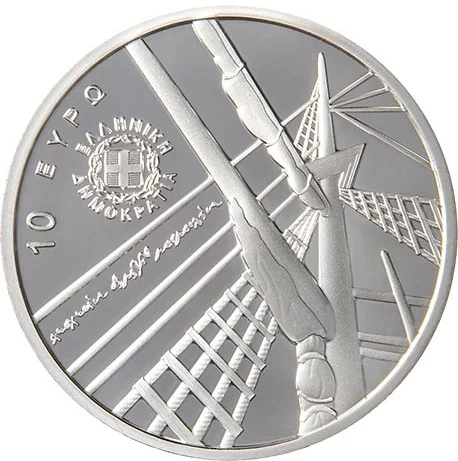
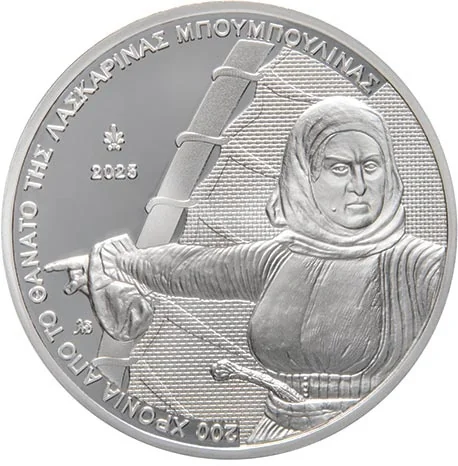
10 euro (Laskarina Bouboulina) – Greece
Add to wishlist
Non-circulating coins
Commemoration: 200 Years from Death of Laskarina Bouboulina
Greece
Obverse
Reverse
Edge
Categories
| Transportation> Watercraft |
| Symbols> Coat of Arms |
| History> War |
| History> Feminism |
Mints
| Name | Mark |
|---|---|
| National Mint of the Bank of Greece | — |
Mintings
| Year | Mint Mark | Mintage | Quality | Collection |
|---|---|---|---|---|
| 2025 | — | 1,500 | Proof |
Historical background
In 2025, Greece remains a committed member of the Eurozone, with the euro as its sole official currency. The turbulent decade following the sovereign debt crisis (2010-2018) is firmly in the past, with the country having successfully exited its final enhanced surveillance program in 2022. The primary focus is no longer on existential threats of "Grexit" or a return to the drachma, but on managing the legacy of high public debt and fostering sustainable economic growth within the European monetary union.
The currency situation is characterized by stability but underlying challenges. Greece's banking sector has consolidated and is significantly healthier, yet credit growth to the private sector remains cautious. The European Central Bank's monetary policy, particularly interest rate decisions aimed at Eurozone-wide inflation, continues to directly impact Greek borrowing costs and investment. While tourism and foreign direct investment provide steady inflows of euros, the economy must still navigate the tight fiscal rules of the EU's revised Stability and Growth Pact, limiting budgetary flexibility.
Looking ahead, the key currency-related debates in Greece for 2025 revolve around digital finance and European integration. There is active discussion about the potential benefits of a digital euro for improving payment efficiency and financial inclusion. Furthermore, Greece is a vocal advocate for deeper EU fiscal integration, including permanent mechanisms for common investment and asymmetric shock absorption, arguing that a truly resilient euro requires more shared financial tools beyond a common currency alone. The nation's currency stability is now inextricably linked to the broader evolution of the Eurozone's architecture.
The currency situation is characterized by stability but underlying challenges. Greece's banking sector has consolidated and is significantly healthier, yet credit growth to the private sector remains cautious. The European Central Bank's monetary policy, particularly interest rate decisions aimed at Eurozone-wide inflation, continues to directly impact Greek borrowing costs and investment. While tourism and foreign direct investment provide steady inflows of euros, the economy must still navigate the tight fiscal rules of the EU's revised Stability and Growth Pact, limiting budgetary flexibility.
Looking ahead, the key currency-related debates in Greece for 2025 revolve around digital finance and European integration. There is active discussion about the potential benefits of a digital euro for improving payment efficiency and financial inclusion. Furthermore, Greece is a vocal advocate for deeper EU fiscal integration, including permanent mechanisms for common investment and asymmetric shock absorption, arguing that a truly resilient euro requires more shared financial tools beyond a common currency alone. The nation's currency stability is now inextricably linked to the broader evolution of the Eurozone's architecture.

✨ Legendary