

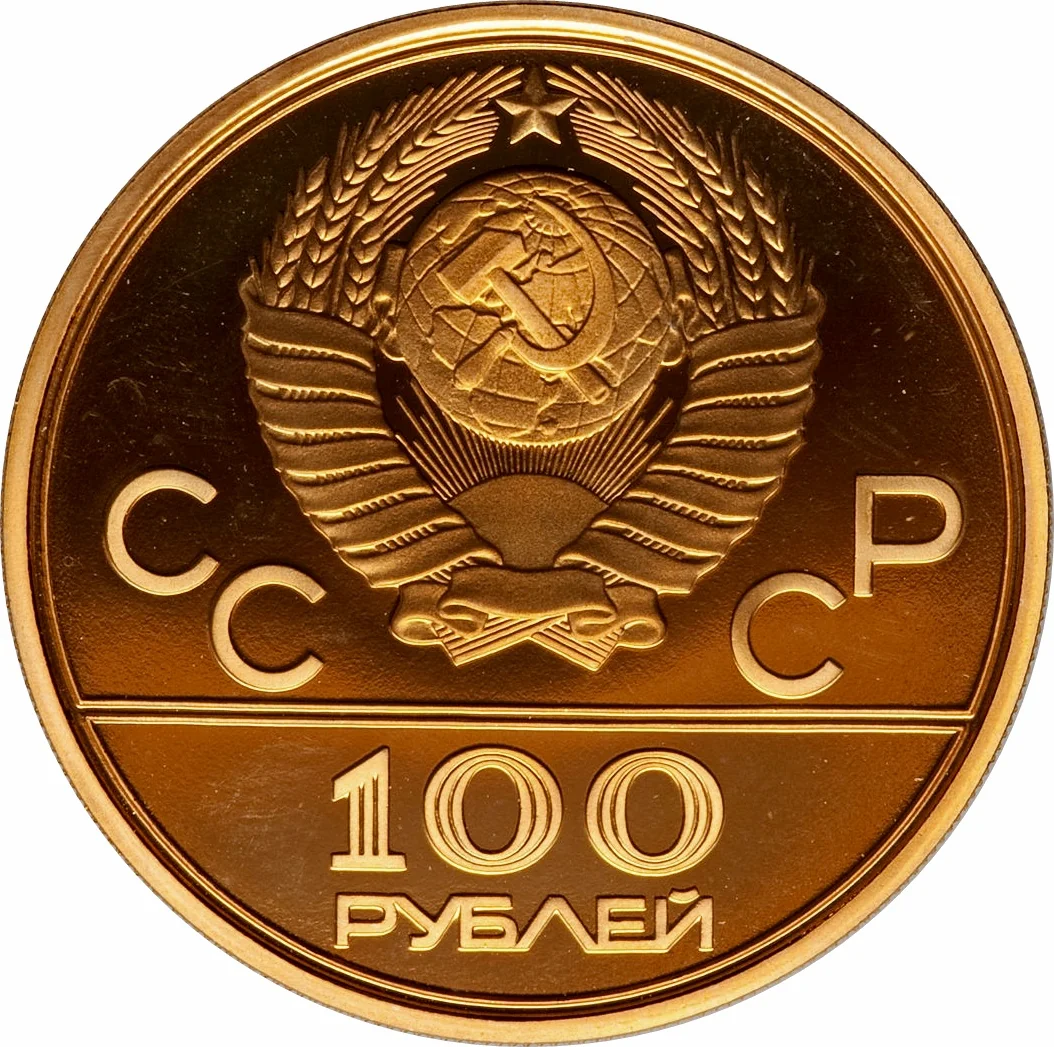
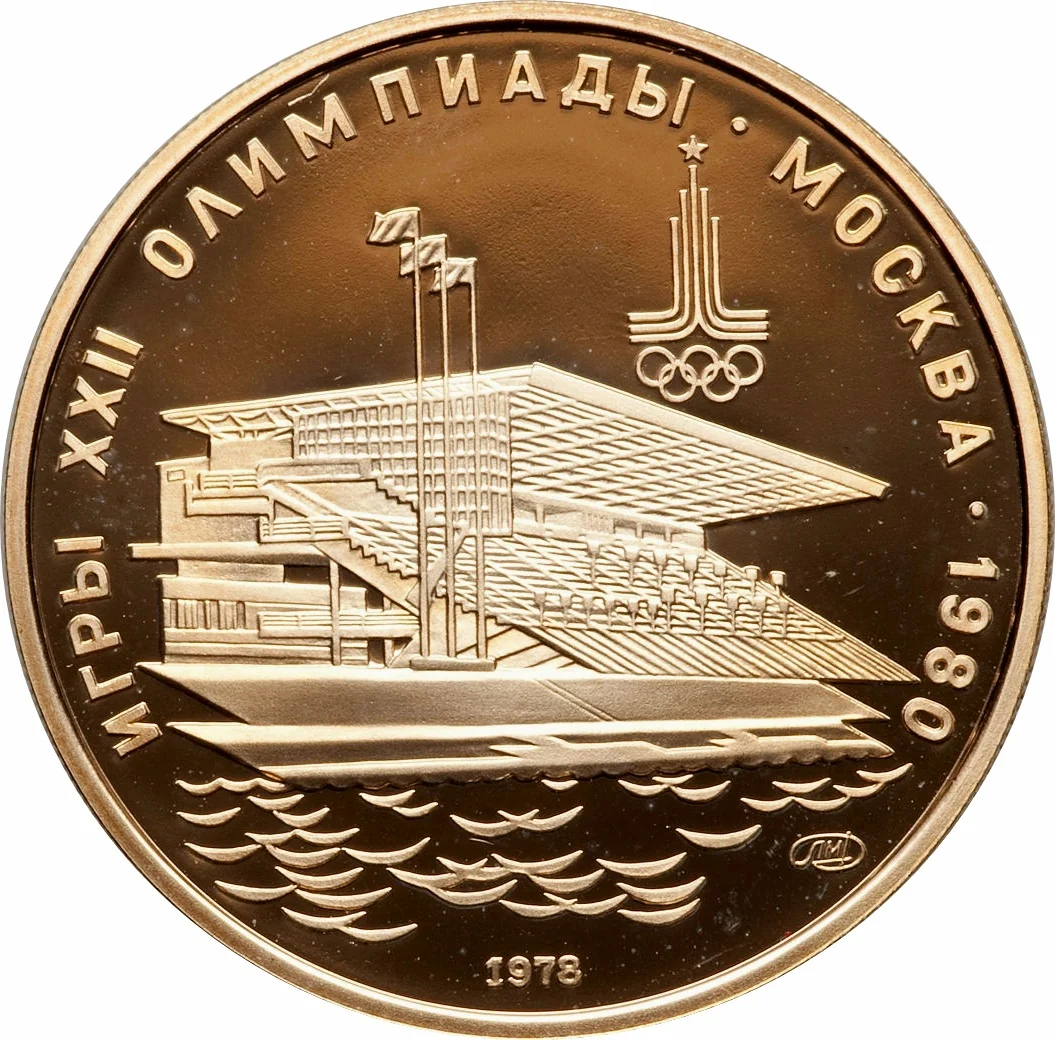
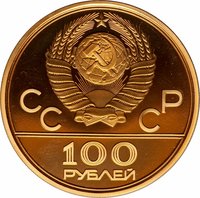
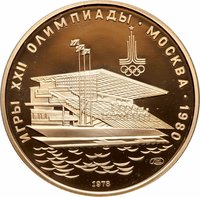
100 Rubles – Soviet Union
Non-circulating coins
Commemoration: 1980 Summer Olympics, Moscow
Russia
Context
Year: 1978
Country: Russia 
Issuer: Soviet Union 
Period:
(1922—1991)
Currency:
(1961—1991)
Demonetization: 1991
Total mintage: 100,406
Material
References
Value
Exchange value: 100 SUR
Bullion value: $2592.99
Obverse
Reverse
Edge
Milled
Categories
| Sport> Summer Olympic Games |
Mints
| Name | Mark |
|---|---|
| Saint Petersburg | ЛМД |
| Moscow Mint | ММД |
Mintings
Historical background
By 1978, the Soviet Union's currency situation was characterized by a stark duality between the domestic ruble and its international standing. Internally, the State Bank (Gosbank) maintained strict control over the ruble, which was a non-convertible "soft currency." Its value was administratively set and bore little relation to market forces, with an official exchange rate artificially pegged at approximately 0.66 rubles to the US dollar. This domestic ruble functioned primarily as a tool for accounting within the planned economy, while citizens faced a chronic shortage of consumer goods, meaning saved rubles often had limited purchasing power despite price stability.
Externally, the USSR operated a separate "hard currency" regime crucial for foreign trade. For international transactions, it used a non-cash "transferable ruble" within the Council for Mutual Economic Assistance (Comecon) bloc and, more importantly, sought Western currencies like US dollars and Deutsche Marks. Earning this hard currency was a top state priority, driven by the need to import vital grain and advanced technology from capitalist nations, which would not accept Soviet domestic rubles. This created a dependency that highlighted the ruble's irrelevance on the global financial stage.
This divide was visibly embodied in the black market and the state-run Beryozka stores. While the official rate was 0.66 rubles to the dollar, the thriving black market in 1978 offered roughly 4 to 6 rubles per dollar, exposing the vast overvaluation of the domestic currency. Meanwhile, Beryozka stores sold coveted imported or high-quality domestic goods exclusively for hard currency or special certificates, creating a two-tier consumption system that privileged elites, diplomats, and those with access to foreign funds, thereby underscoring the inequality and economic contradictions of late Soviet society.
Externally, the USSR operated a separate "hard currency" regime crucial for foreign trade. For international transactions, it used a non-cash "transferable ruble" within the Council for Mutual Economic Assistance (Comecon) bloc and, more importantly, sought Western currencies like US dollars and Deutsche Marks. Earning this hard currency was a top state priority, driven by the need to import vital grain and advanced technology from capitalist nations, which would not accept Soviet domestic rubles. This created a dependency that highlighted the ruble's irrelevance on the global financial stage.
This divide was visibly embodied in the black market and the state-run Beryozka stores. While the official rate was 0.66 rubles to the dollar, the thriving black market in 1978 offered roughly 4 to 6 rubles per dollar, exposing the vast overvaluation of the domestic currency. Meanwhile, Beryozka stores sold coveted imported or high-quality domestic goods exclusively for hard currency or special certificates, creating a two-tier consumption system that privileged elites, diplomats, and those with access to foreign funds, thereby underscoring the inequality and economic contradictions of late Soviet society.
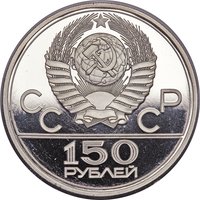
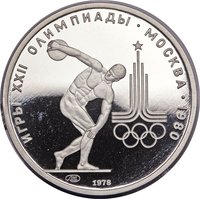
💎 Very Rare