

¼ Shilling – Jersey
Context
Year: 1964
Country: British Crown dependencies
Issuer: Jersey 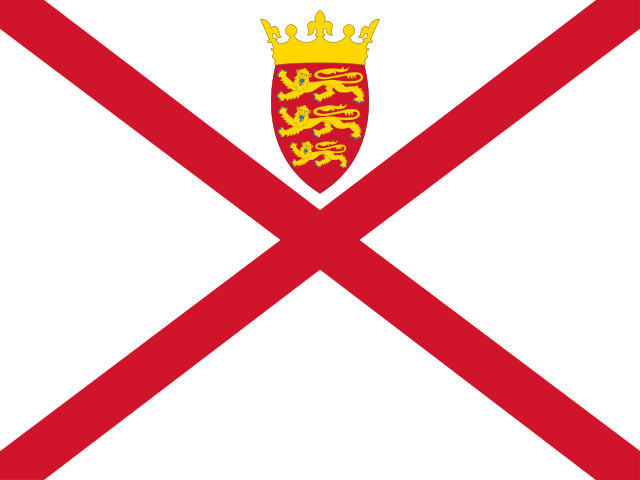
Ruler: Elizabeth II
Currency:
(1813—1971)
Demonetization: 27 December 1971
Total mintage: 1,220,000
Material
Diameter: 21.05 mm
Weight: 6.8 g
Thickness: 2.49 mm
Shape: Dodecagonal
Composition: Nickel brass
Magnetic: No
Technique: Milled
Alignment: Medal alignment
flip
References
KM: #Click to copy to clipboard25
Numista: #4936
Obverse
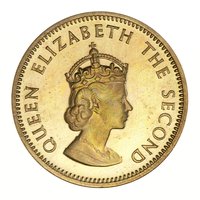
Description:
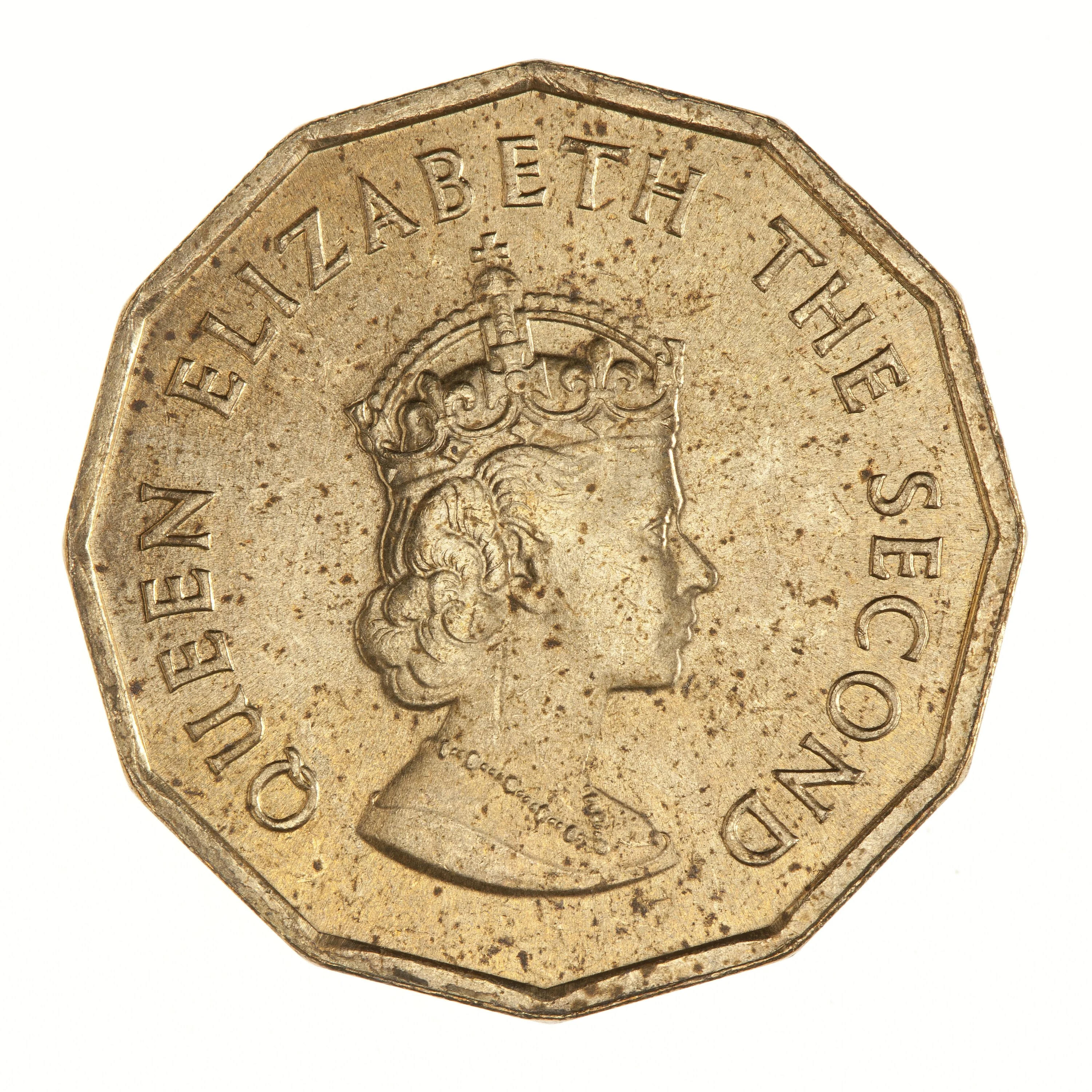
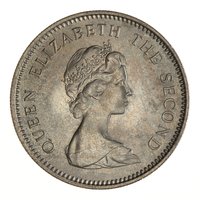
Queen Elizabeth II crowned portrait facing right, encircled by legend.
Inscription:
QUEEN ELIZABETH THE SECOND
Script: Latin
Engraver: Cecil Thomas
Reverse
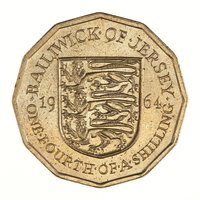
Description:
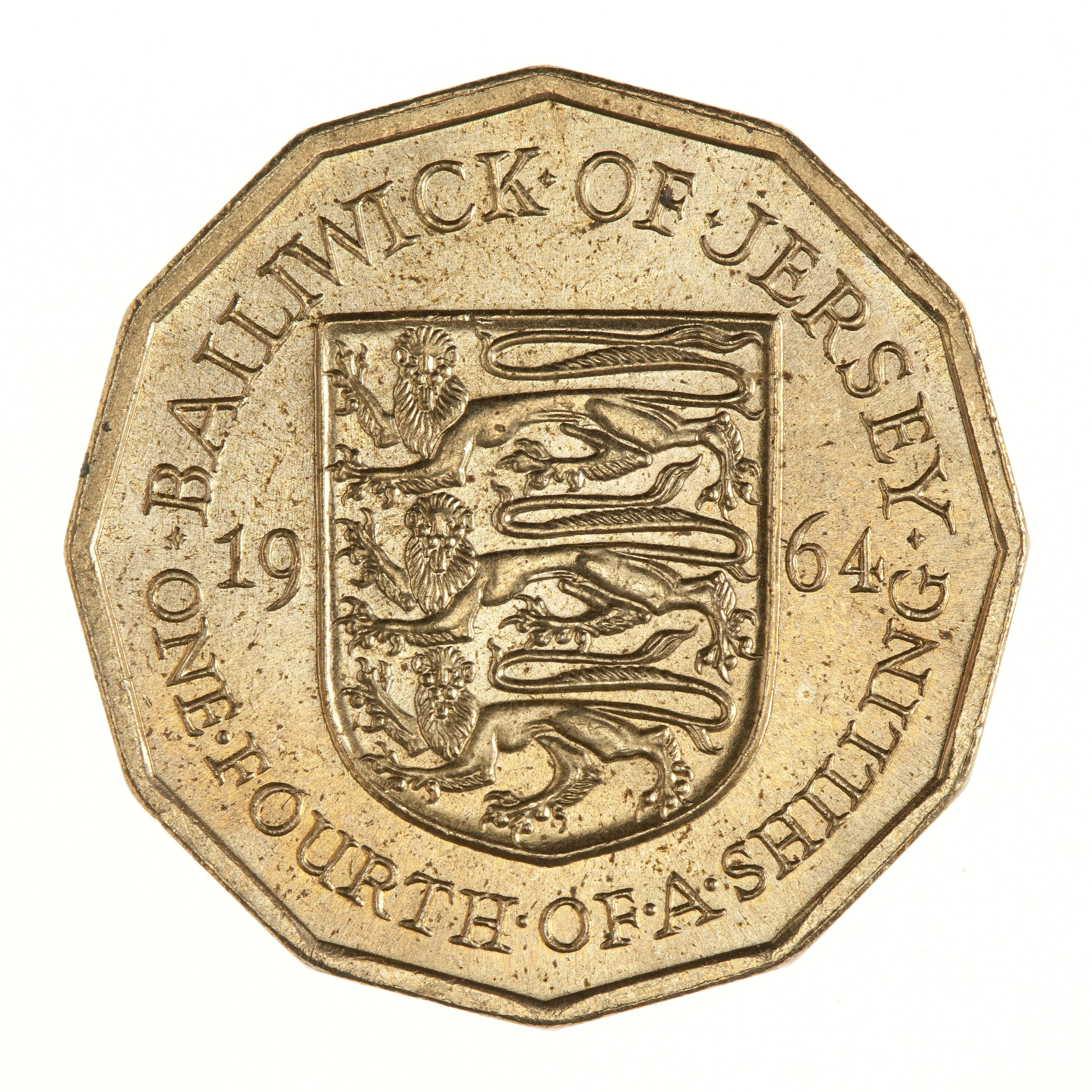
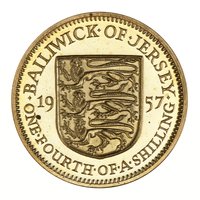
Three lions passant guardant on a shield.
Inscription:
·BAILIWICK·OF·JERSEY·
19 64
ONE·FOURTH·OF·A·SHILLING
19 64
ONE·FOURTH·OF·A·SHILLING
Script: Latin
Engraver: George Kruger Gray
Edge
Plain
Mints
| Name | Mark |
|---|---|
| Royal Mint (Tower Hill) | — |
Mintings
| Year | Mint Mark | Mintage | Quality | Collection |
|---|---|---|---|---|
| 1964 | — | 1,200,000 | ||
| 1964 | — | 20,000 | Proof |
Historical background
In 1964, the currency situation in Jersey was one of transition and assertion of local identity, yet remained fundamentally tied to the British pound sterling. The island, as a British Crown Dependency, did not issue its own independent currency but produced local banknotes that were strictly denominated in sterling and required to be fully backed by pound sterling reserves held in London. These distinctive Jersey notes, issued by the States of Jersey, circulated alongside Bank of England notes and UK coinage, creating a mixed but stable monetary environment on the island.
This period was significant as it fell just before a major numismatic change. Since 1957, Jersey had been considering decimalisation, and by 1964, plans were advancing to replace the centuries-old system of pounds, shillings, and pence. The UK's own decision to decimalise in 1971 provided further impetus, setting the stage for Jersey to introduce its own decimal coins later in the decade while maintaining the parity of its currency with sterling.
Economically, the 1960s were a time of growth for Jersey, with tourism and agriculture flourishing. The reliable currency regime, pegged one-for-one to sterling, provided stability for these industries and for the nascent finance sector. Thus, in 1964, Jersey’s currency was a symbol of its practical autonomy within the wider British monetary sphere, operating a hybrid system that was both locally distinct and seamlessly integrated into the UK's financial architecture, while standing on the brink of a planned decimal modernisation.
This period was significant as it fell just before a major numismatic change. Since 1957, Jersey had been considering decimalisation, and by 1964, plans were advancing to replace the centuries-old system of pounds, shillings, and pence. The UK's own decision to decimalise in 1971 provided further impetus, setting the stage for Jersey to introduce its own decimal coins later in the decade while maintaining the parity of its currency with sterling.
Economically, the 1960s were a time of growth for Jersey, with tourism and agriculture flourishing. The reliable currency regime, pegged one-for-one to sterling, provided stability for these industries and for the nascent finance sector. Thus, in 1964, Jersey’s currency was a symbol of its practical autonomy within the wider British monetary sphere, operating a hybrid system that was both locally distinct and seamlessly integrated into the UK's financial architecture, while standing on the brink of a planned decimal modernisation.
🌱 Very Common