

10 Cents – Seychelles
Seychelles
Context
Year: 1951
Issuer: Seychelles 
Ruler: George VI
Currency:
(since 1914)
Demonetized: Yes
Total mintage: 36,000
Material
References
KM: #Click to copy to clipboard8
Numista: #4889
Value
Exchange value: 0.10 SCR
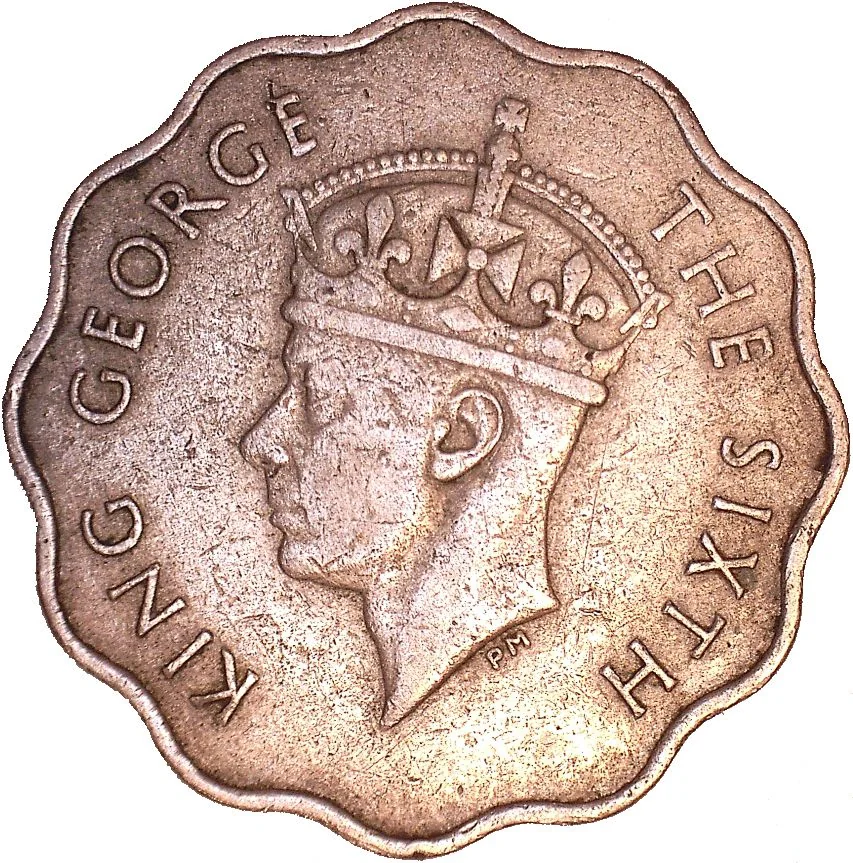
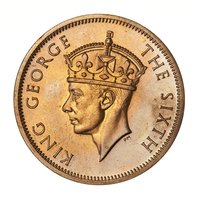
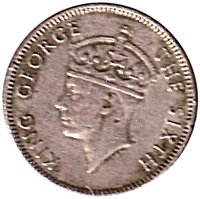
Obverse
Description:
George VI left-facing effigy.
Inscription:
KING GEORGE THE SIXTH
P.M.
P.M.
Translation:
KING GEORGE THE SIXTH
P.M.
P.M.
Script: Latin
Language: English
Engraver: Percy Metcalfe
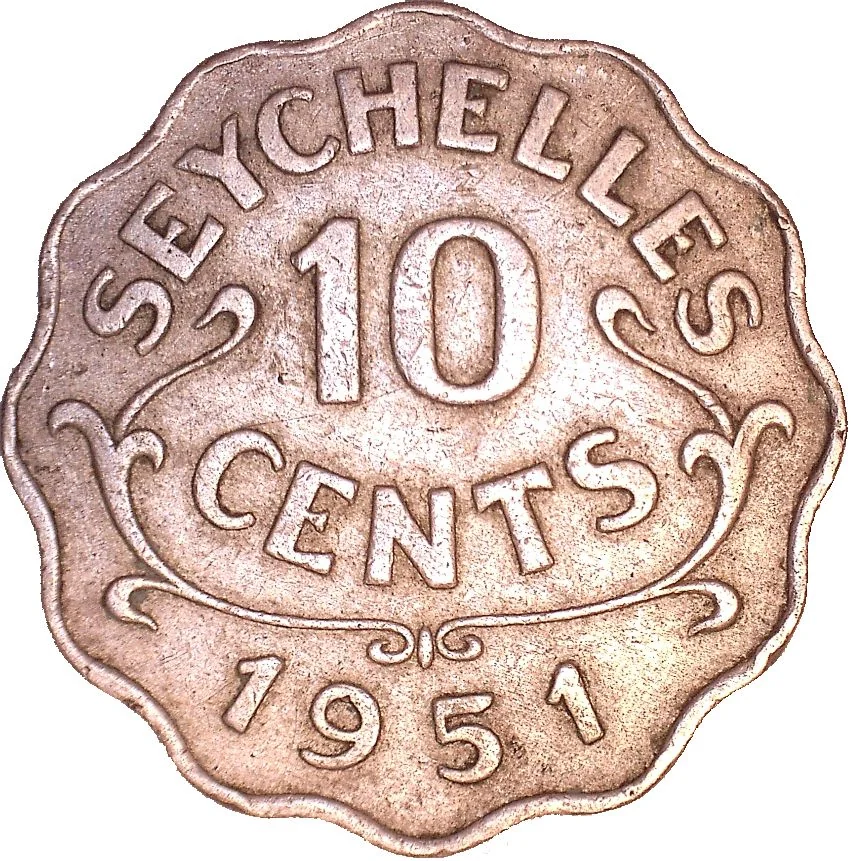
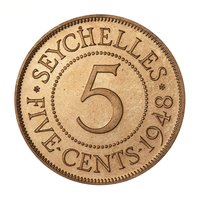
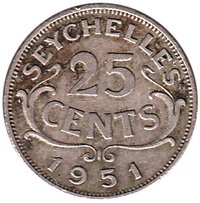
Reverse
Description:
Treasure in ornament. Myth.
Inscription:
SEYCHELLES
10
CENTS
1951
10
CENTS
1951
Script: Latin
Engraver: George Kruger Gray
Edge
Plain
Mints
| Name | Mark |
|---|---|
| Royal Mint (Tower Hill) | — |
Mintings
| Year | Mint Mark | Mintage | Quality | Collection |
|---|---|---|---|---|
| 1951 | — | 36,000 | ||
| 1951 | — | — | Proof |
Historical background
In 1951, the currency situation in Seychelles was firmly under the control of the British colonial administration, as the islands were a Crown Colony. The official currency was the Seychelles rupee, which was not an independent currency but a local issue pegged at par to the Indian rupee. This link was a legacy of the islands' earlier administrative connection to Mauritius and, before that, the broader British Indian Ocean trade and monetary sphere. The currency was issued by the Government of Seychelles in the form of coins and notes, but its value was ultimately derivative and managed externally.
The peg to the Indian rupee, however, was becoming increasingly problematic by 1951. Just a few years earlier, in 1947, India had gained independence, and its rupee was subjected to devaluation pressures and exchange controls. This created significant economic inconvenience for Seychelles, which conducted most of its trade not with India but with the United Kingdom, East Africa, and other regions. Using a currency tied to India's volatile economic situation complicated foreign trade and investment, creating a clear misalignment with Seychelles' actual economic linkages.
Consequently, 1951 fell within a period of monetary transition and deliberation. Colonial authorities and local merchants were actively discussing a necessary change to sever the link with the Indian rupee. This led to the decisive move in 1952, when the Seychelles rupee was repegged to the pound sterling at a rate of 13.33 rupees = £1, under the auspices of the East African Currency Board. Therefore, the situation in 1951 was one of the final years of an outdated monetary arrangement, with the colony on the cusp of a reform that would better align its currency with its primary trading partners and colonial ruler.
The peg to the Indian rupee, however, was becoming increasingly problematic by 1951. Just a few years earlier, in 1947, India had gained independence, and its rupee was subjected to devaluation pressures and exchange controls. This created significant economic inconvenience for Seychelles, which conducted most of its trade not with India but with the United Kingdom, East Africa, and other regions. Using a currency tied to India's volatile economic situation complicated foreign trade and investment, creating a clear misalignment with Seychelles' actual economic linkages.
Consequently, 1951 fell within a period of monetary transition and deliberation. Colonial authorities and local merchants were actively discussing a necessary change to sever the link with the Indian rupee. This led to the decisive move in 1952, when the Seychelles rupee was repegged to the pound sterling at a rate of 13.33 rupees = £1, under the auspices of the East African Currency Board. Therefore, the situation in 1951 was one of the final years of an outdated monetary arrangement, with the colony on the cusp of a reform that would better align its currency with its primary trading partners and colonial ruler.
🌟 Limited