

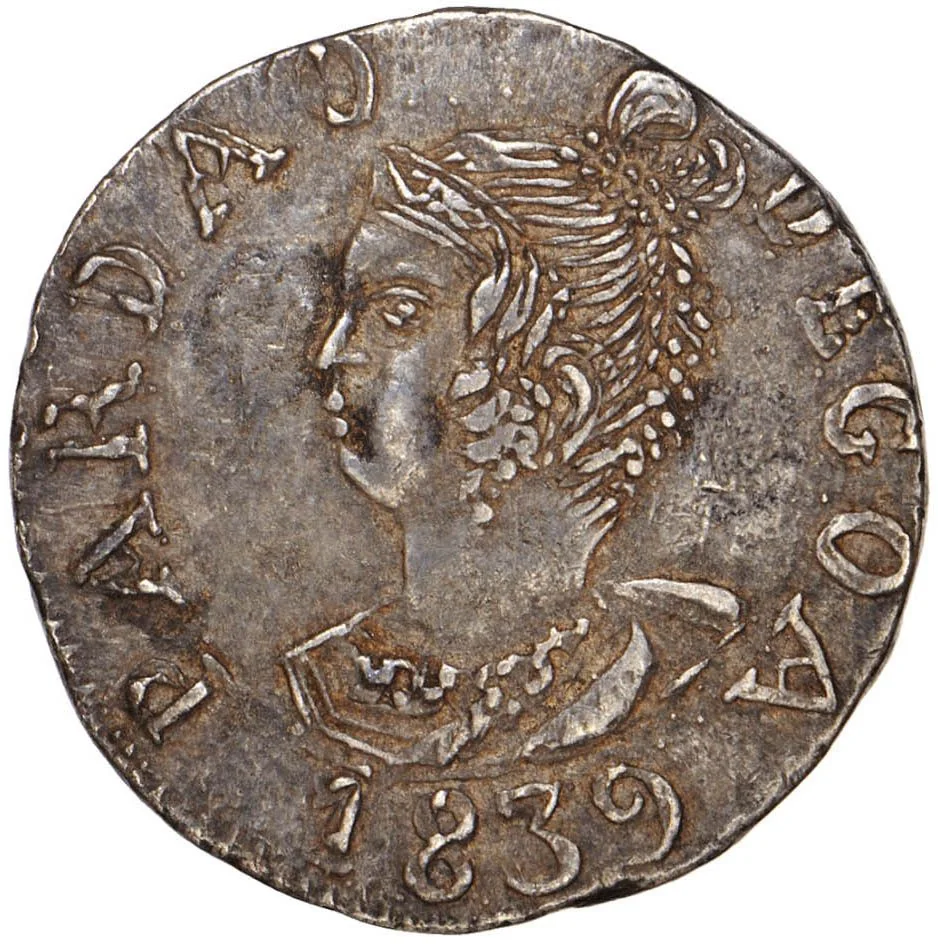
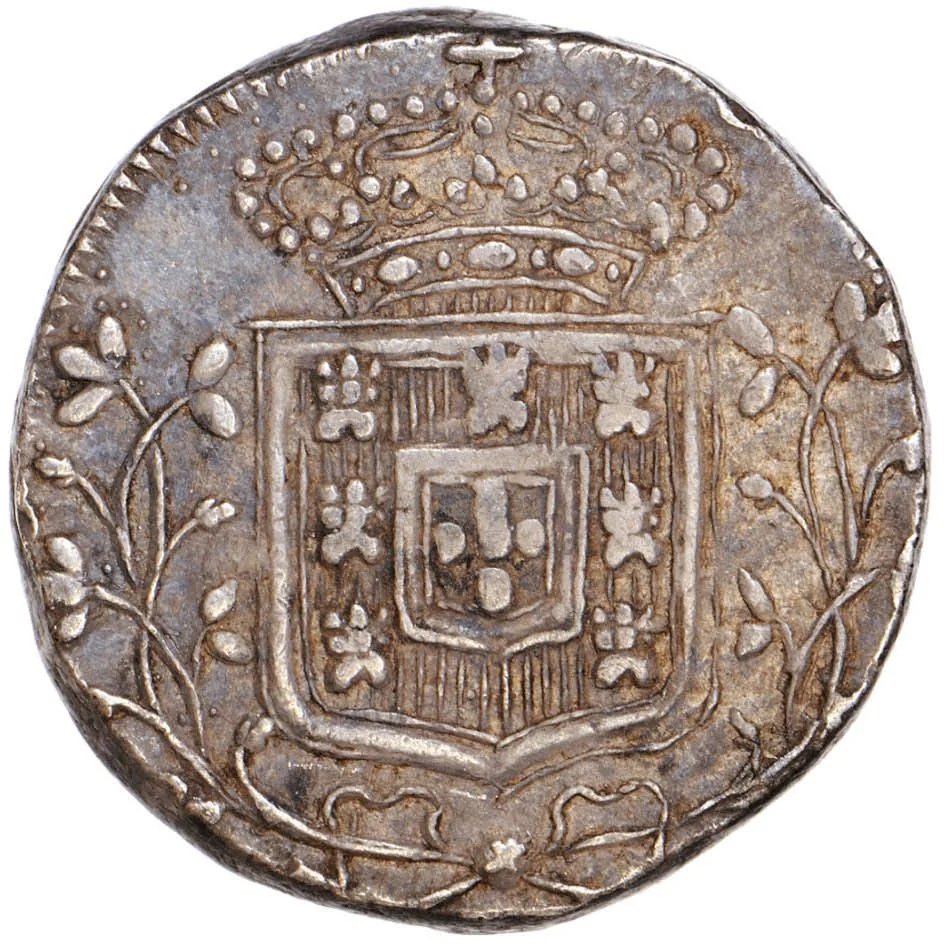
1 pardau – Portuguese India
Add to wishlist
India
Context
Years: 1839–1841
Country: India
Issuer: Portuguese India
Ruler: Mary II
Currency:
(1706—1880)
Subdivision: 1 pardau = ½ Rupia
Demonetized: Yes
Material
Diameter: 20 mm
Weight: 5.5 g
Silver Weight:: 5.50 g
Shape: Irregular round
Composition: Silver
Magnetic: No
Technique: Hammered
References
KM: #
Numista: #48799
Value
Bullion value: $13.39
Mints
| Name | Mark |
|---|---|
| Goa | — |
Mintings
| Year | Mint Mark | Mintage | Quality | Collection |
|---|---|---|---|---|
| 1839 | — | — | ||
| 1840 | — | — | ||
| 1841 | — | — |
Historical background
In 1839, the currency situation in Portuguese India was a complex and fragmented system, reflecting both its colonial status and its integration into regional trade networks. The official currency was the Portuguese Réis, but its circulation was limited and it often served more as a unit of account than a physical medium. The real economic lifeblood of Goa, Damão, and Diu was a multitude of foreign coins that flowed through its ports. British Indian Rupees, particularly those from Bombay, dominated larger transactions and official government finances, while older silver coins like the Spanish Dollar (8 Réis piece) and the Maria Theresa Thaler were also widely used in commerce.
This monetary pluralism was driven by Goa's role as a commercial hub within the Indian Ocean trade. The prevalence of foreign specie, especially British, underscored the growing economic dominance of British India in the region and the relative decline of Portuguese mercantile power. The local administration struggled with the practical problems this caused: exchange rates between the various coins fluctuated, leading to confusion, arbitrage, and frequent official proclamations attempting to fix their values against the Réis. Counterfeiting was also a persistent issue, further eroding trust in the already chaotic system.
Consequently, the monetary landscape was one of administrative weakness and market-driven pragmatism. While the Portuguese crown claimed monetary sovereignty, the de facto circulation was dictated by merchants and the needs of cross-border trade. This unstable and heterogeneous system would persist until a more standardized currency, the Rupia, was introduced in the late 1850s, finally aligning the colony's coinage more closely with the dominant British Indian rupee and providing a more stable medium of exchange.
This monetary pluralism was driven by Goa's role as a commercial hub within the Indian Ocean trade. The prevalence of foreign specie, especially British, underscored the growing economic dominance of British India in the region and the relative decline of Portuguese mercantile power. The local administration struggled with the practical problems this caused: exchange rates between the various coins fluctuated, leading to confusion, arbitrage, and frequent official proclamations attempting to fix their values against the Réis. Counterfeiting was also a persistent issue, further eroding trust in the already chaotic system.
Consequently, the monetary landscape was one of administrative weakness and market-driven pragmatism. While the Portuguese crown claimed monetary sovereignty, the de facto circulation was dictated by merchants and the needs of cross-border trade. This unstable and heterogeneous system would persist until a more standardized currency, the Rupia, was introduced in the late 1850s, finally aligning the colony's coinage more closely with the dominant British Indian rupee and providing a more stable medium of exchange.
✨ Legendary