

1 Rupia – Portuguese India
India
Context
Years: 1866–1869
Country: India 
Issuer: Portuguese India
Ruler: Louis I
Currency:
(1706—1880)
Demonetized: Yes
Material
Diameter: 24.5 mm
Weight: 11 g
Silver weight: 11.00 g
Shape: Irregular round
Composition: Silver
Magnetic: No
Technique: Hammered
References
KM: #Click to copy to clipboard282
Numista: #48649
Value
Bullion value: $30.86
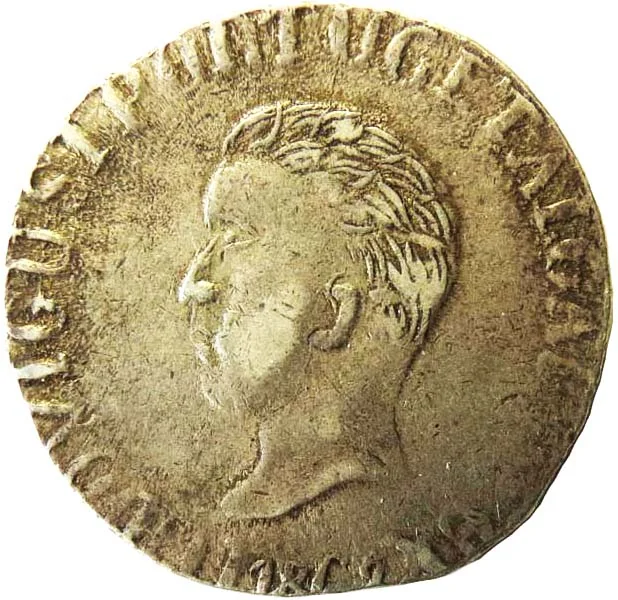
Obverse
Inscription:
LUDOVICUS I PORT ET ALGARB REX
1868
1868
Translation:
Louis I, King of Portugal and the Algarves
1868
1868
Script: Latin
Languages: Latin, Portuguese
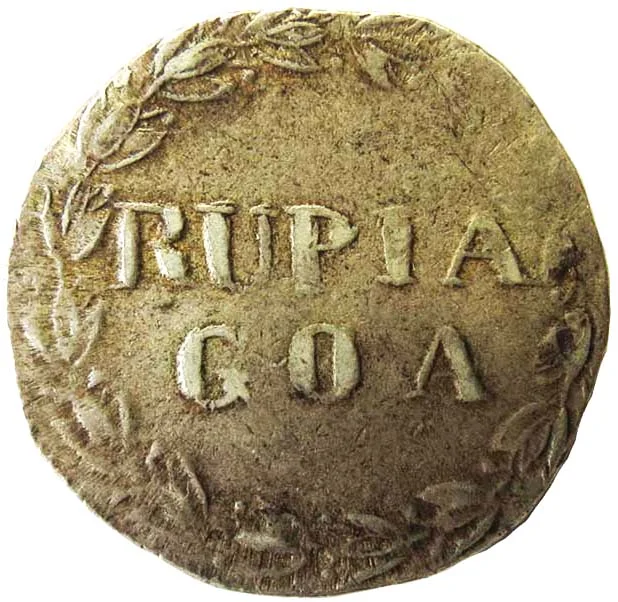
Reverse
Inscription:
RUPIA
GOA
GOA
Script: Latin
Edge
Mints
| Name | Mark |
|---|---|
| Goa | — |
Mintings
| Year | Mint Mark | Mintage | Quality | Collection |
|---|---|---|---|---|
| 1866 | GOA | — | ||
| 1868 | GOA | — | ||
| 1869 | GOA | — |
Historical background
In 1866, the currency situation in Portuguese India was a complex and transitional one, characterized by the coexistence of multiple monetary systems. The official currency was the Portuguese Indian Rupia (divided into 16 tangas or 960 réis), which had been formally introduced in the late 18th century to align the colony's economy more closely with the surrounding Indian subcontinent. However, the British Indian Rupee, a currency of nearly identical weight and fineness, circulated widely and with practical authority due to the overwhelming dominance of British trade and economic influence in the region. This created a de facto bimetallic scenario where the two rupees, along with a variety of older Portuguese and local coins, all competed for acceptance.
The year 1866 itself was a point of crisis and reform. Portugal, under the monetary conventions of the Latin Monetary Union, had introduced a new gold-based currency standard in the metropole. This created a significant divergence, as the silver-based rupee in India saw its value fluctuate against the gold escudo. To address the resulting fiscal strain and to formally integrate the colony's system with Lisbon's, the Portuguese government issued a decree on September 22, 1866. This law aimed to suppress the local rupee and replace it with Portuguese metropolitan currency, making the escudo the official unit of account.
This abrupt decree of 1866 proved highly disruptive and was ultimately a failure. The attempt to impose a gold-based currency in a region deeply embedded in a silver-standard economy, and where the British Indian Rupee was the de facto trade currency, was economically impractical. It caused confusion, hindered commerce, and was met with strong resistance from the local population and merchants. The impracticality forced Lisbon to repeatedly postpone the decree's implementation, and Portuguese India would continue to function on a silver rupee standard for decades more, with the 1866 episode highlighting the limits of colonial power against entrenched economic realities.
The year 1866 itself was a point of crisis and reform. Portugal, under the monetary conventions of the Latin Monetary Union, had introduced a new gold-based currency standard in the metropole. This created a significant divergence, as the silver-based rupee in India saw its value fluctuate against the gold escudo. To address the resulting fiscal strain and to formally integrate the colony's system with Lisbon's, the Portuguese government issued a decree on September 22, 1866. This law aimed to suppress the local rupee and replace it with Portuguese metropolitan currency, making the escudo the official unit of account.
This abrupt decree of 1866 proved highly disruptive and was ultimately a failure. The attempt to impose a gold-based currency in a region deeply embedded in a silver-standard economy, and where the British Indian Rupee was the de facto trade currency, was economically impractical. It caused confusion, hindered commerce, and was met with strong resistance from the local population and merchants. The impracticality forced Lisbon to repeatedly postpone the decree's implementation, and Portuguese India would continue to function on a silver rupee standard for decades more, with the 1866 episode highlighting the limits of colonial power against entrenched economic realities.
✨ Legendary