

50 toea (Independence) – Papua New Guinea
Add to wishlist
Circulating commemorative coins
Commemoration: 50th Anniversary of Independence
Papua New Guinea
Context
Year: 2025
Issuer: Papua New Guinea
Issuing organization: Bank of Papua New Guinea
Ruler: Charles III
Currency:
(since 1975)
Material
Diameter: 30 mm
Weight: 13.6 g
Thickness: 2 mm
Shape: Heptagonal
Composition: Copper-nickel
Alignment: Medal alignment

flip
References
KM: #
Numista: #485515
Value
Exchange value: 0.50 PGK
Obverse
Description:
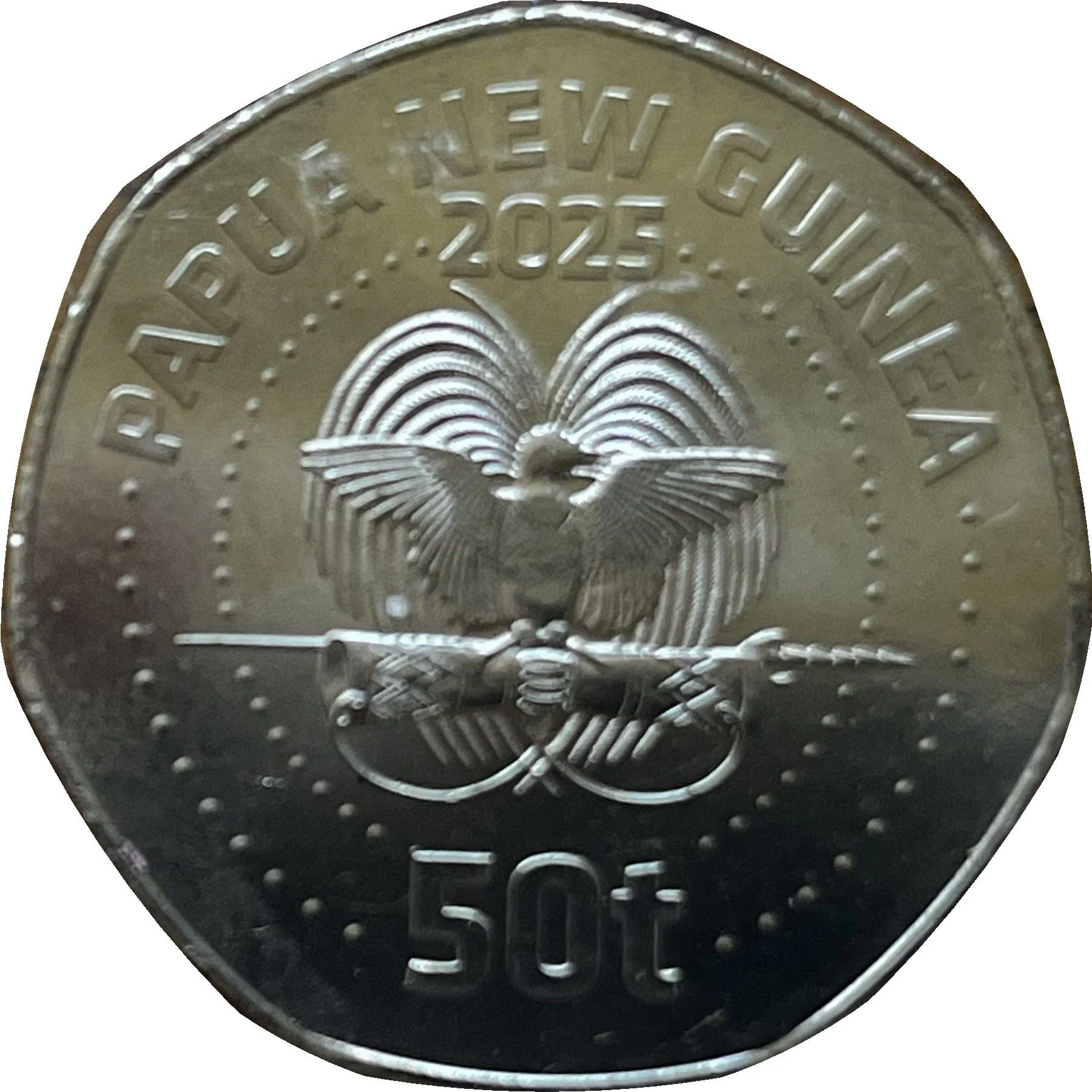
A bird-of-paradise above a spear and kundu drum.
Inscription:
PAPUA NEW GUINEA
2025
50t
2025
50t
Script: Latin
Reverse
Description:
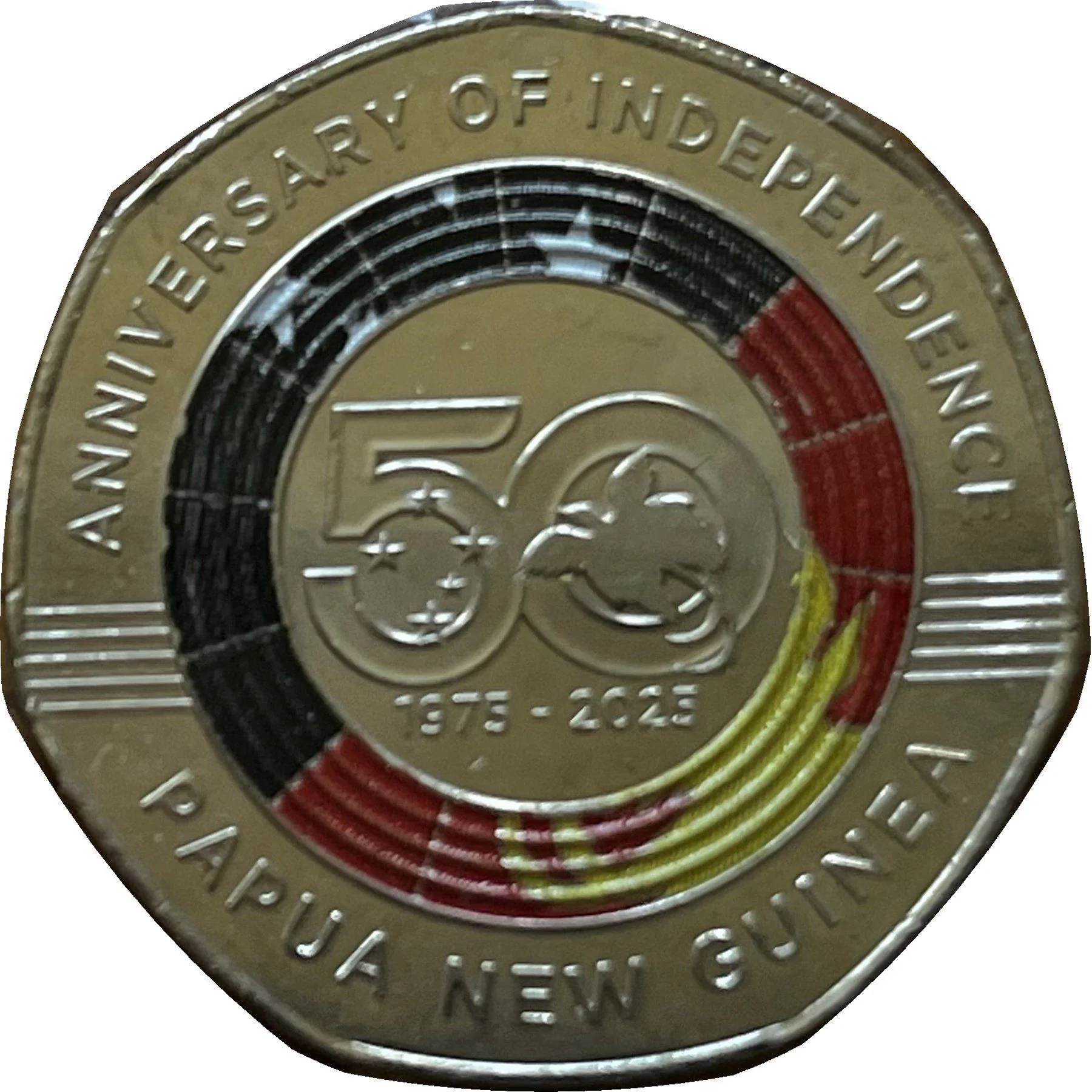
Independence anniversary logo within a national flag-colored circle.
Inscription:
PAPUA NEW GUINEA
ANNIVERSARY OF INDEPENDENCE
50
1975 - 2025
ANNIVERSARY OF INDEPENDENCE
50
1975 - 2025
Script: Latin
Edge
Interrupted Serration
Categories
| Animal> Bird |
| Art> Music |
| Symbols> Coat of Arms |
| Object> Cold weapons |
Mints
| Name | Mark |
|---|---|
| Royal Australian Mint | — |
Mintings
| Year | Mint Mark | Mintage | Quality | Collection |
|---|---|---|---|---|
| 2025 | — | — |
Historical background
In 2025, Papua New Guinea's currency, the Kina (PGK), remains under significant pressure, navigating a complex landscape of structural economic challenges and cautious optimism from recent policy shifts. The currency's value continues to be heavily influenced by the volatile foreign exchange (FX) market, where a chronic shortage of hard currency persists. This shortage, a multi-year issue, stifles business activity by making it difficult for companies to import essential goods and service foreign debt, despite the country benefiting from elevated global prices for its key mineral and liquefied natural gas (LNG) exports. The inflow of export revenues has not fully translated into domestic FX liquidity, partly due to the structure of resource projects and lingering investor caution.
The government and the Bank of Papua New Guinea (BPNG) have maintained a managed float regime, intervening to prevent a precipitous fall while gradually allowing for adjustment. Key initiatives from the 2024-2025 budget, focused on fiscal consolidation and efforts to diversify the economy beyond extractives, aim to build long-term confidence in the Kina. However, these measures are counterbalanced by high levels of public debt, persistent budget deficits, and underlying issues like political instability and security concerns, which continue to deter the sustained foreign direct investment needed to stabilize the currency.
Looking ahead, the currency's trajectory in 2025 is inextricably linked to the progress of major resource projects, such as the Porgera gold mine restart and the advanced Papua LNG venture. Successful advancement of these projects promises substantial future FX inflows. In the short term, however, the Kina is expected to remain weak and volatile, with its stability contingent on the government's ability to maintain fiscal discipline, the central bank's careful management of its limited foreign reserves, and a favorable external environment for its commodity exports. The situation represents a delicate balancing act between immediate economic pressures and the potential for a more stable foundation later in the decade.
The government and the Bank of Papua New Guinea (BPNG) have maintained a managed float regime, intervening to prevent a precipitous fall while gradually allowing for adjustment. Key initiatives from the 2024-2025 budget, focused on fiscal consolidation and efforts to diversify the economy beyond extractives, aim to build long-term confidence in the Kina. However, these measures are counterbalanced by high levels of public debt, persistent budget deficits, and underlying issues like political instability and security concerns, which continue to deter the sustained foreign direct investment needed to stabilize the currency.
Looking ahead, the currency's trajectory in 2025 is inextricably linked to the progress of major resource projects, such as the Porgera gold mine restart and the advanced Papua LNG venture. Successful advancement of these projects promises substantial future FX inflows. In the short term, however, the Kina is expected to remain weak and volatile, with its stability contingent on the government's ability to maintain fiscal discipline, the central bank's careful management of its limited foreign reserves, and a favorable external environment for its commodity exports. The situation represents a delicate balancing act between immediate economic pressures and the potential for a more stable foundation later in the decade.
💎 Very Rare