

1 Anna – India - British
India
Context
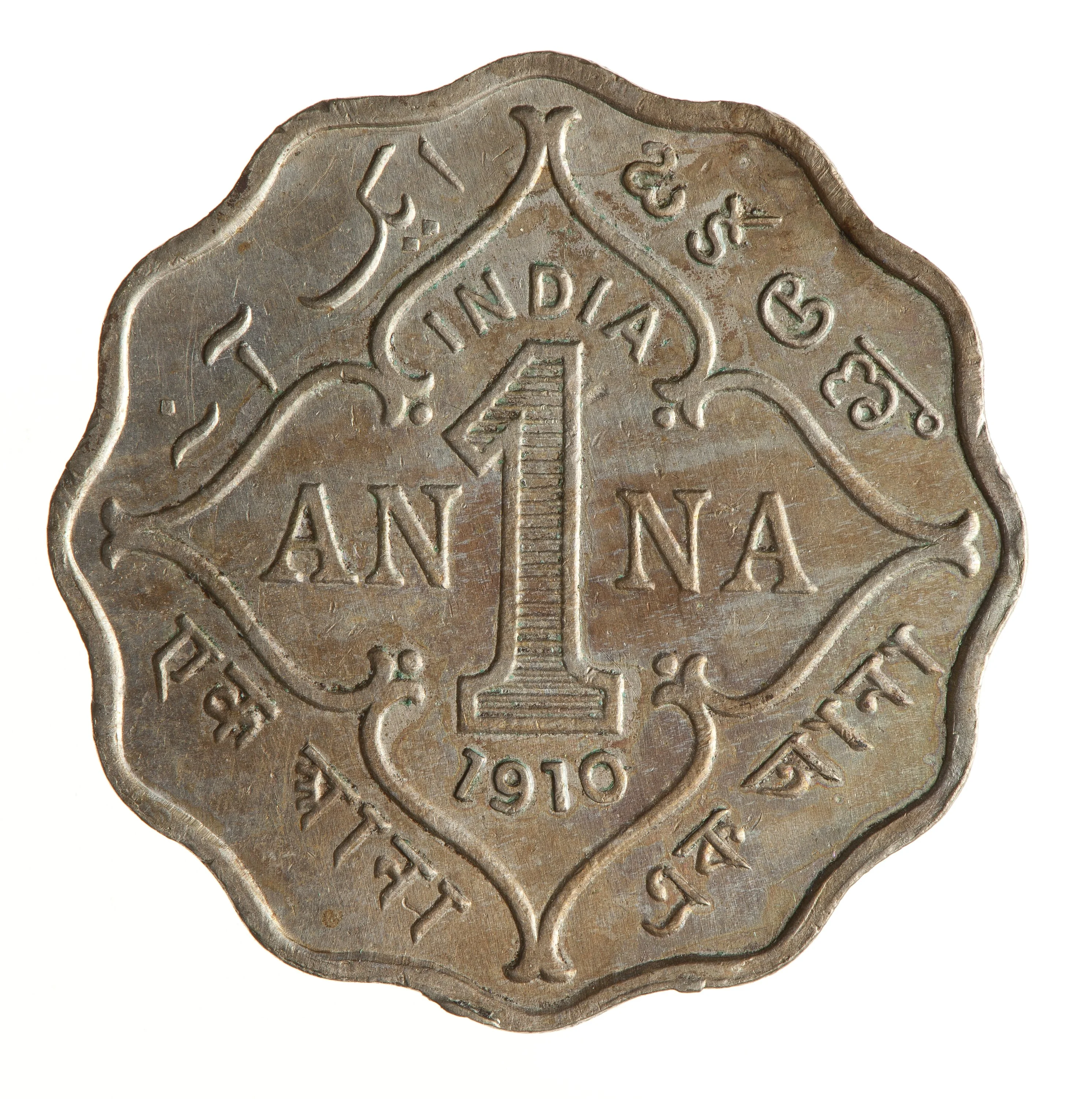
Years: 1906–1910
Country: India 
Issuer: India - British
Ruler: Edward VII
Currency:
(1770—1947)
Demonetized: Yes
Total mintage: 124,992,000
Material
Diameter: 20.5 mm
Weight: 3.9 g
Thickness: 1.4 mm
Shape: Scalloped
Composition: Copper-nickel
Technique: Milled
Alignment: Medal alignment
flip
References
KM: #Click to copy to clipboard504
Numista: #4853
Obverse
Description:
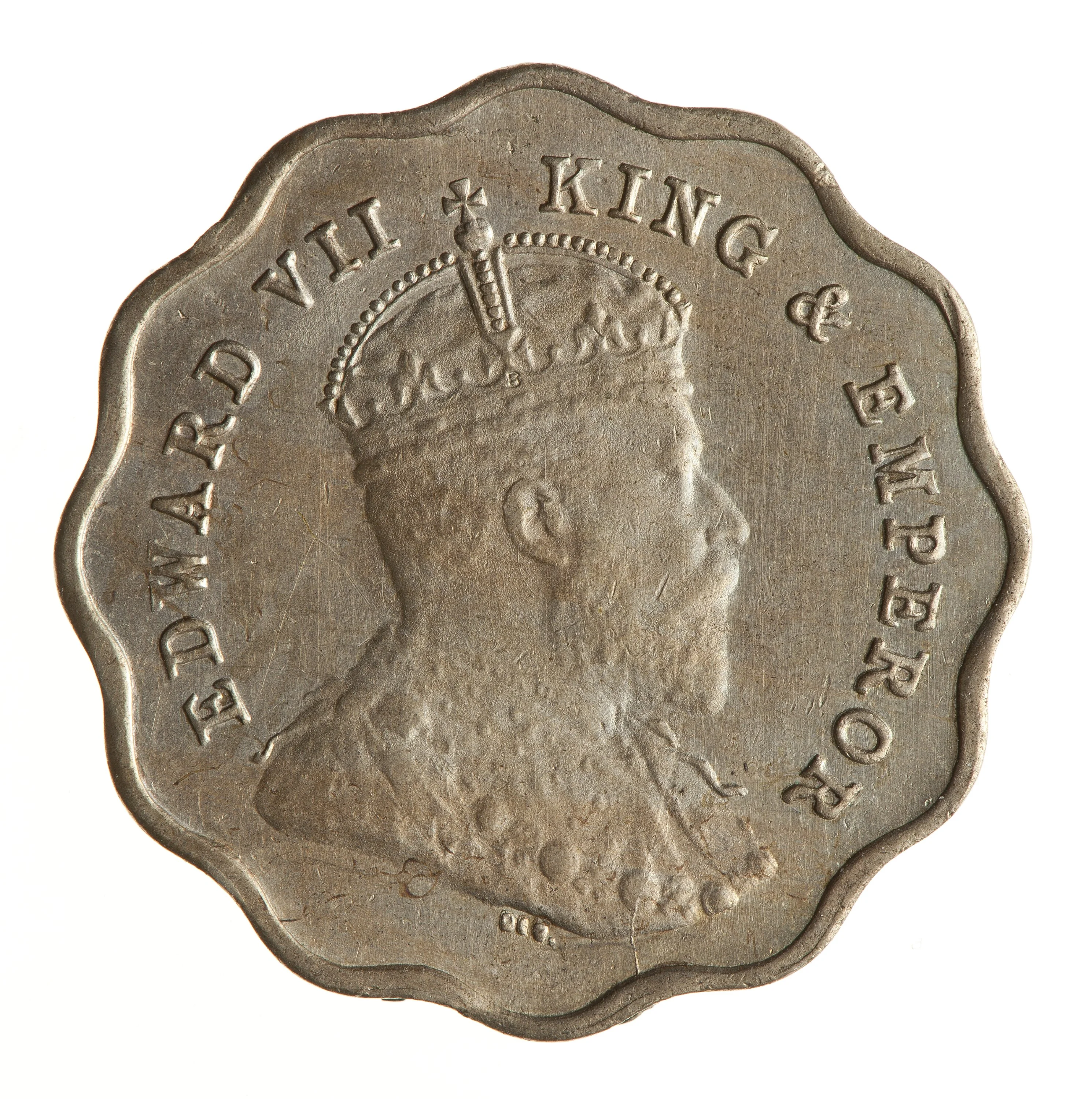
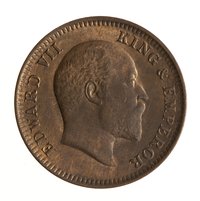
Scalloped edge. Right-facing Edward VII portrait, crowned, encircled by English legend. Engraver's initials below.
Inscription:
EDWARD VII KING & EMPEROR
B
DeS.
B
DeS.
Translation:
Edward VII King & Emperor
B
DeS.
B
DeS.
Language: English
Engraver: George William de Saulles
Reverse
Edge
Plain
Mints
| Name | Mark |
|---|---|
| Mumbai / Bombay | B |
Mintings
Historical background
By 1906, the currency situation in British India was defined by the gold exchange standard, a system formalized by the Indian Coinage Act of 1899. This policy firmly linked the rupee to gold, not by minting gold coins for circulation, but by fixing its value at 1s 4d (16 pence) sterling. The Government of India held substantial gold reserves in London, guaranteeing the rupee's convertibility at that fixed rate. The primary objective was to ensure exchange rate stability between India and Britain, facilitating predictable trade, capital flows, and the smooth "home charges" remittances to London.
However, this system created significant domestic tension. The fixed, high valuation of the rupee (often called the "rupee ratio" problem) was widely blamed for depressing Indian exports, particularly in the agricultural sector, as it made Indian goods more expensive on the world market. Furthermore, the economy suffered from a chronic scarcity of rupees and small denomination coins, causing deflationary pressure and hardship for common people. Nationalist leaders, like Dadabhai Naoroji and R.C. Dutt, fiercely criticized this "drain of wealth," arguing that the currency policy prioritized British financial and imperial interests over Indian economic welfare.
Consequently, 1906 stood in a period of entrenched policy but growing discontent. The British authorities, led by the Viceroy Lord Curzon and his financial advisors, were steadfast in their defence of the gold standard as a mark of financial modernity and imperial stability. Simultaneously, the Indian National Congress and emerging economic nationalists were increasingly vocal in their demand for a lower, more competitive rupee valuation and a currency system managed for India's benefit, making monetary policy a potent symbol of colonial exploitation and a rallying point for the Swadeshi movement.
However, this system created significant domestic tension. The fixed, high valuation of the rupee (often called the "rupee ratio" problem) was widely blamed for depressing Indian exports, particularly in the agricultural sector, as it made Indian goods more expensive on the world market. Furthermore, the economy suffered from a chronic scarcity of rupees and small denomination coins, causing deflationary pressure and hardship for common people. Nationalist leaders, like Dadabhai Naoroji and R.C. Dutt, fiercely criticized this "drain of wealth," arguing that the currency policy prioritized British financial and imperial interests over Indian economic welfare.
Consequently, 1906 stood in a period of entrenched policy but growing discontent. The British authorities, led by the Viceroy Lord Curzon and his financial advisors, were steadfast in their defence of the gold standard as a mark of financial modernity and imperial stability. Simultaneously, the Indian National Congress and emerging economic nationalists were increasingly vocal in their demand for a lower, more competitive rupee valuation and a currency system managed for India's benefit, making monetary policy a potent symbol of colonial exploitation and a rallying point for the Swadeshi movement.
🌱 Common