

20 Pesos (Mexican Army) – Mexico
Circulating commemorative coins
Commemoration: 100th Anniversary of the Mexican Army
Mexico
Context
Material
References
KM: #Click to copy to clipboard969
Numista: #48376
Value
Exchange value: 20 MXN = $1.16
Inflation-adjusted value: 34.08 MXN
Obverse
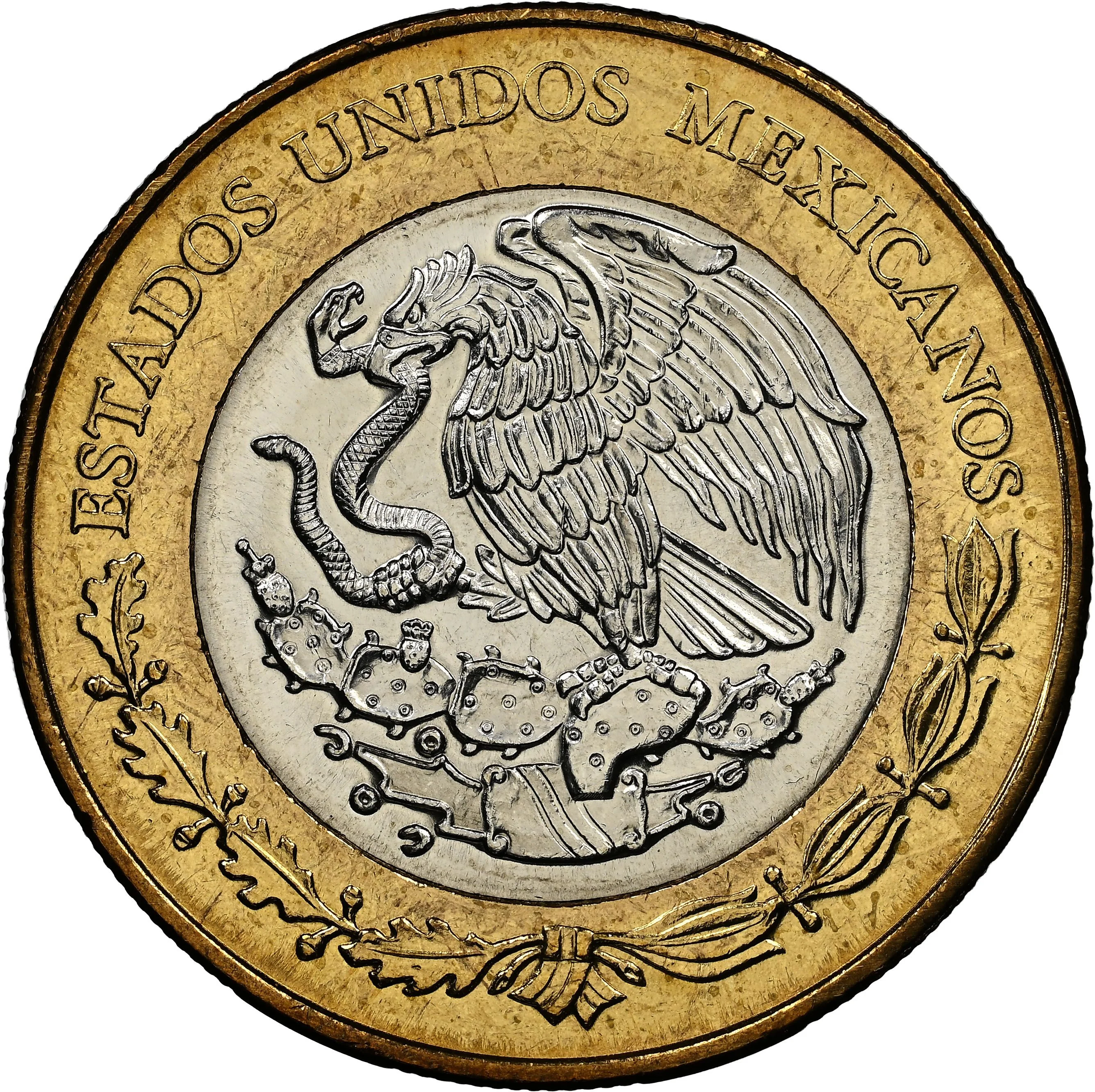
Reverse
Description:
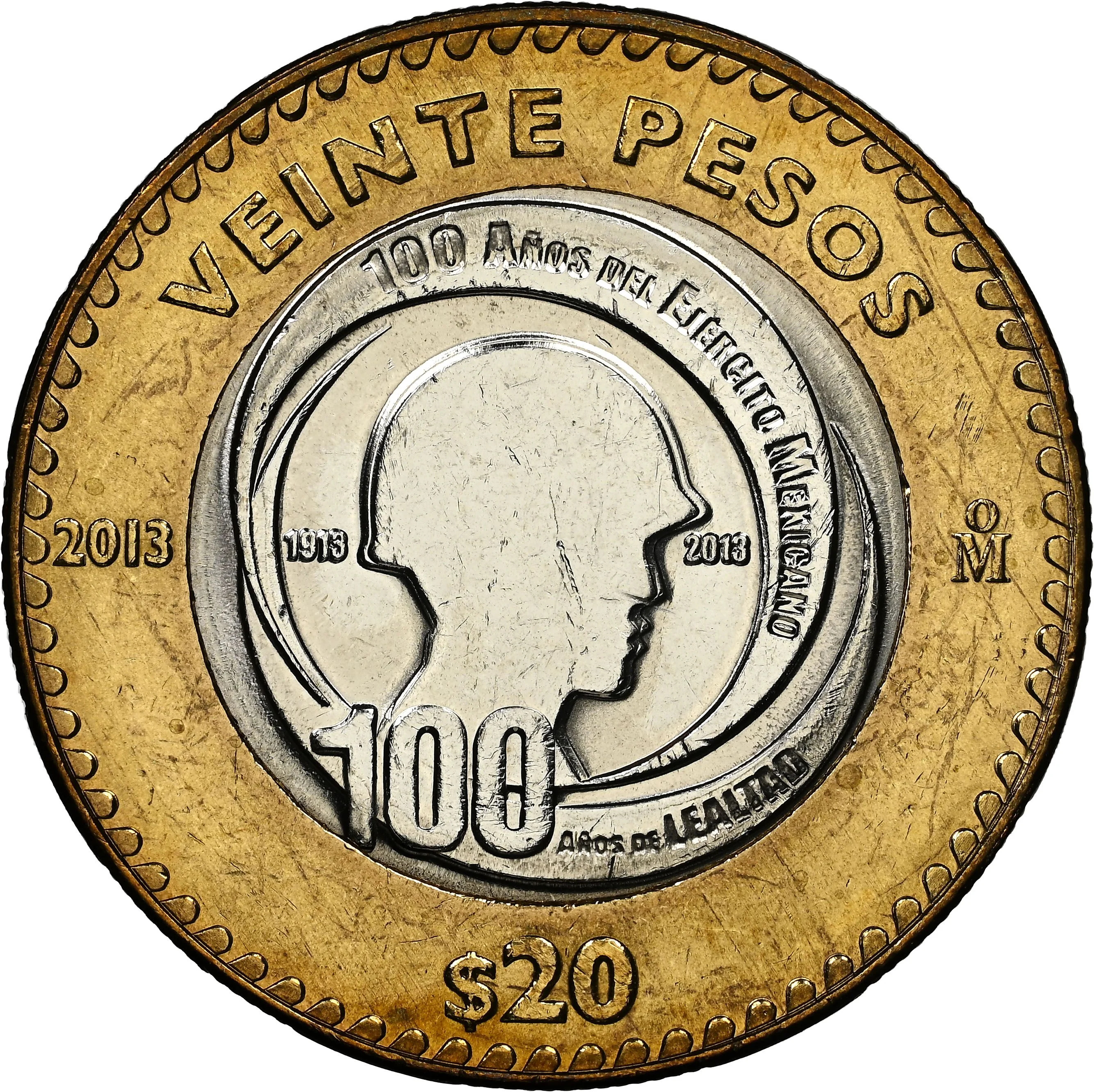
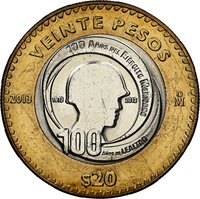
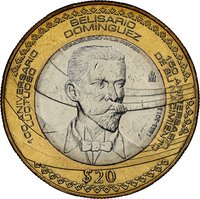
The inner coin features a helmeted soldier's silhouette between 1913 and 2013, surrounded by the legends “100 años del Ejército Mexicano” above and “100 años de lealtad” below. The outer ring displays “VEINTE PESOS” above and “$20” below, with the mint year 2013 and the mintmark (M°) on the sides, all within an elliptical frieze.
Inscription:
VEINTE PESOS
100 AÑOS DEL EJÉRCITO MEXICANO
2013 1913 2013 Mo
100 AÑOS DE LEALTAD
$20
100 AÑOS DEL EJÉRCITO MEXICANO
2013 1913 2013 Mo
100 AÑOS DE LEALTAD
$20
Translation:
Twenty Pesos
100 Years of the Mexican Army
2013 1913 2013 Mo
100 Years of Loyalty
$20
100 Years of the Mexican Army
2013 1913 2013 Mo
100 Years of Loyalty
$20
Script: Latin
Language: Spanish
Edge
Segmented reeding
Mints
| Name | Mark |
|---|---|
| Mexican Mint | (Mo) |
Mintings
| Year | Mint Mark | Mintage | Quality | Collection |
|---|---|---|---|---|
| 2013 | Mo | 4,956,000 |
Historical background
In 2013, Mexico's currency, the peso (MXN), operated within a context of relative stability and cautious optimism, but remained sensitive to both domestic policy shifts and global financial currents. The year was politically significant as it marked the beginning of Enrique Peña Nieto's presidency, following his inauguration in December 2012. His administration quickly launched an ambitious reform agenda, particularly in energy and telecommunications, which initially buoyed investor sentiment and supported the peso. The currency traded in a range of approximately 12 to 13 pesos per US dollar for much of the year, reflecting a period of calm compared to the volatility seen during the 2008-2009 global financial crisis.
The primary external influence on the peso in 2013 was the monetary policy speculation emanating from the United States Federal Reserve. Following the "taper tantrum" in mid-2013, when the Fed first hinted at reducing its quantitative easing program, emerging market currencies, including the Mexican peso, experienced bouts of pressure and depreciation. Investors, anticipating higher yields in the US, began pulling capital from emerging markets. However, Mexico was somewhat insulated from the worst of this volatility due to its strong macroeconomic fundamentals, including low public debt, a stable inflation rate, and a flexible credit line with the International Monetary Fund.
Domestically, the Bank of Mexico (Banxico) maintained a supportive stance, keeping its benchmark interest rate at a historic low of 4.0% for the entire year to foster economic growth. This policy, combined with the positive momentum from structural reforms, helped the economy and currency weather external shocks. Consequently, while the peso faced headwinds from global risk aversion, it ended 2013 without a dramatic crisis, positioned as one of the more resilient emerging market currencies, setting the stage for the challenges and adjustments that would come in subsequent years.
The primary external influence on the peso in 2013 was the monetary policy speculation emanating from the United States Federal Reserve. Following the "taper tantrum" in mid-2013, when the Fed first hinted at reducing its quantitative easing program, emerging market currencies, including the Mexican peso, experienced bouts of pressure and depreciation. Investors, anticipating higher yields in the US, began pulling capital from emerging markets. However, Mexico was somewhat insulated from the worst of this volatility due to its strong macroeconomic fundamentals, including low public debt, a stable inflation rate, and a flexible credit line with the International Monetary Fund.
Domestically, the Bank of Mexico (Banxico) maintained a supportive stance, keeping its benchmark interest rate at a historic low of 4.0% for the entire year to foster economic growth. This policy, combined with the positive momentum from structural reforms, helped the economy and currency weather external shocks. Consequently, while the peso faced headwinds from global risk aversion, it ended 2013 without a dramatic crisis, positioned as one of the more resilient emerging market currencies, setting the stage for the challenges and adjustments that would come in subsequent years.
🌱 Common