

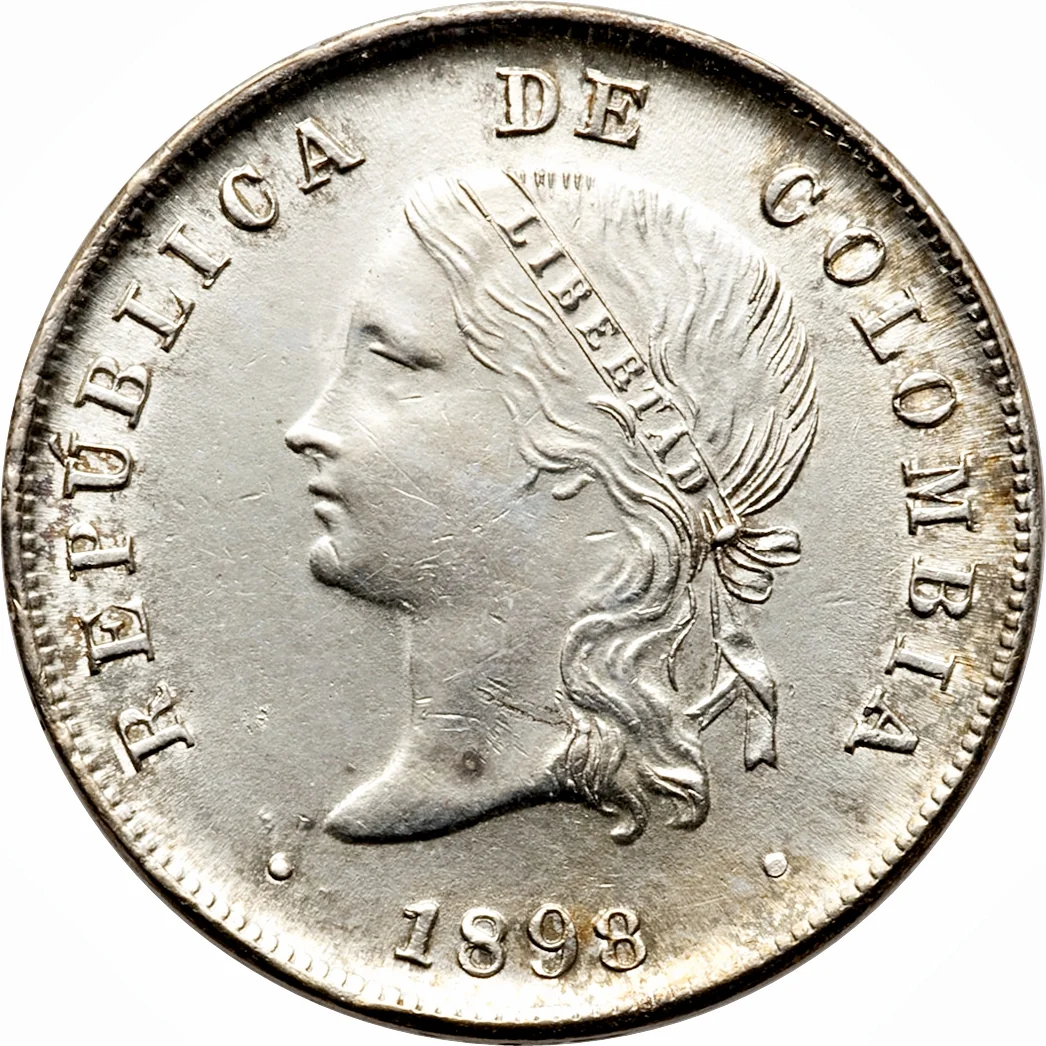
50 Centavos – Colombia
Colombia

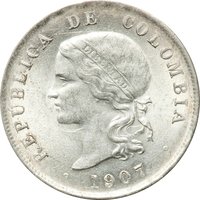
Obverse
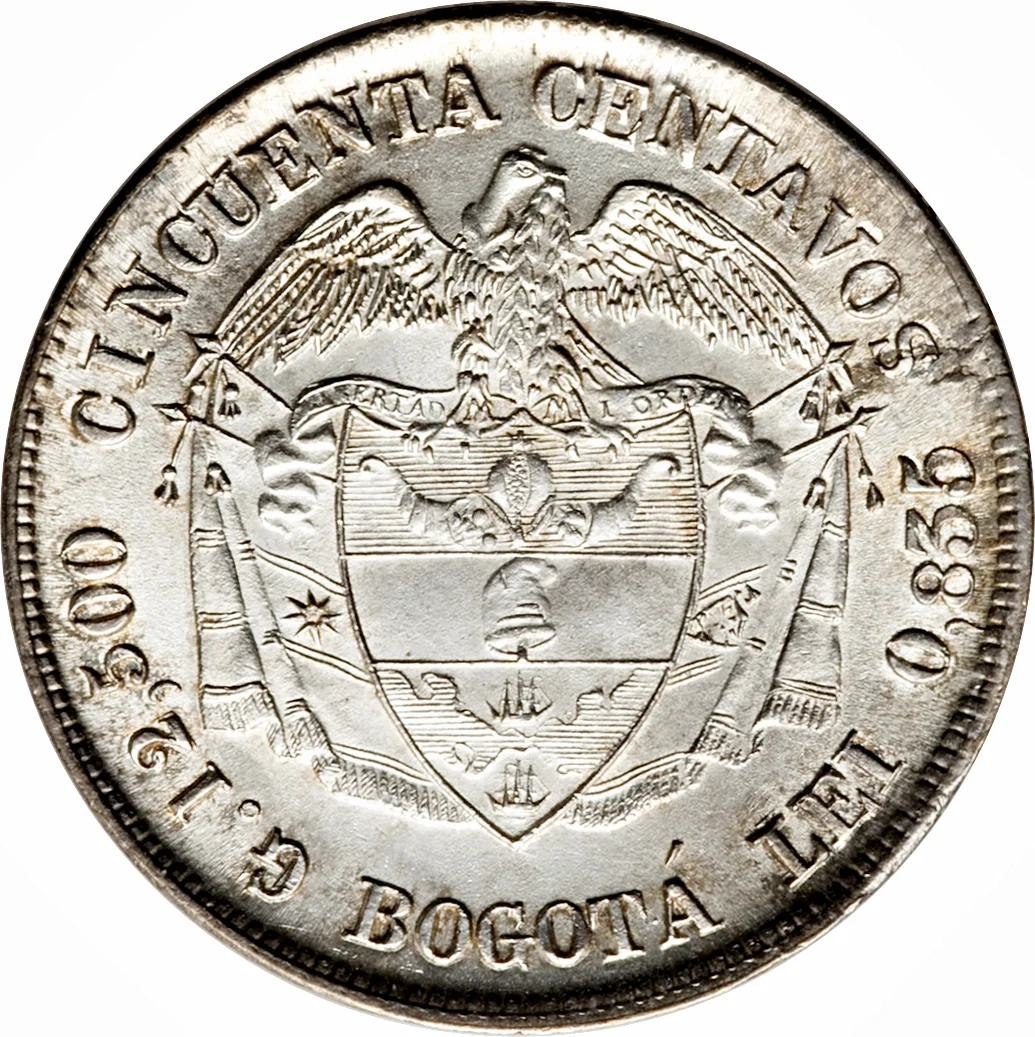
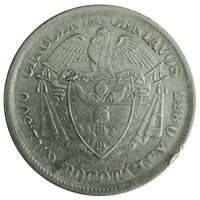
Reverse
Description:
Condor over flagged arms, encircled by weight, value, silver fineness, and mint.
Inscription:
G. 12,500 CINCUENTA CENTAVOS
BOGOTA LEI 0,835
BOGOTA LEI 0,835
Script: Latin
Edge
Categories
| Symbol> Allegory |
| Symbols> Coat of Arms |
Mintings
| Year | Mint Mark | Mintage | Quality | Collection |
|---|---|---|---|---|
| 1889 | — | 130,000 | ||
| 1898 | — | — | ||
| 1899 | — | — |
Historical background
In 1889, Colombia’s currency system was characterized by profound instability and fragmentation, a direct legacy of the political and territorial disunity of the 19th century. Following the dissolution of Gran Colombia, the nation had struggled to establish a unified monetary authority. The result was a chaotic landscape where the federal government, private banks, and even regional entities issued their own paper money, often with little to no specie backing. This proliferation of banknotes, coupled with a severe shortage of precious metal coinage, led to widespread depreciation, wild exchange rate fluctuations, and a deep public distrust in paper currency, which was frequently discounted at a fraction of its face value.
The situation was exacerbated by the fiscal policies of the Regeneración movement under President Rafael Núñez, which sought centralization. The 1887 Constitution had restored a strong central government, and in 1888, the government attempted to impose order by granting exclusive note-issuing privileges to the newly created National Bank (Banco Nacional). However, this institution was effectively under government control and was used primarily to finance public deficits, leading to further inflationary emissions. Thus, instead of creating stability, the Banco Nacional’s notes simply added another layer of inconvertible paper to the already saturated system, doing little to restore confidence or establish a sound monetary standard.
Consequently, by 1889, the Colombian economy operated on a de facto fiduciary standard with no link to gold or silver, hindering both domestic commerce and foreign investment. The value of money varied drastically from one city to another, and the economy suffered from high transaction costs and uncertainty. This monetary anarchy was a critical obstacle to national integration and economic modernization, setting the stage for the severe currency reforms and painful consolidations that would define the Colombian monetary experience in the 1890s and early 20th century.
The situation was exacerbated by the fiscal policies of the Regeneración movement under President Rafael Núñez, which sought centralization. The 1887 Constitution had restored a strong central government, and in 1888, the government attempted to impose order by granting exclusive note-issuing privileges to the newly created National Bank (Banco Nacional). However, this institution was effectively under government control and was used primarily to finance public deficits, leading to further inflationary emissions. Thus, instead of creating stability, the Banco Nacional’s notes simply added another layer of inconvertible paper to the already saturated system, doing little to restore confidence or establish a sound monetary standard.
Consequently, by 1889, the Colombian economy operated on a de facto fiduciary standard with no link to gold or silver, hindering both domestic commerce and foreign investment. The value of money varied drastically from one city to another, and the economy suffered from high transaction costs and uncertainty. This monetary anarchy was a critical obstacle to national integration and economic modernization, setting the stage for the severe currency reforms and painful consolidations that would define the Colombian monetary experience in the 1890s and early 20th century.
✨ Legendary